Twitter
 Facebook
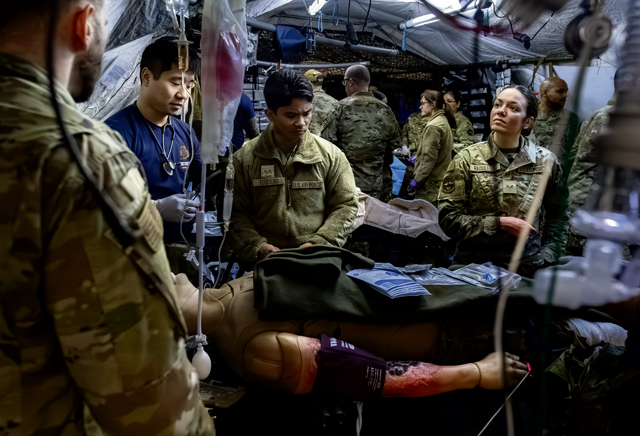
U.S. Air Force Airmen assigned to the 86th Medical Group, Army, Marine Corps and Navy medical personnel assigned to Landstuhl Regional Medical Center, trained together during a Survive, Adapt and Battlefield Readiness, large-scale mass casualty exercise Jan. 22, to strengthen joint inter-operability and preparing personnel for combat medical scenarios.
The exercise was designed to test medical personnel covering multiple levels of care, emphasizing the value of staying calm amidst chaos and pressure. The training events imitated real-world uncertainty, while providing critical patient care to advance joint-inter-operable capabilities.
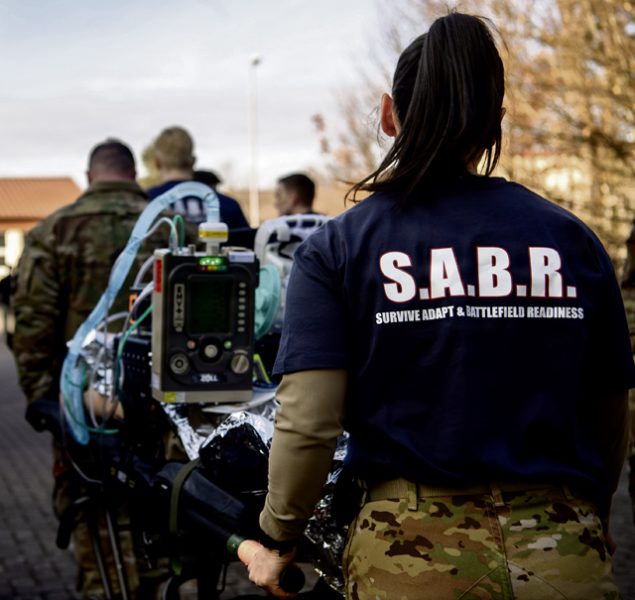
“SABR is about preparing our medics to take care of patients under stress,” said U.S. Air Force Maj. Keshia Brown, 86th Medical Group primary care flight commander. “We want them to be comfortable making decisions under pressure.”
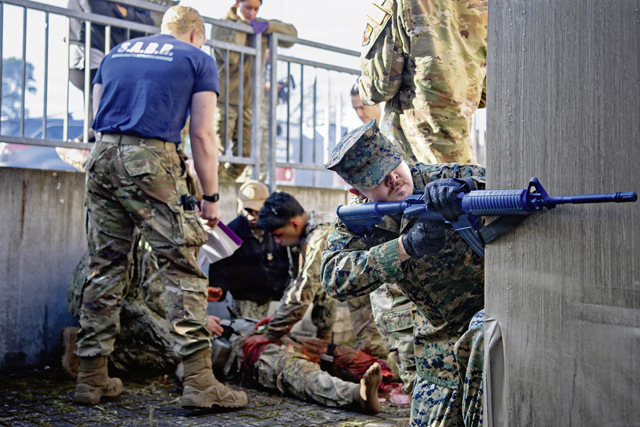
Participants operated simultaneously across initial injury locations, emergency rooms, ground surgical teams, intensive care units and medical surgical wards. Mock patients were moved through the system under critical life-threatening timelines, forcing teams to make fast-paced life or death decisions while coordinating across specialities and service branches.
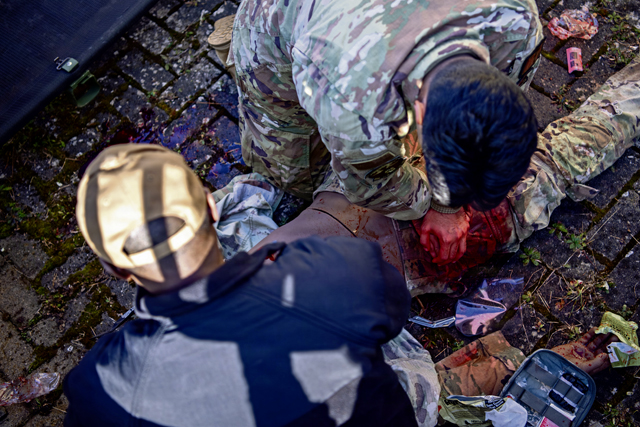
The training focused on assessing patient injuries to prioritize care, determining how and who to treat first. Service members practiced life-saving trauma procedures to stabilize personnel in an environment where resources and time may be limited, and giving service members access to medical training that’s usually only available in the United States.
“We don’t get a lot of opportunities to train overseas,” said Senior Airman Shannon Fleming, 86th Medical Group medical technician. “Usually we have to travel to the states for something of this scale and it’s a really good experience that we don’t get exposed to over here as medics.”
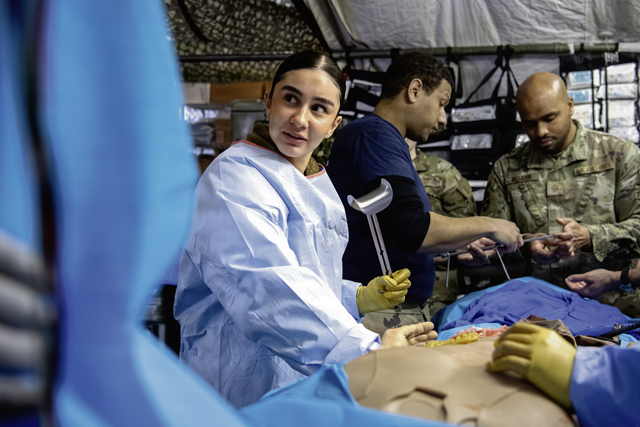
Service members trained side-by-side introducing participants to new styles of communication and methodology of medical procedures used by sister-service branches.
“The benefit of joint interoperability is that we get to learn from each other,” Brown said. “Air Force, Army, Navy and Marines all bring different experiences, but we’re all medics with the same mission.”
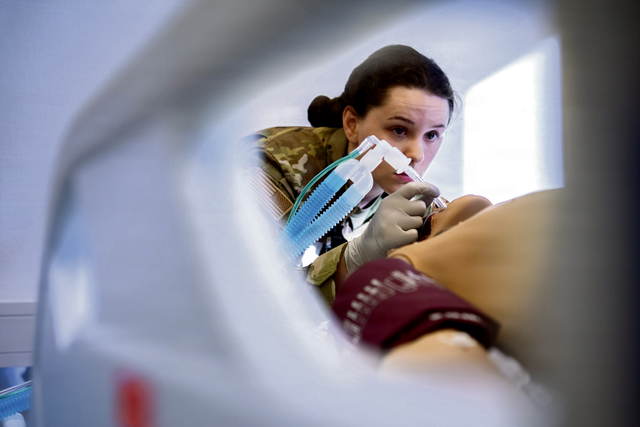
The exercise also simulated drone attacks to simulate modern day threats joint forces may face in an ever-changing battlefield climate. These conditions reinforced the need to balance patient care with situational awareness to yield life-saving treatment in austere environments.
“Timing is imperative,” Brown said. “Good decision making at the right moment can save lives.”
Getting SABR to simulate real-world situations was vital for the newer medics to hone in on skills that are matters of life and death. Cadre helped breathe life into the training-dummies with intense screaming, feigned cries for help and commanding newer medics to move faster, making the training more authentic.
“SABR gives newer Airmen and medics exposure to how chaotic trauma situations can be and what it’s like to work alongside critical care nurses, physicians and joint partners,” Fleming said.
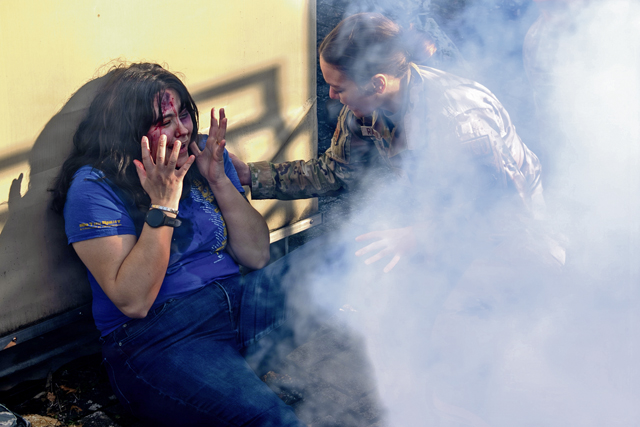
Exercises like SABR sharpen readiness and interconnectivity throughout all branches of service showcasing the significance of familiarizing medics with real-world scenarios while boosting teamwork amongst service mem-bers.
“We don’t know what the next conflict will look like,” Brown said. “Training like this ensures our medics are prepared to respond when it matters.”