 Twitter
 Facebook
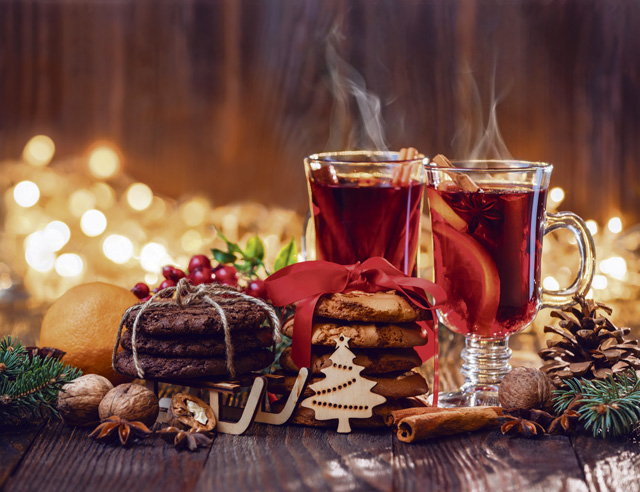
As days get shorter and cooler, typical winter delicacies, sweets and bright festive lights can brighten up our spirits and let us swing into the holiday season. Lebkuchen (gingerbread), Stollen (Christmas cake) and Glühwein (mulled wine) can be found at each and every Christmas Market around Germany and parts of Europe.
Christmas markets began as medieval December fairs and seasonal “December markets” in German-speaking Europe, evolving into the Advent-focused Weihnachtsmärkte known today. The first noted market took place in Vienna, Austria, in 1296, Dresden’s Striezelmarkt was first recorded in 1434 and the Christkindlesmarkt in Nürnberg was documented in the 17th century.
During the Medieval period winter fairs provided food and necessities and allowed craftsmen and confectioners to sell seasonal goods. In the 14th and 15th centuries Saint Nicholas or December markets became popular to brighten up dreary and cold days leading up to Christmas.
Later Protestant reforms helped popularize the “Christkindelmarkt” (Christ child) name and began shaping some traditions now associated with Advent or Weihnachtsmärkte. During the industrial revolution and urbanization, rising consumer culture reshaped markets into larger commercial events and have continued to adapt through social change.
Open-air wooden stalls sell handcrafted gifts, ornaments, toys, seasonal decorations and candles. Food stalls will let your mouth water with Rostbratwurst, Lebkuchen, Christstollen, roasted nuts, waffles and candied apples, and, of course, spicy and hot Glühwein.
Christstollen
Christstollen (also Weihnachtsstollen or simply Stollen) is a traditional German Christmas fruit bread: a yeast‑leavened, cake‑like loaf made with candied or dried fruit, nuts, spices and usually coated with powdered sugar or rolled in butter and sugar.
Stollen dates back to late medieval Saxony; early versions (called Striezel or Strutzel) were simple loaves of flour, yeast and water baked as fasting food during Advent. The Butter Letter: Because butter and milk were originally forbidden during Advent fasting, Saxon bakers petitioned the papacy; after a long process a papal dispensation (the so‑called Butter Letter) allowed richer ingredients in return for a payment, leading to the more flavorful Stollen we know today.
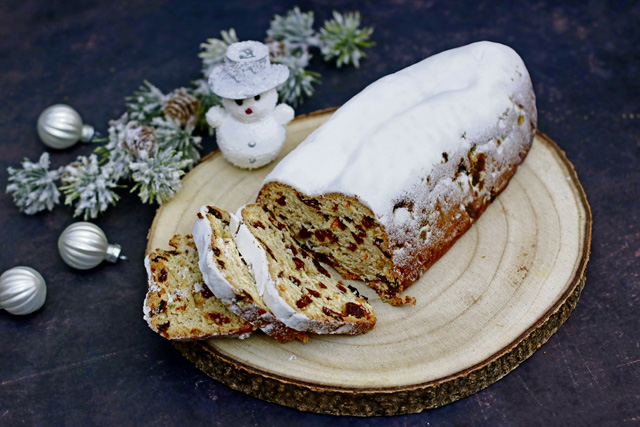
Dresdner Christstollen
Dresden Stollen (Dresdner Christstollen) is the most famous regional variety and its Strietzelmarkt sold it from at least the 15th century. It has a long, documented history in the city and is produced under a distinctive quality tradition—historical records mention Stollen deliveries to rulers and spectacular giant Stollen events that shaped the festival culture around it and is protected by a specific seal.
Lebkuchen
Lebkuchen is a traditional German spiced honey cake or cookie closely related to gingerbread, commonly made with honey, mixed spices, nuts, candied peel and sometimes covered with sugar glaze or chocolate.
Lebkuchen originated in medieval Franconian monasteries and towns in the 13th century and became an established specialty in cities with access to spices and honey; bakers were recorded in Ulm in 1296 and in Nuremberg by 1395, where the product later became especially famous and regulated by guilds. Spiced honey cakes carried medicinal and symbolic meaning in the Middle Ages and were sold at winter fairs and Christmas markets, helping them become a core part of German Christmas traditions.
However, Lebkuchen are not just Lebkuchen, they can be differentiated between Elisenlebkuchen that are very soft, nearly cake‑like, have a high nut content, and little or no flour, often top‑glazed and always with oblates on the bottom. Nürnberger Lebkuchen are soft, come in varied sizes (often small rounds) and are based on a traditional recipe from Nürnberg, sometimes glazed or chocolate‑coated.
Pfeffernüsse (pepper nuts) are small, dense balls with strong spice and often rolled in powdered sugar, while Aachener Printen are firmer, molded and are a regional variant from the city of Aachen, sometimes with syrup added for chewiness. German supermarkets also sell a variety of non-traditional ones in different shapes and sizes, such as stars, hearts and tiny gingerbread men along with traditional Marzipan from Lübeck, another popular treat. A fun fact: Lebkuchen are usually baked in the summer ready to be delivered to the shops by September or October!
Glühwein
Glühwein, literally “glow wine” is usually prepared from red wine, heated and spiced with cinnamon sticks, cloves, star aniseed, orange, sugar and at times vanilla pods. A variation called “Jagertee” (hunter’s tea) can mainly be found in Bavaria and consists of black tea, spices and a shot of rum. Many vendors also sell Kinderpunsch or hot chocolate for children or those who prefer a non-alcoholic delight. So-called “Glühbier” has also become popular in recent years.
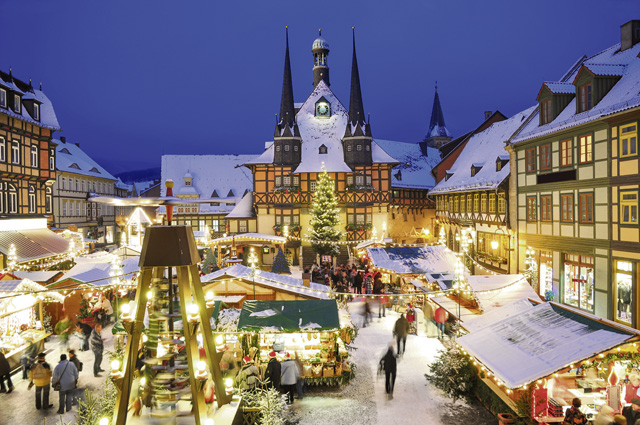
Weihnachtsmarkt
There are well over 2,500 Christmas markets throughout Germany, while some smaller ones in towns or villages may not even be counted. Each larger city has at least one market and some very large cities such as Berlin, Cologne, Munich and Hamburg may have up to five or six individual markets in separate city sections.
A few Christmas Markets within an hour’s driving distance from the Kaiserslautern Military Community include: Saarbrücken, where a Santa Claus “glides” over St. Johanner Markt once an hour. Trier has been voted as the most romantic market for several years. Mannheim has booths around the water tower and the market in Neustadt offers an especially nostalgic setting at the market square. An underground market in a wine cellar in Trabentrarbach is also worth a spectacular visit. A smaller market, that only opens on weekends, is in Bad Münster am Stein, but offers a grandiose, medieval setting with Ebernburg Castle as a backdrop.
Dresden’s Striezelmarkt is the oldest in Germany and Nürnberg is known for its iconic red‑white stalls and Zwetschgen Männla (small figures made out of plums) in front of the cathedral. Rothenburg ob der Tauber has a fairy-tale medieval setting and in Stuttgart booths compete with special prize-winning decorations on their roof tops. See Unterwegs for a full list of markets.
Whether near or far, the nostalgic markets will surely tune you into the holiday season!


