 Twitter
 Facebook
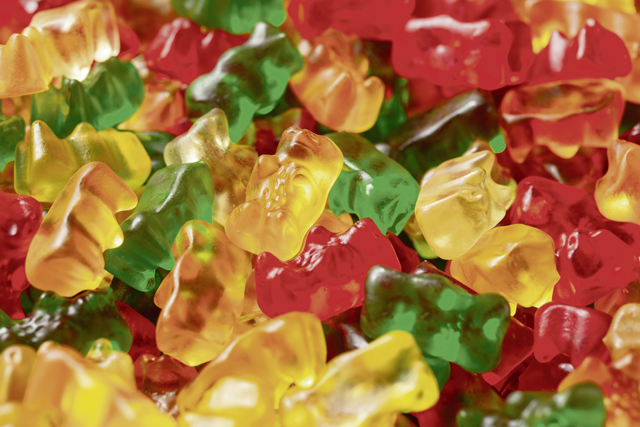
We’re all familiar with those soft, fruity, irresistibly sweet little bears that Germans lovingly call “Goldbären.” Few candies have achieved the global affection and cultural staying power of Haribo Goldbears.
Since their introduction in 1922, these colorful little gummies have become a symbol of childhood joy, playful indulgence, and German confectionery craftsmanship. Their story, however, begins even earlier with a young candy maker in Bonn and a simple dream of creating something new.
Haribo was founded in 1920 by Hans Riegel, who named his company by combining the first two letters of his first and last name with the first two letters of his hometown: HAns RIegel BOnn. Working out of a small shed with little more than a sack of sugar and a copper kettle, Riegel initially produced items such as licorice and pastilles. But he soon felt compelled to invent a sweet that would stand apart from the rest.
On March 14, 1922, that idea took shape — literally. Inspired by the dancing bears that once performed at fairs, Riegel created the first gummy bear, a four‑centimeter-tall, somewhat tough, chewy candy he called the “Dancing Bear.” His wife packaged the treats by hand, and Riegel sold them to local shops for a penny a pair. At first, the Dancing Bears were far from a sensation, his other “pharmaceutical” sweets sold better, even being shipped to soldiers during World War II.
After the war, Riegel’s sons took over the business and transformed their father’s modest creation. Hans Riegel Jr. refined the recipe, softened the texture, and shrank the bear into the friendlier, more flavorful form we recognize today. In 1960, the Dancing Bears were officially rebranded as Goldbears, and Haribo began its rise to international fame — helped along by a catchy slogan that would become known around the world: “Kids and grown-ups love it so, the happy world of Haribo.”
Today, Haribo Goldbears come in five classic flavors — raspberry, lemon, strawberry, pineapple, and orange — and are made from a mixture of glucose syrup, sugar, gelatin, citric acid, and both natural and artificial flavorings and colorings. Despite their simplicity, the process behind each gummy bear is surprisingly intricate. Every new design begins as a hand-drawn sketch, which is then transformed into a 3D model and used to create production molds. The gummy mixture is heated, flavored, and colored before being poured into corn-starch molds at lightning speed. After several days of drying, the bears are coated in a thin layer of wax for shine and to prevent sticking. Only then are they sorted, inspected, and packaged for eager consumers.
The scale of production is staggering. Haribo produces roughly 160 million Goldbears every day — enough in a year to wrap around the Earth ten times. The company now offers more than 200 gummy varieties in Germany alone, including favorites like Happy Cola, Twin Snakes, Peach Rings, and Sour Goldbears. Seasonal and limited-edition treats keep the brand fresh, while classics like Licorice Wheels and Smurfs gummies appeal to nostalgic fans.
Throughout the year, Haribo adapts its gummy creations to match the seasons and the moods that come with them. Heart-shaped red or pink gummies can be found in February while spring ushers in Easter-themed treats such as colorful eggs, cheerful bunnies, and playful nests or green frogs, capturing the lightness of the season. As temperatures rise, consumers often gravitate toward “Tropifrutti,” a line celebrated for its bright, tropical fruit flavors or wine gummies with a grape flavor that evoke the feeling of summer holidays.
Autumn brings a shift in tone, with gummies inspired by Harry Potter, along with spooky shapes like spiders, witches, and vampires that fit perfectly with Halloween festivities. Winter, in turn, transforms store shelves into a festive landscape filled with Santa Claus gummies, elves, Christmas trees, and tiny gift-shaped sweets.
In Germany, gummy-filled Advent calendars have become a beloved tradition, offering a different treat behind each door as the countdown to Christmas unfolds. Other special editions such as “Starmix” with flying saucers, spacecraft and astronauts have also made a showing. At the same time, rising interest in gelatine-free and vegan options has encouraged Haribo to expand its product range, introducing new variations that cater to evolving dietary preferences and consumer values.
Haribo’s growth has been equally impressive. With global revenue estimated between €1.7 and €2.0 billion — and Haribo of America reporting around $3 billion — the company has become a confectionery powerhouse. In 2023, Haribo opened its first North American manufacturing facility in Pleasant Prairie, Wisconsin, ensuring that American consumers can enjoy Goldbears made closer to home. Meanwhile, the company’s headquarters, originally located in Bonn’s Kessenich district, moved in 2019 to Grafschaft in Rhineland-Palatinate, though Bonn remains an important production site.
From a humble shed in Bonn to a worldwide phenomenon, Haribo Goldbears have traveled a remarkable journey. They have survived war, economic upheaval, and shifting consumer tastes, all while maintaining their simple charm. Billions of people have enjoyed these tiny bears or one of the many other figures over the past century, each with their own favorite flavor or memory tied to the cheerful crinkle of a Haribo bag.
Goldbears are more than candy — they are a testament to creativity, perseverance, and the universal delight of a sweet treat shared across generations. And by one rough estimate, the very first bear from 1922 now has over 4 trillion “descendants” in the world. Happy Bear Day!


