 Twitter
 Facebook
Story & photos by
Capt. Amber R. Kelly-Herard
435th Air Ground Operations Wing
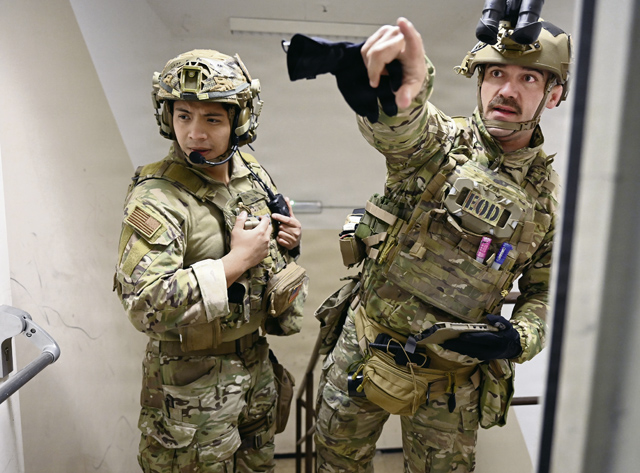
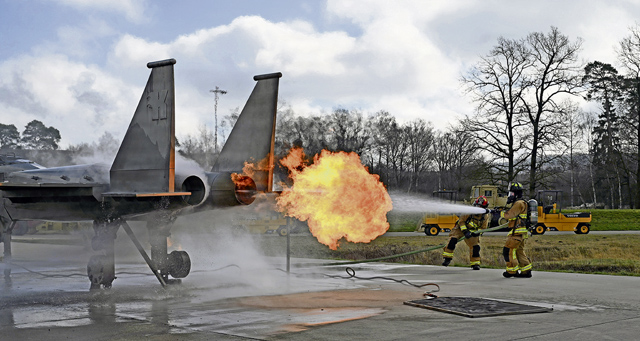
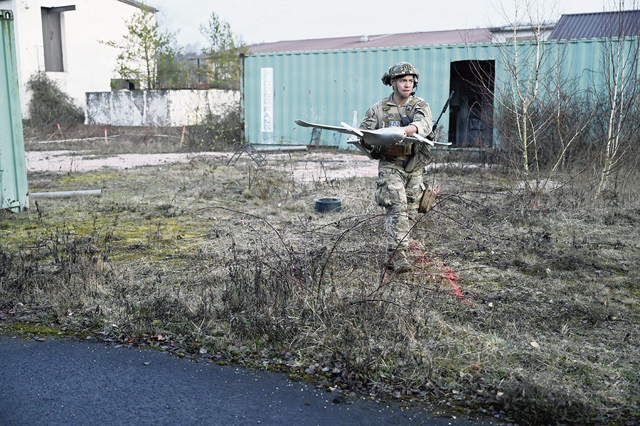
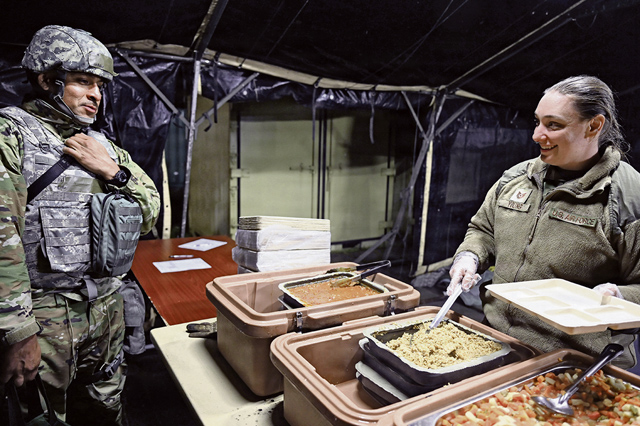
The 435th Construction and Training Squadron concluded its first of six Silver Flag trainings of the year.
This iteration was the first time the force support career field rejoined their civil engineer and logistics readiness counterparts in three years.
“I’m excited for this reintegration, because CE is our best friend in a deployed environment,” said U.S. Air Force Tech. Sgt. Naomi Holley, 435 CTS Force Support Contingency instructor. “It forces Force Support students to learn who exactly they need to contact for support, and in return, our services students support the CE specialties, especially when it comes to morale.”
Ramstein is one of three Silver Flag locations that prepares Airmen from 16 career fields in more than 350 wartime tasks. The training began with classroom instruction and hands-on applications before moving to a forward-deployed bare base.
“The students set everything up from their tents to showers,” said U.S. Air Force Capt. Tyler Stout, 435 CTS Contingency Training flight commander. “We then culminated with our exercise that tested core competencies.”
To ensure the training reflected modern warfighting, this Silver Flag iteration was the first to incorporate a simulated drone attack, a change designed to prepare Airmen for a variety real-world possibilities. The training covered a wide range of critical skills, including airfield damage repair, response to chemical, biological, radiological, and nuclear threats, lodging operations, and mortuary affairs.
“My hope is that my students retain the information and not only apply it on a real-world deployment but also bring back the knowledge to their respective units,” said U.S. Air Force Tech. Sgt. Reena Neumeister, 435 CTS Personnel Support for Contingency Operations Contingency Training NCOIC.


