 Twitter
 Facebook
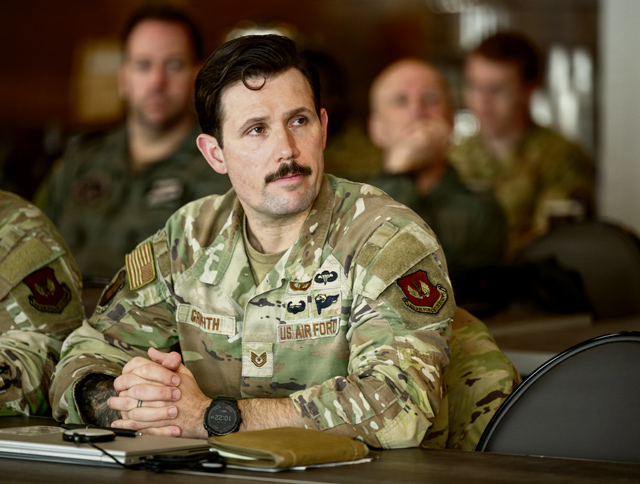
The 86th Operations Support Squadron hosted the European Airborne Airlift Conference at Ramstein Air Base, March 30 – April 3. This brought together approximately 100 personnel across 14 NATO countries to strengthen interoperability across airborne, airlift, aeromedical and maintenance communities.
The biannual conference provides a forum for NATO partners to exchange ideas, develop training opportunities and improve their ability to operate in conjunction across the European theatre.
“Interoperability is the backbone of modern defense and power projection in Europe,” said U.S. Air Force Lt. Col. Sean Andrews, 86th OSS director of strategic communications. “It’s not just a technical requirement but a strategic imperative that turns collective defense from a promise into a credible capability.”
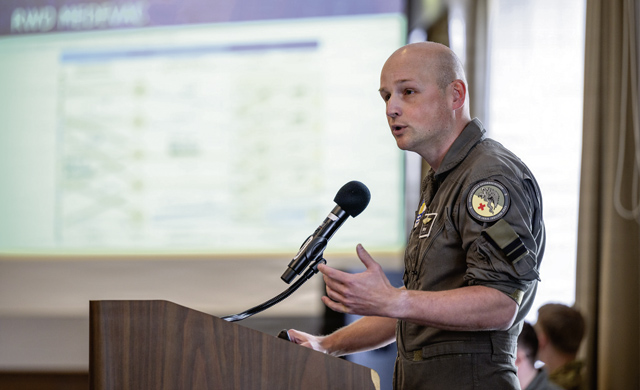
The weeklong conference included briefings, discussions and cultural exchanges aimed at addressing shared challenges and aligning multinational capabilities. Talking points focused on improving coordination across different aircraft, expanding joint training opportunities and overcoming limitations such as restricted airspace and differing national procedures.
“These trainings are important because it increases interoperability, directly working hand in hand during an operation helps us learn each other’s procedures and get comfortable working together in high stress operational environments,” said Tech. Sgt. Joshua Griffith, 435th Contingency Response Group personnel parachute program manager. “If a conflict or situation ever happens when we need to work together, we are ready because of these opportunities.”
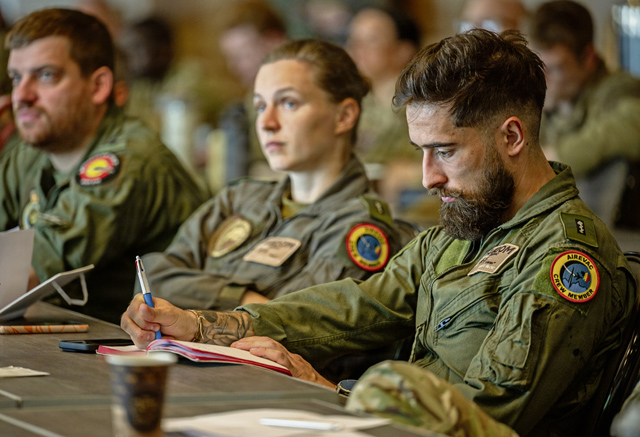
The conference builds on previous European Airborne Airlift Conferences that led to joint training efforts across Europe. This included participation in multinational exercises and coordinated airdrop operations. These efforts continue to enhance NATO’s ability to respond quickly and effectively in complex scenarios.
“Each year, we return with fewer gaps between us and our allies,” Andrews said. “That steady progress turns our shared commitment into a force that is ready and capable whenever and wherever it’s needed.”
The conference reinforces NATO’s commitment to collective defense by ensuring allied forces can operate seamlessly together, increasing readiness and strengthening de-ter-rence across the alliance.


