Twitter
 Facebook
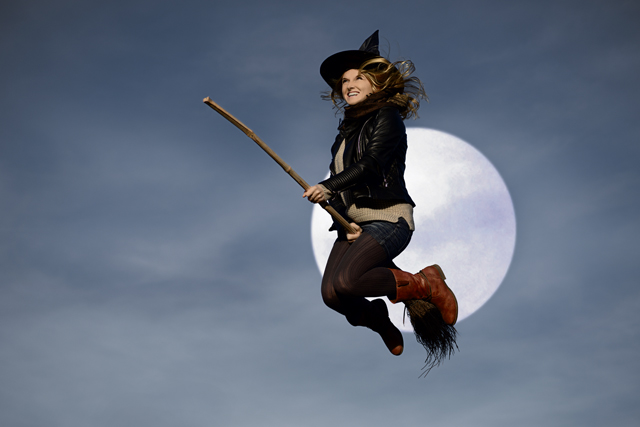
Beware of witches!
The night from April 30 to May 1 is known as “Walpurgisnacht” or “Hexennacht” in our region, so beware the “witches” are out there!
It is not considered an official holiday but is still a noteworthy event for reasons that will become clear in a second.
In German folklore Walpurgisnacht is heavily linked to witchcraft and the supernatural. It is said that witches chose this day to dance on the peaks of hills and plague the populace by causing mischief. Bonfire and celebrations take place on Brocken, a mountain in eastern Germany.
The Brocken (Blocksberg) is the highest peak in the Harz mountains and long associated with uncanny weather, fog, and the Brocken spectra optical phenomenon, which helped fuel tales of supernatural gatherings. Its remoteness and frequent cloud cover made it an ideal setting for stories of witches meeting there to dance, feast, and ride through the night.
In our region, kids love the evening which is often simply called “Hexennacht” (witches’ night). You can think of it as a mix between Halloween and April Fools. A big part of the “holiday” is playing pranks on unsuspecting people. Usually this is limited to minor nuisances like spraying shaving cream on door handles and wrapping lamp posts in toilet paper.
On occasion some people might overdo it with the pranks. Just to be on the safe side, do not leave items, such as trash cans or flowerpots, out in your front yard as people might carry them off. If you own a garage, park your car inside to avoid cleaning up shaving cream in the morning or decorative toilet paper on the antenna or mirrors.
Sometimes kids will drape toilet paper across the street and demand a toll. Of course, you are not required to pay it, but just a few cents will spare you the pleading and the puppy eyes.
Some villages hold dance events such as “Tanz in den Mai” with music and a jolly time. May poles, consisting of poles neatly decorated with colorful ribbons, may be displayed in towns and villages. Young people will guard the poles to avoid them being “stolen” by thieves from neighboring villages, thought to be a total disgrace if the pole is lost.
May Day
May Day blends ancient spring rites and modern labor politics across Europe. In Germany it is both a folk festival with May poles and Walpurgis traditions and a political day of labor demonstrations dating from the late 19th century.
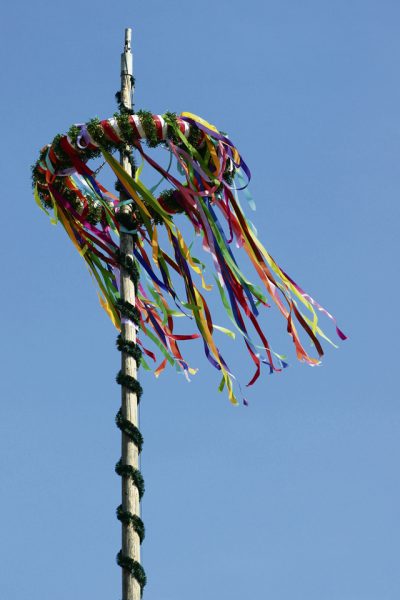
May Day has roots in pre‑Christian spring and fertility festivals such as the Roman Floralia and Celtic Beltane, where communities celebrated renewal with flowers, bonfires, and rites intended to secure fertility for crops and people. Over centuries these seasonal customs evolved into popular practices like “bringing in the May,” crowning a May Queen, and erecting the May pole, which became widespread in medieval and early modern Europe.
Rise of International Workers’ Day
A separate but overlapping tradition emerged in the 19th century: May 1 as International Workers’ Day grew from labor agitation for the eight‑hour day, notably after the 1886 Chicago demonstrations and subsequent international labor mobilization. European socialist and trade‑union movements adopted May 1 for rallies, strikes, and political demands; by the early 20th century the date was established across many countries as a day of labor solidarity.
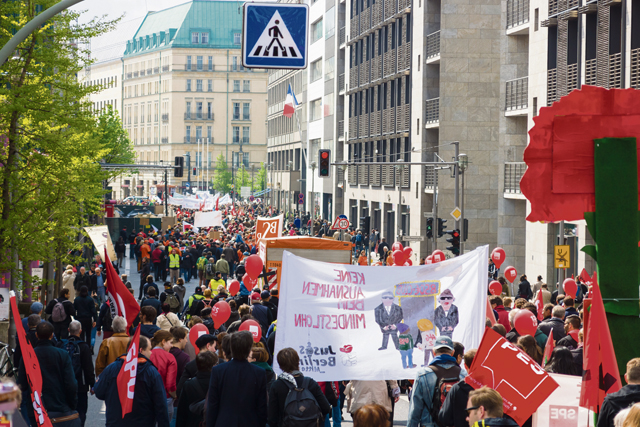
In Germany the labor meaning of May Day became prominent after 1890, when social democrats and unions promoted the date; the holiday was later co‑opted by the Nazi regime as the “Day of National Labor,” and after 1945 it was reclaimed in democratic contexts as “Tag der Arbeit” combining political demonstrations with folk festivities. Today German May Day often features both trade‑union marches and local cultural events, and in some cities clashes between protesters and police have also become part of the modern landscape.
Across Europe the balance between springtime celebration and labor politics varies by country: in parts of northern and central Europe seasonal rites remain strong, while in industrialized urban centers May Day is primarily a day for labor rallies, social justice campaigns, and public holidays. The dual heritage — ancient festival and modern labor commemoration — explains why May Day continues to be both festive and politically charged.
Friday, May 1 is a public holiday in Germany with stores and official businesses closed in observation of the occasion.