 Twitter
 Facebook
Parsley, sage, rosemary and thyme
As Kaiserslautern celebrates the 750th anniversary of its city rights, we’re once again journeying further back in time to the year 985, when “Curtis Luthara” was granted market rights, and exploring what this milestone meant for the small settlement’s early development.
Imagine strolling around a vibrant square where visitors can explore fresh produce, artisanal goods and a lively atmosphere. The fragrance of colorful flowers such as lavender, hydrangeas, roses, bright yellow sunflowers and purple lilac enchant your senses. The appetizing scent of fresh carrots, fennel, ripe red tomatoes, basil and herbs such as parsley, sage, rosemary and thyme let your mouth water. Beekeepers selling their regional honey, fresh eggs, dairy products and fresh fish and poultry galore!
Picture yourself heading home with a wicker basket overflowing with the season’s colorful fruits and vegetables, likely picked up at the farmers’ market. Along with your produce, you’re carrying a piece of Kaiserslautern’s heritage: the Wochenmarkt at Stiftsplatz has long been a cornerstone of the city. Welcome to another chapter in Kaiserslautern’s lively history!
A little market tale
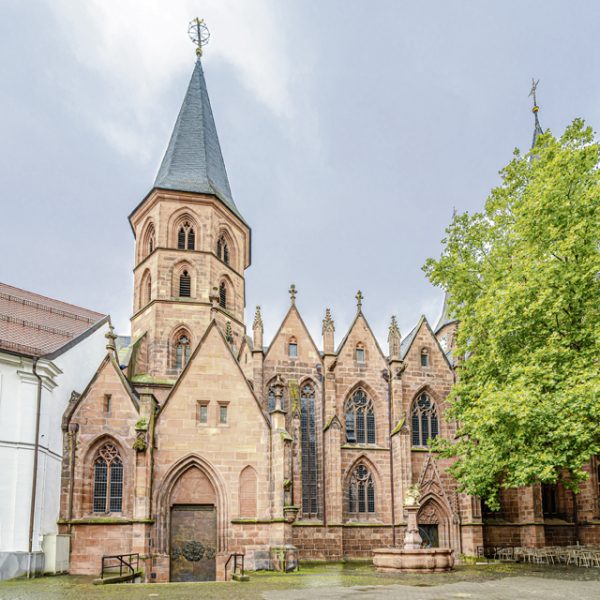
For centuries, weekly markets have taken place near the Stiftskirche in the heart of the city. Back in Medieval times, markets weren’t just places to haggle over bread and turnips, they were the social hotspots of the day, buzzing with gossip, news, and chance encounters. In other words, social media of the Middle Ages!
In the early Middle Ages, however, only select settlements were granted market rights, which were governed by strict regulations. In 985, such a right was documented for the first time as a donation from King Otto III. With it, “Curtis Luthara” received the privileges of market, customs, and ban income, an honor that brought considerable prestige to a community of roughly 800 inhabitants. The charter bore the name of Otto III, who was not yet five years old; his mother, Theophano, and the Archbishop of Mainz, Willigis, acted on behalf of the young king.
Then, almost three centuries later, in 1276 King Rudolf von Habsburg elevated the small town, home to only a few thousand people, to the status of an imperial city. The move acknowledged its growing economic and administrative importance and gave the town, and its market, a significant boost.
The fertile land of the early cloister of 1360 (situated near Stiftsplatz today) plays a decisive role in the development of the rich selection at the current market stalls. The green garden of the Chorherrenstift (canonical monastery, in conjunction with construction of Stiftskirche in 1250) served as a marketplace with monks and local peasants selling their vegetables and herbs but was surrounded by an ugly stone wall with one entrance.
In the early days, not all decisions made by city leaders were deemed sensible at first sight. According to council minutes dated Dec. 19, 1566, there is mention that the textile flag hanging at the entrance would have to be replaced by a metal sign during market hours. The sign would have to display the crest of the imperial coat of arms on one side and the city crest on the other. This would make it evident that the market had the imperial privilege of special protection. Expressions such as market order, market peace and market right were defined in stringent regulations, similar to very precise military regulations today.
As recorded in various council minutes, the Kaiserslauterer Karcherzunft (carter guild) assumed responsibility as “market police” in the 16th century. In September 1570 the guild requested the privilege to hold two livestock markets, which was granted by Emperor Maximilian II and marked a significant milestone in market history.
The original market behind the Stiftskirche wandered from spot to spot over the centuries, but as the weekly market grew, and livestock sales and annual fairs expanded, it quickly outgrew its old quarters. In 1842, the city cleared the way for a brand‑new square by tearing down the old hospital, the public baths, and the Stiftskirche’s cloister gardens. With that transformation, the farmers’ market finally found its permanent home at Stiftsplatz.
Magnificent buildings surrounded the new market square, for example, a miller named Spittel had a stately residential house built next to his mill in 1862. In 1874 he abandoned the mill as it wasn’t profitable anymore, but the house remained until the beginning of the 1950’s.
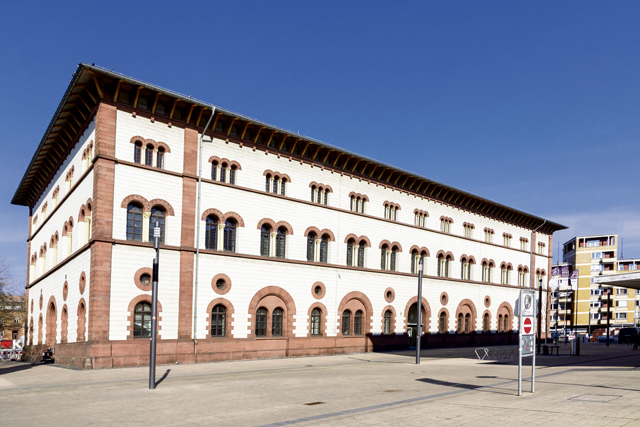
Fruchthalle
By the late 1830s grain merchants began frequenting the city and a dry storage and trading spot for the delicate wheat, grain and flour products was needed. The Fruchthalle (literally fruit hall), the edifice in the city center in Neo renaissance style, was completed in 1846. At that time the Lauter River, mainly used for garbage and waste disposal, awfully smelly and in poor sanitary condition, was covered up and the ground floor of the new building was used as a protected indoor market.
The third floor was utilized to house an infantry battalion, while the second floor had several meeting rooms for council meetings, the city administration, a court room and a police directorate. There were also two apartments for the market writer, responsible for market order and revenue, and for the police servant. Over time, the building grew into a popular place for cultural events while the grain market gradually faded away.
After significant reconstruction of the two upper floors in 1891 and 1892, the concert hall known today was opened with a circumferential gallery and has since been used for city events. These include the annual German-American Friendship concert and the Christmas concert in December with U.S. Army and Air Force involvement, as well as the Culture Market during the holiday season.
Now that we’ve traveled through a thousand years of market history, you might look at your basket of produce a little differently. Maybe you’ll turn your next Saturday market visit into a mini adventure: grab a second breakfast, meet friends at a bar table in the sunshine, or savor local specialties as the city hums around you.
And if you let your imagination wander, you might just hear the echoes of that very first market day, more than a millennium ago!
Don’t miss next week’s edition, another special chapter of Kaiserslautern’s vivid history awaits, and you may find a piece of yourself in it!


