Photos by Pfc. Kaiden Silversmith
21st Theater Sustainment Command May 22, 2026
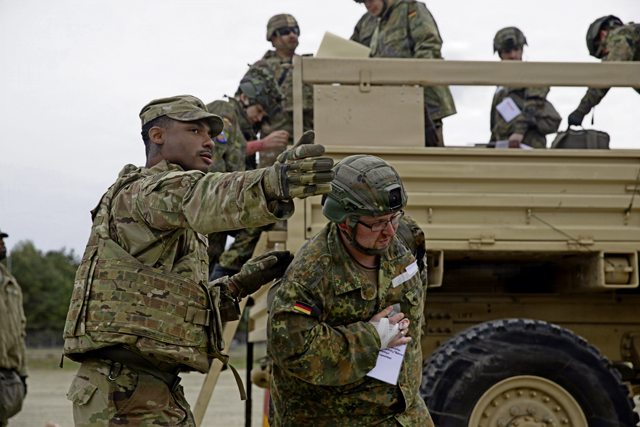
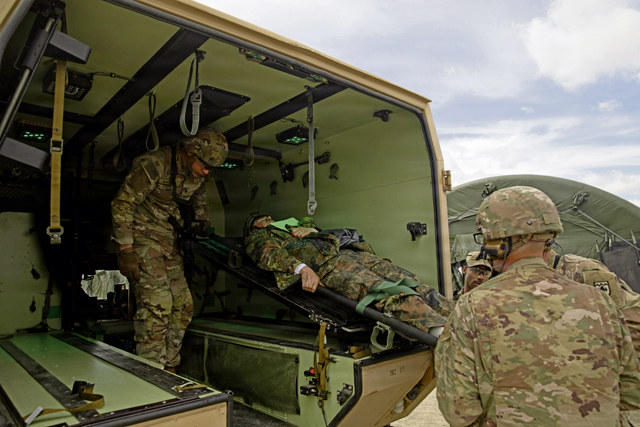
U.S. Army Sgt. Kyurn Taylor, a practical nursing specialist assigned to the 591st Hospital Center, 30th Medical Brigade, directs a simulated casualty into the Sword 26 casualty staging area at Drawsko Combat Training Center, Poland, May 12, 2026. Casualty staging areas help organize treatment, accountability and evacuation during large-scale training events. Although NATO allied medical practitioners commonly use a CSU, the U.S. Army has not previously trained with the use of a CSU during medical missions. During Sword 26, 30th Med Bde is practicing this innovation to gain lessons learned during a simulated LSCO flight as well as enhance interoperability with NATO medical allies. (U.S. Army photo by Pfc. Kaiden Silversmith)
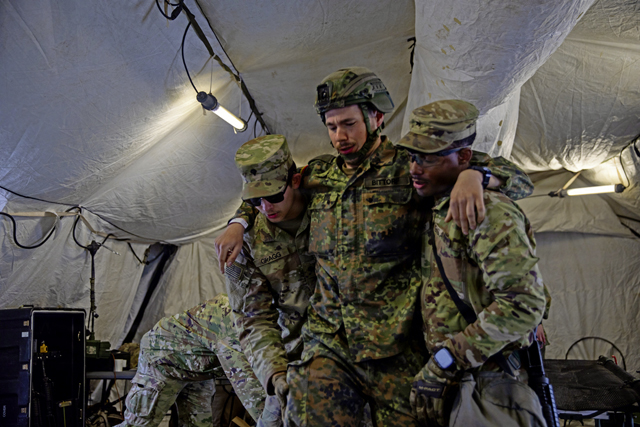
U.S. Army Soldiers assigned to the 30th Medical Brigade, 21st Theater Sustainment Command, move a simulated casualty to the Sword 26 casualty staging area at Drawsko Combat Training Center, Poland, May 12, 2026. The exercise builds readiness by testing casualty care, communication and evacuation procedures in a tactical environment. Although NATO allied medical practitioners commonly use a CSU, the U.S. Army has not previously trained with the use of a CSU during medical missions. During Sword 26, 30th Med Bde is practicing this innovation to gain lessons learned during a simulated LSCO flight as well as enhance interoperability with NATO medical allies. (U.S. Army photo by Pfc. Kaiden Silversmith)
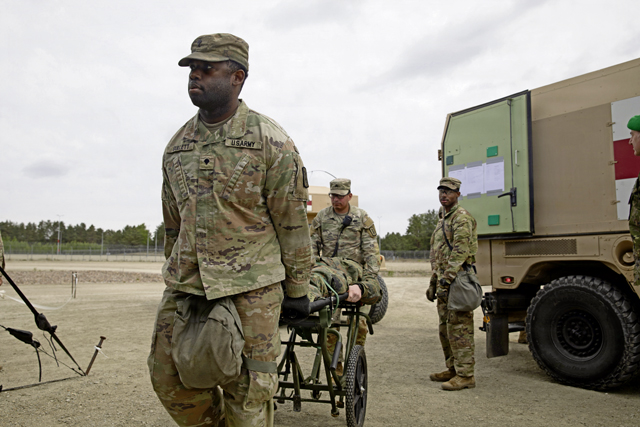
U.S. Army Sgt. Kyurn Taylor (left) and Spc. Johnathon Gragg (right), assigned to the 591st Hospital Center and 167th Medical Augmentation Detachment, 30th Medical Brigade, carry a simulated casualty to the Sword 26 casualty staging area at Drawsko Combat Training Center, Poland, May 12, 2026. Casualty movement training helps prepare Soldiers to respond quickly and effectively during combat operations. Although NATO allied medical practitioners commonly use a CSU, the U.S. Army has not previously trained with the use of a CSU during medical missions. During Sword 26, 30th Med Bde is practicing this innovation to gain lessons learned during a simulated LSCO flight as well as enhance interoperability with NATO medical allies. (U.S. Army photo by Pfc. Kaiden Silversmith)
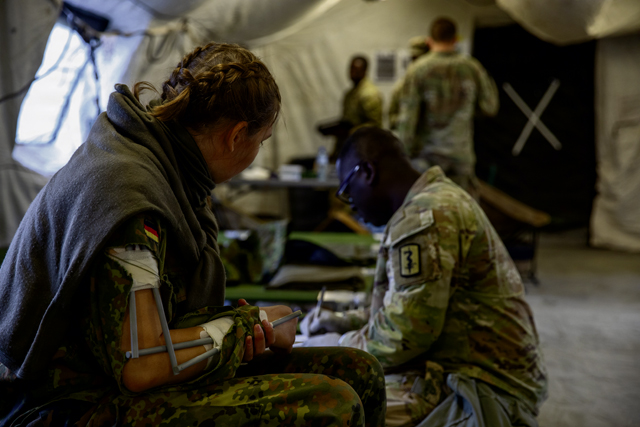
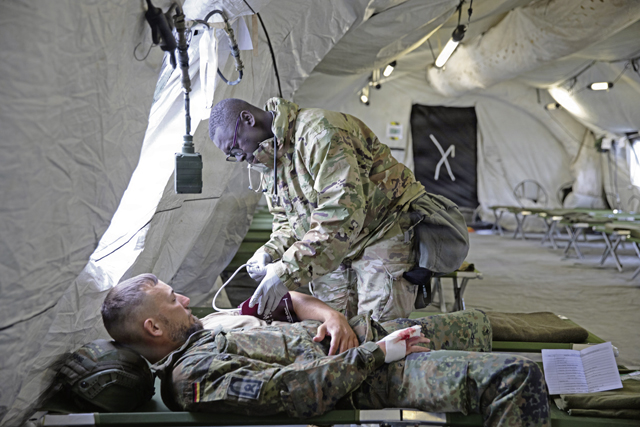
U.S. Army Capt. Tony Onyingo, a public health nurse assigned to the 167th Medical Augmentation Detachment, 30th Medical Brigade, renders aid to a simulated casualty at the Sword 26 casualty staging area during training at Drawsko Combat Training Center, Poland, May 12, 2026. The training improves Soldiers’ ability to stabilize casualties and coordinate movement under realistic conditions. Although NATO allied medical practitioners commonly use a CSU, the U.S. Army has not previously trained with the use of a CSU during medical missions. During Sword 26, 30th Med Bde is practicing this innovation to gain lessons learned during a simulated LSCO flight as well as enhance interoperability with NATO medical allies. (U.S. Army photo by Pfc. Kaiden Silversmith)
U.S. Army Soldiers assigned to the 30th Medical Brigade, 21st Theater Sustainment Command, off-load a simulated casualty after providing medical aid during Sword 26 casualty staging area training at Drawsko Combat Training Center, Poland, May 12, 2026. Casualty care training builds confidence and improves unit readiness during high-stress situations. Although NATO allied medical practitioners commonly use a CSU, the U.S. Army has not previously trained with the use of a CSU during medical missions. During Sword 26, 30th Med Bde is practicing this innovation to gain lessons learned during a simulated LSCO flight as well as enhance interoperability with NATO medical allies. (U.S. Army photo by Pfc. Kaiden Silversmith)
U.S. Army Sgt. Charles Dubin, a practical nursing specialist assigned to the 519th Hospital Center, 30th Medical Brigade, treats a simulated casualty at the Sword 26 casualty staging area during training at Drawsko Combat Training Center, Poland, May 12, 2026. The event strengthens tactical medical skills and reinforces the importance of rapid casualty care in a field environment. Although NATO allied medical practitioners commonly use a CSU, the U.S. Army has not previously trained with the use of a CSU during medical missions. During Sword 26, 30th Med Bde is practicing this innovation to gain lessons learned during a simulated LSCO flight as well as enhance interoperability with NATO medical allies. (U.S. Army photo by Pfc. Kaiden Silversmith)
 Twitter
 Facebook