 Twitter
 Facebook
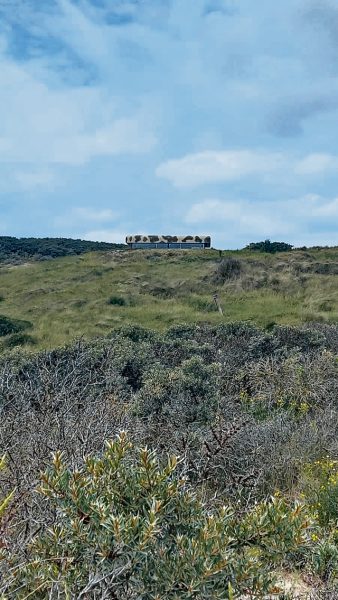
The Atlantic Wall Museum Noordwijk, Netherlands
When visiting the Netherlands, there are certainly many sightseeing and activity opportunities from a visit to Keukenhof and the tulips in spring, the miniature world of Madurodam, a tour of a windmill to a nice and relaxing canal cruise through endless kilometers of canals in Amsterdam. Bicycle riders will love thousands of kilometers of well-preserved bike trails that can become a challenge for car drivers especially in villages and cities.
Besides things like these, there is a completely different location to explore, and it will be of special interest for history enthusiasts. The Atlantic Wall Museum near the town of Noordwijk is well-hidden in the dunes. It presents a special piece of European history. A visit of this museum could be a unique and surprising opportunity to experience a former defense structure of the German Atlantic Wall, offering an in-depth insight into this historic defense system from World War II.
Thousand-kilometer defensive line
The Atlantic Wall was a several thousand-kilometer-long defensive line along the coasts of the Atlantic Ocean, the English Channel, and the North Sea. It was planned and partially constructed by the German occupying forces in France, Belgium, the Netherlands, Denmark, Norway, the British Channel Islands, and the German Reich between 1942 and 1944 during World War II. The purpose of the wall was to prevent an invasion by the Western Allies.
But let’s first dig into history a bit deeper. The northern dunes of Noordwijk functioned as a golf course in the years before World War II. This peaceful role shifted noticeably at the end of 1940, when the German Navy recognized the strategic value of this stretch of dune terrain and deployed roughly 180 soldiers to the area. Their arrival required the rapid establishment of essential infrastructure, prompting the construction of housing, sanitary facilities, and a range of defensive positions suited to the coastal environment.
During the war, approximately 80 structures were erected across the dunes. These installations varied widely in scale and purpose, from modest wooden shower buildings to substantial reinforced bunkers with concrete walls reaching thicknesses of up to 3 meters. Among these fortifications, the S414 bunker stood out as the largest and most demanding project, requiring an estimated 1,800 cubic meters of concrete. To illustrate the magnitude of this effort, a modern concrete mixer truck would need to deliver around 300 full loads to supply the necessary volume for this single structure.
Challenges
The logistical challenge of transporting such quantities of concrete across shifting dune terrain led the German occupying forces to construct a dedicated railroad track. This measure enabled the steady movement of materials to the site and underscored the scale of the undertaking. In the context of the wartime landscape, it represented a significant organizational and engineering effort.
Operating the outpost required other tasks. It was necessary to:
- provide meals for 180 men every day,
- assign guards and draw up schedules for them,
- develop defense strategies in case the enemy attacked,
- organize and conduct alarm drills and
- restock supplies.
Also important, a daily routine had to be established for the soldiers. This routine consisted primarily of building even more bunkers. Finally, two soldiers built one bunker.
The components of the bunkers were manufactured to standardized specifications which allowed for a rapid construction of many bunkers. Once completed, all the bunkers were covered with sand, and grass mats from the golf course were laid over the sand. Construction continued throughout the war until, shortly before liberation, most of the soldiers withdrew, leaving behind the cannons and bunkers.
Post-war
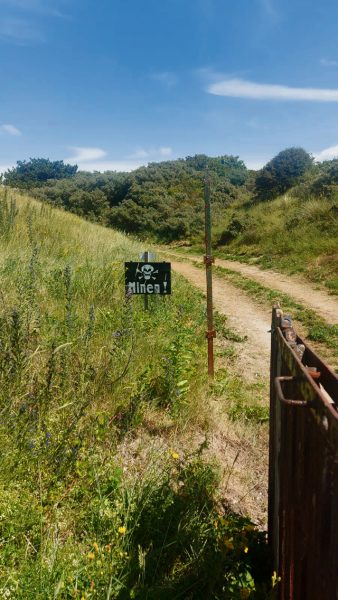
After the war ended and the weapons and ammunition were removed, the bunkers stood empty for a long time and served as a playground for the children and teenagers of Noordwijk. After accidents, officials closed the bunkers that were soon covered by sand.
In 2001, the Atlantic Wall Museum Noordwijk foundation was instituted and in 2004, the museum was opened in a former ammunition bunker. Also in 2004, excavations of the first corridors began and in 2007 they were opened to the public. The clearing of the second part of tunnels started in 2012 and in 2014, the original exhibition was moved from the ammunition bunker to the fire control bunker. Dedicated volunteers worked extensively removing tons of sand to make it possible for visitors to access the bunkers as well as the connecting corridors.
Today’s visitors to the Atlantic Wall Museum Noordwijk can explore preserved bunkers, including reconstructed interiors with original historical documents, a fire control bunker, artillery bunkers, ammunition bunkers, and residential bunkers, all connected through an underground tunnel system. You may find it interesting to view the exhibition that explains daily life and work in the bunkers, and their construction along the Atlantikwall.
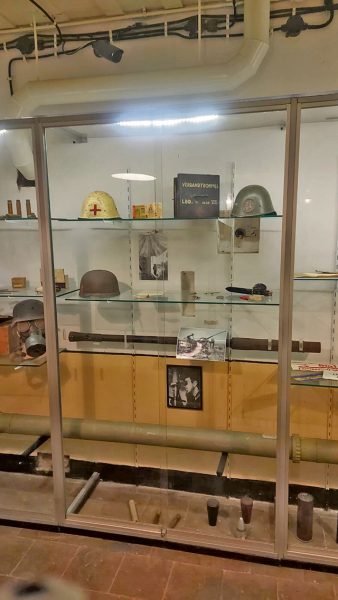
The museum’s fire control bunker can be explored independently with audio tours — one designed for adults and one for children — offering a clear and informative explanation of the site. The underground corridor system can only be visited only with a guide, and it is recommended to get tickets for these tours online in advance. However, we experienced that it is no problem to spontaneously join a tour. The guide explains in detail the former use of the rooms. One of the underground rooms, for example, was used as a cantina, the walls covered with wood and painted; pictures hung up to give the impression of looking out at the window to the sea. Today, the room looks like a basement with bare stone walls and an unpaved floor.
What you should keep in mind prior to your visit:
- The complex in the north dunes is not accessible to people with disabilities.
- Children must be accompanied by an adult.
- The museum does not have restroom facilities. If you need one, please visit the Engelandvaarders Museum, where visitors of the Atlantikwall Museum Noordwijk can use the facilities free of charge. The Museum is about 400 meters away.
- Dogs are not allowed in the museum.
You can view a video about the costal battery Noordwijk with this link:
https://atlantikwall.nl/de/category/nachrichten/
Enjoy an enlightening visit and a hands-on journey through history!


