Twitter
 Facebook
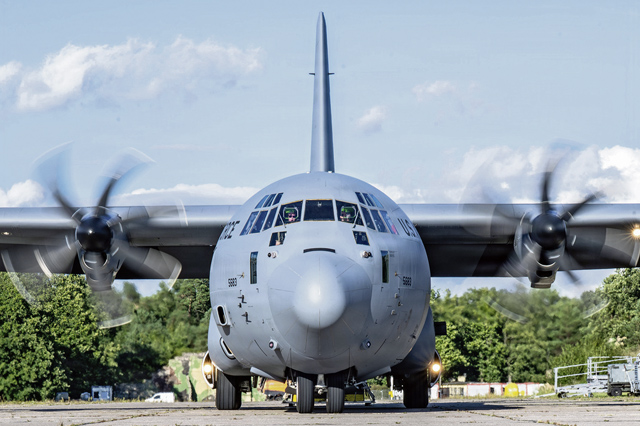
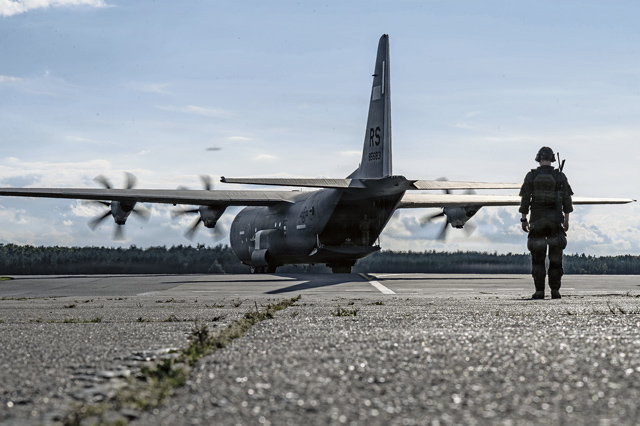
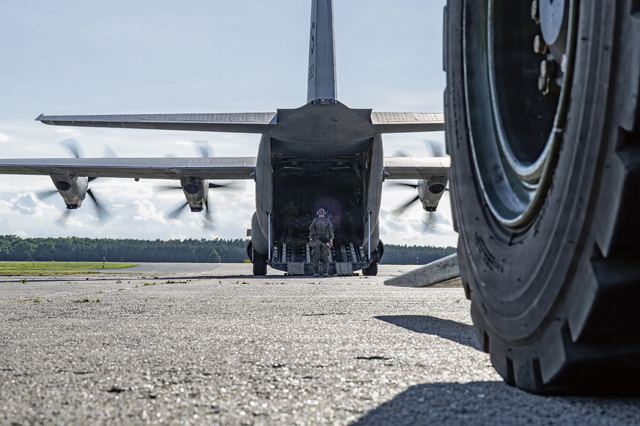
POWIDZ, Poland – Inside a C-130J Super Hercules, every member of the aircrew has an essential role to play. As pilots and loadmasters coordinate throughout each phase of a mission, their ability to communicate and execute together means the difference between a successful sortie and a missed objective.
For the 37th Airlift Squadron loadmasters, coordination took on a different rhythm during exercise Hussar Saber 26-4, where U.S. and Polish forces trained together across Poland strengthening readiness and interoperability amongst NATO Allies.
U.S. Air Force Tech. Sgt. Jade Morin, 37th AS loadmaster and flight chief of training, helped develop and implement the squadron’s training objectives during the exercise. Serving as an operations coordinator, she tracked training requirements, monitored accomplishments and helped ensure crews optimized the off-station training away from the unit’s home station at Ramstein Air Base.
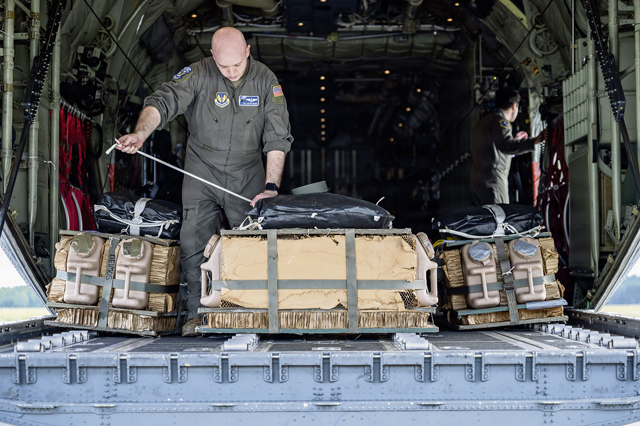
“We’re able to pack a lot of training into these two weeks,” Morin said. “We’re accomplishing the mission while also knocking out certifications and annual requirements that we need to get done.”
Due to the off-station nature of the training, Airmen in the squadron strengthened their ability to execute the mission away from their home station, thereby enhancing operational readiness and resilience with a NATO ally.
“Being away from home station gives our Airmen the experience of going through the entire process, from the brief and mission planning, to execution and the debrief,” Morin said. “It’s training we just can’t replicate in the same way at home.”
This experience was especially meaningful for U.S. Air Force Airman 1st Class Carter Wilson, 37th AS loadmaster, and one of the squadron’s newer Airmen.
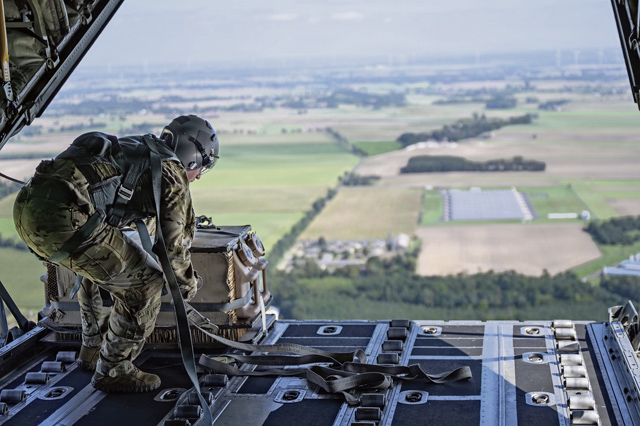
As a young Airman, Hussar Saber 26-4 marked Wilson’s first training event of this scale away from Ramstein. Flying frequently with the same crew strengthened his ability to learn, proficiency in core tasks and his communication skills in and out of the aircraft.
“Being out here, you’re flying every day and building chemistry with your crew,” Wilson said. “You get comfortable working together, and that makes you better at the job.”
The repetition in core tasks strengthened his ability to translate classroom training into hands-on experience.
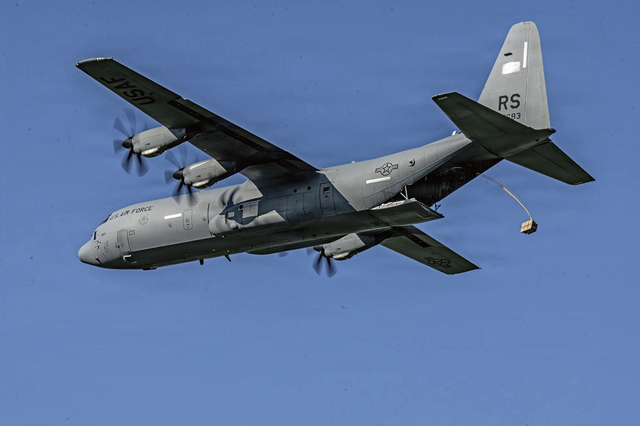
“You can study the numbers, procedures and rules, but there’s a lot of the job you have to experience firsthand,” Wilson said. “Being out here and doing it every day gives you that hands-on feel and a taste of what it’s like to operate away from home station.”
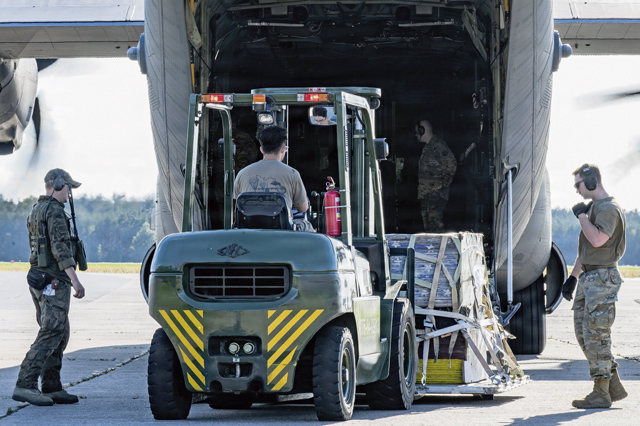
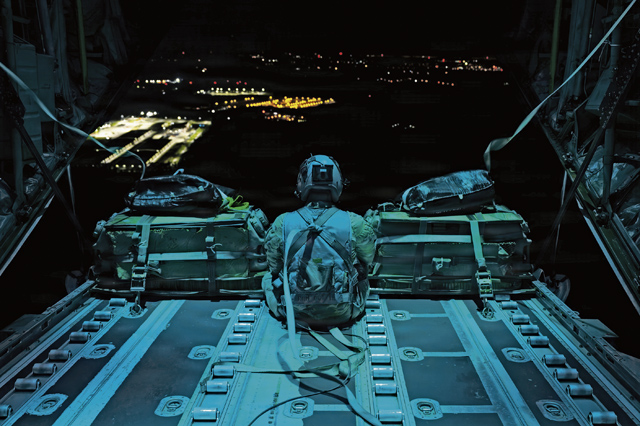
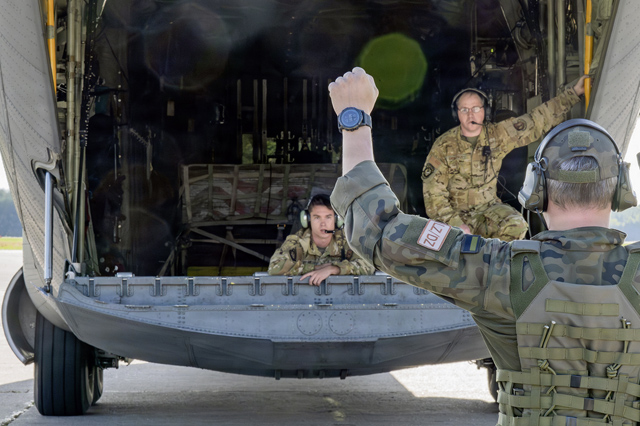
Loadmasters play critical roles throughout any airlift mission, from preparing and securing cargo before takeoff to coordinating with pilots and managing airdrop operations in flight. During Hussar Saber 26-4, those responsibilities were exercised alongside U.S. and Polish personnel in an environment designed to increase coordination between the forces.
Training outside the normal home-station routine also meant additional planning and communication between the front and back of the aircraft, as well as with personnel on the ground.
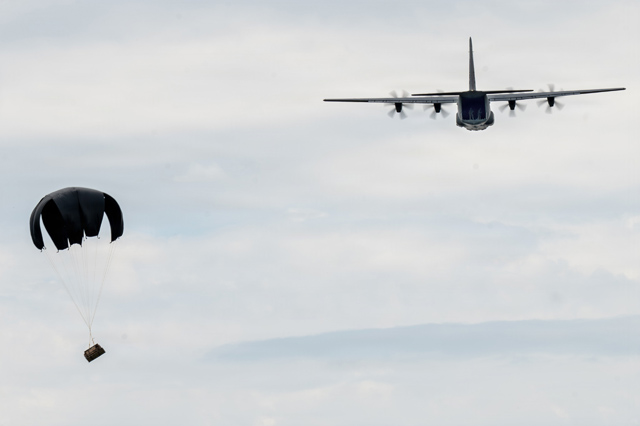
(U.S. Air Force photo by Airman 1st Class Joseph Curzi)
“When we’re doing things that we don’t normally do or getting people certified on something they haven’t done before, there’s another level of coordination,” Morin said. “You have more pre-briefs, more communication between the flight deck and the back of the aircraft, and more coordination with the ground teams, including our Polish partners.”
The partnership took on a personal dimension for the U.S. Air Force Senior Airman Natalia Skolyszewski, 37th AS loadmaster, whose Polish heritage provided an additional capability to the exercise.
Skolyszewski’s parents are from Poland, and she grew up speaking Polish. During Hussar Saber 26-4, she used her language skills to assist with mission coordination, communicating with Polish air traffic control personnel and helping the team work through flight-plan changes and other operational requirements.
“It’s really rewarding to be able to use something that’s part of my background in a strategic setting,” Skolyszewski said. “Normally, speaking Polish is something I use with my family. Here, I’m able to use it to directly support the mission.”
Her ability to communicate in Polish helped reduce a potential language barrier while allowing U.S. and Polish personnel to coordinate more efficiently.
“It’s pretty cool to be able to speak directly with professionals in the Polish military in their own language and know that I’m helping my team at the same time,” Skolyszewski said.
The experience also reinforced the importance of building relationships between Allied forces before they are needed in a real-world operation.
“Working with our Allies and maintaining those relationships is really important,” Skolyszewski said. “We work together, so having that personal connection makes it easier to understand each other and operate as a team.” Exercises such as Hussar Saber provide opportunities to establish familiarity and trust while developing the practical skills required to operate together.
“Integrating with our partner nations is extremely important,” Morin said. “We do these exercises year after year, and it’s really rewarding to see those relationships grow and the connections we’ve built with our partners.”
Hussar Saber 26-4 gave the squadron another opportunity to train as it would fight, away from home station, alongside NATO partners and prepared to rapidly respond when called upon.