 Twitter
 Facebook
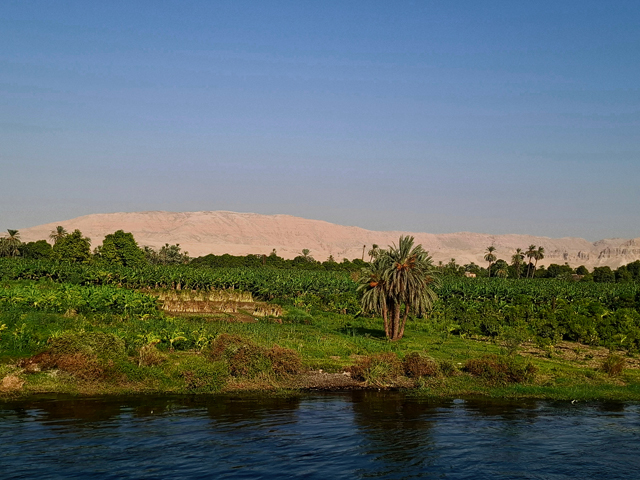
Rolling down the river
Germany is threaded with rivers — many within a short drive of the Kaiserslautern Military Community and countless others that invite exploration. They weave together history, scenic towns and countless places to discover, perfect for adventures in spring, summer and autumn.
The Moselle winds past vineyards, castles and picturesque towns such as Trier, Bernkastel‑Kues and Cochem before meeting the Rhine at Koblenz. The Rhine itself is famed for Rüdesheim, the dramatic Lorelei cliff, major cities like Cologne and Düsseldorf, and more than 40 castles that line its banks.
But when the days start to turn cool and gray, a change of pace can be just what you need. Think pyramids, ancient temples, millennia of history and stunning scenery. How about a Nile cruise leaving the cold behind, soaking up some sun, and exploring the past?
Cairo, pyramids and Tutankhamun
Cairo is Egypt’s largest city and its capital, sitting just south of the Nile Delta and in the middle of the desert, was founded around 969. It mixes ancient and modern Egypt, bustling streets beside centuries-old sites. Locals often call it Misr (the Egyptian Arabic name) or al‑Qahirah (“the Vanquisher”). Its population is estimated at about 13 million.
Ideal as starting point for a journey through ancient history, the three Great Pyramids of Giza were erected during Egypt’s fourth dynasty, roughly between 2580 and 2510 BC. Khufu’s (Cheops) pyramid, Khafre (Chephren) and Menkaure, the smallest. The Great Sphinx of Giza, which has kept a watchful eye on things, is believed to have been built during the Old Kingdom, around 2500 BC.
A visit to the New Egyptian Museum drops you into a whole section just for Tutankhamun, his tomb, found in 1922, is on display with his coffins, shrine, furniture, a chariot and personal belongings. The museum also holds more than 220,000 ancient artifacts and statues, plus two impressively well‑preserved boats recovered from another burial.
Stop by Ataba Square, Cairo’s biggest market and also home to the National Theater. Wander the old alleys, visit one of the famous mosques, two large Coptic churches, or a synagogue, sip mint tea or mocha, soak up 1,400 years of history, and finish with a peaceful walk along the green‑lined Nile.
Start your cruise in Cairo or take a sleeper train or short flight to Luxor and board one of the 400 Nile cruise ships. Drift past lush green riverbanks framed by mountains and sand dunes, with millennia of history unfolding along the shores.
Temples and the Valley of Kings
The temples from Luxor to Aswan are a testament to the rich history and architectural marvels of ancient Egypt. They offer a glimpse into the daily life and religious beliefs of ancient Egyptians, a must-visit destination for anyone traveling.
East Bank temples include Karnak Tempel, the largest religious complex, built over 1,500–2,000 years by 30 different pharaohs. Highlights include the towering Hypostyle Hall, the obelisk of Hatshepsut, and the Avenue of Sphinxes connecting it to Luxor Temple. Early morning visits are recommended, while a sound & light show offers a dramatic evening experience.
Luxor Temple was founded around 1400 BC and dedicated to the Theban Triad: Amun, Mut, and Khonsu. During the Opet Festival statues of the gods were paraded from Karnak. The temple features columns of varying heights, and layers of construction from different eras, including Roman and Islamic influences.
The Temple of Hatshepsut (Deir el-Bahari) on the west bank is a temple honoring one of Egypt’s few female pharaohs. Its terraces, colonnades, and integration into the cliffside make it architecturally stunning. The Colossi of Memnon, two massive figures mark the entrance to Amenhotep III’s mortuary complex and are a must-see for their scale and historical significance.
In the Valley of the Kings nearby you’ll find about 63 known tombs. This was the main burial ground for pharaohs and high nobles during Egypt’s New Kingdom (18th–20th dynasties). Edfu Temple is a well‑preserved Ptolemaic temple dedicated to Horus, a great example of ancient Egyptian architecture and religious life.
Kom Ombo is an unusual double temple that honors both Sobek and Horus, with separate courts and sanctuaries for each. It also has a Crocodile Museum with mummified crocodiles and related artifacts, and you can simply step off the ship and walk right into the temple.
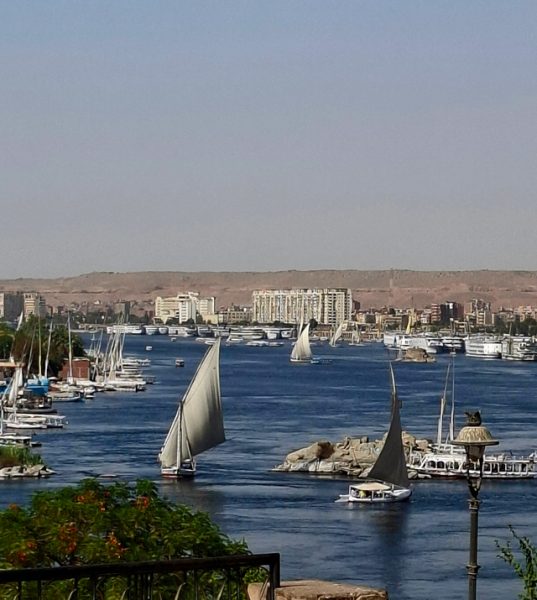 As you roll further along the river, the journey ends at Aswan, with even more sites. The unfinished obelisk, which would have been the largest ever, can be visited there. A felucca will take you to Kitchener Island with a stunning botanical garden, and you can round off your tour with a ride around Elephantine Island with a Nubian village, a beach and a view of the Old Cataract Hotel, where author Agatha Christie lived for three years, and was possibly inspired to write “Death on the Nile.”
The Aswan High Dam, officially opened in 1971, has since become a significant engineering and economic project in Egypt. The Abu Simbel temples were relocated between 1964 and 1968, led by a German company. The monumental effort was undertaken to save the temples from being submerged by the rising waters of Lake Nasser in a joint venture including engineers from 50 different nations.
Philae Temple was mainly built during the Ptolemaic era around 285–246 BC. and originally sat on a nearby island. In 537 AD it was converted into a Christian church. Between 1972 and 1980 it was carefully moved, and reconstruction on Agilkia Island was carried out by a French team.
If you wish to visit the Nubian Temple of Dendur, you’ll have to travel to New York’s Metropolitan Museum of Art. Originally located further south, it was donated to the museum after being saved from flooding.
After soaking in all these sites, kick back with a cool drink on board, or keep the vacation going at Red Sea beach towns like Hurghada or Sharm El Sheikh for a round of snorkeling, diving or just sunbathing on the sandy beaches and relaxing after days of historical wonders.
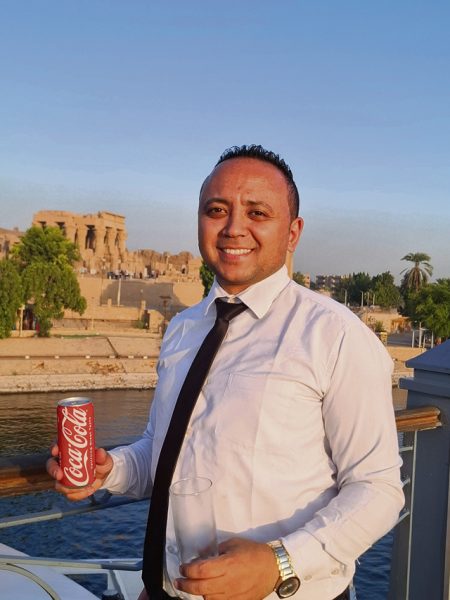
Good day and a warm welcome to our guests from around the world!
It is a pleasure to welcome you on behalf of the entire team. My name is Peter Bader and I am proud to work at the bar of our five-star ship hotel, the ‘Princess Sarah.’
We understand how important unforgettable memories are to you during your vacation. That is why, on board, we offer not only exceptional service but also the perfect blend of modern luxury and authentic Egyptian hospitality. Enjoy our exquisite cuisine featuring the finest local and international dishes and relax on deck as you immerse yourself in thousands of years of history.
Leave the everyday behind and experience the magic of the Nile with us. We look forward to welcoming you on board soon! Ahlan bik fi Misr, welcome to Egypt!


