 Twitter
 Facebook

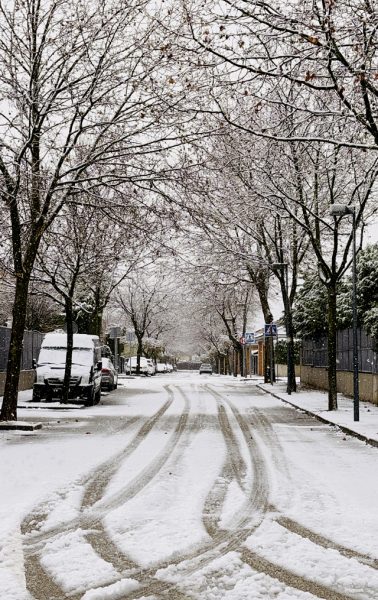
Winter in Germany brings a few rules that can catch newly arrived American drivers by surprise. There is no official winter tire season, M+S tires may no longer be enough, and the first cold morning is a bad time to discover that your battery or washer fluid isn’t ready for it. A little preparation now can save a lot of hassle later.
Ask around about winter tires in Germany and sooner or later somebody will tell you “O bis O,” meaning Oktober bis Ostern, or October to Easter.
It’s easy to remember and pretty sensible advice. It just isn’t the law.
Germany has what is known as a situative Winterreifenpflicht. The requirement for winter tires is determined by the road conditions, rather than a fixed date on the calendar.
If there is black ice, packed snow, slush, ice or frost on the road, your car must be fitted with qualifying tires on all four wheels.
So a warm, dry December day doesn’t automatically make summer tires illegal. Equally, an icy morning in October doesn’t give you a free pass because you haven’t changed yours yet.
If the conditions require winter tires and yours aren’t fitted, the car stays parked.
1. Get the tires sorted before you need them
If you’ve recently PCS’d to Germany, shipped a vehicle from the States or bought a car with tires already fitted, take a look at the sidewalls.
Since October 2024, M+S on its own is no longer enough to satisfy Germany’s winter tire requirement. You now need to look for the Alpine symbol, a three-peaked mountain with a snowflake inside it.
Older M+S tires were allowed during a transition period, but that ended on Sept. 30, 2024. All-season tires can still qualify for winter use, provided they carry the Alpine symbol.
While you’re down there, check the tread. Germany’s legal minimum is 1.6 mm, although ADAC recommends at least 4 mm for winter and all-season tires being used in winter conditions.
Check the pressure and look for cracking, uneven wear or damage too.
Don’t wait for the first snow before thinking about replacements. Order winter tires early and book your fitting in advance. From October onwards, workshop appointments fill up quickly as everyone has the same idea at roughly the same time.
2. Make sure the car can see, and be seen
Winter in Germany means short days, plenty of rain and an impressive amount of grime being thrown onto your car from wet roads.
Start with the lights. Check dipped and main beams, brake lights, indicators, fog lights and license plate lights. Give the lenses a clean while you’re there.
Then look at the wipers. If they’re leaving streaks, juddering across the glass or missing areas of the windshield, replace them before winter. A slightly annoying wiper in July becomes a much bigger problem on a dark Autobahn in November.
Have a look at the windshield itself too. Small chips are worth dealing with before months of cold weather and repeated temperature changes turn them into something more troublesome.
3. Winter-proof the fluids
Summer windshield washer fluid needs to make way for a winter version with sufficient frost protection.
This is easy to overlook, but you’ll notice very quickly if it freezes. Winter roads produce plenty of salty spray and dirty water, so a working washer system becomes particularly important.
The engine coolant should also have adequate antifreeze protection. ADAC recommends protection to around -25°C.
If you’re not sure what is already in the cooling system, don’t simply top it up with whatever antifreeze happens to be on the garage shelf. Different vehicles require different coolant specifications and the correct concentration matters.
Check the levels at the same time. Winter preparation is a good excuse to spot a small leak before it becomes a bigger one.
4. Check the battery before the cold does it for you
A battery can appear perfectly healthy through summer and struggle as soon as temperatures fall.
Cold weather reduces battery performance at exactly the time you’re using more electricity for lights, heating and demisters.
Pay attention to a car that has started turning over more slowly in the morning. If the battery is getting older, or you’ve already noticed signs that it’s struggling, have it tested before winter.
EVs and hybrids need a little winter attention too. Cold temperatures can reduce available driving range, so check that charging and pre-conditioning functions are working properly. The ordinary 12-volt battery shouldn’t be forgotten either. An electric car can have a perfectly charged traction battery and still be inconvenienced by a failing 12-volt one.
5. Take a look underneath
Tires, fluids and batteries tend to get most of the attention, but winter is hard on the rest of the car too.
Brakes are an obvious place to start. Check the condition of the pads and discs and don’t ignore vibration, pulling, grinding or unusual noises.
It’s also worth checking steering and suspension components, rubber boots and the underside of the vehicle for damage or deterioration.
Germany uses plenty of road salt during winter. If underbody protection is damaged or metal has been exposed, dealing with it now gives salt and moisture less opportunity to make matters worse over the coming months.
Before the first cold spell
Preparing a car for a German winter doesn’t require anything particularly exotic.
You want the right tires with plenty of tread, a healthy battery, effective brakes, working lights and wipers, and fluids that can cope when the temperature drops below freezing.
Most of these checks are straightforward but if in doubt, book an appointment at your local service center and get the professionals to check over your vehicle. The important bit is getting this done before the first icy morning rather than after it.
And keep O bis O in mind. October to Easter remains a useful reminder for winter tires.
Just remember that in Germany, the weather is the actual rule.
Sources:
German Road Traffic Regulations (StVO/StVZO), ADAC and current U.S. Army guidance. Information checked October 2026.


