 Twitter
 Facebook

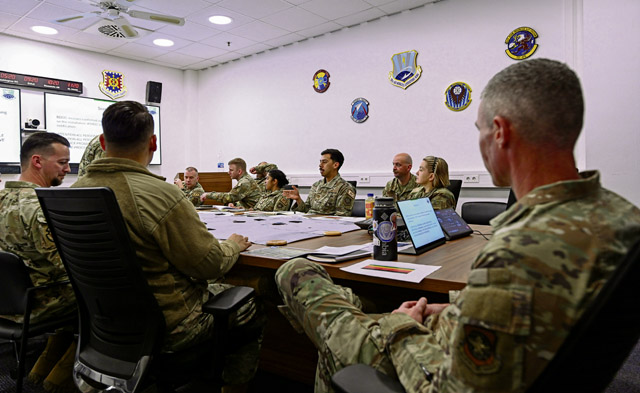
Tactical experts representing every squadron in the 721st Air Mobility Operations Group participated in an unmanned aircraft systems tabletop exercise on Nov. 4, discussing best practices to protect Airmen and assets while responding to threats.
Tailored UAS scenarios gave participants a chance to identify potential limitations and consider how their decisions could affect personnel and mission readiness during a drone incursion or threat.
“We said, let’s develop a training cycle that puts people in the best place to be aware of the threats, the real threats,” said Lt. Col. Michael Stinson, 721st AMOG director of operations. “Instead of hoping for the best, we’re prepared for the worst.”
Preparing for UAS threats requires Airmen at every experience level to consider unfamiliar situations.
“It doesn’t matter if you’re brand new or if you’re a guy like me who’s got nearly 20 years in, this is a new thing,” Stinson said. “Anytime there’s an opportunity to be more prepared for the unexpected, we’re going to take that opportunity.”
Preservation of life was the top priority in each scenario, and the discussions centered on making preparation relevant to the Airmen performing the mission each day.
“How does it apply to our people out there pushing pallets and turning wrenches?” said Master Sgt. Jason Ossowski, 721st AMOG deputy director of operations. “What are the things they need to know?”
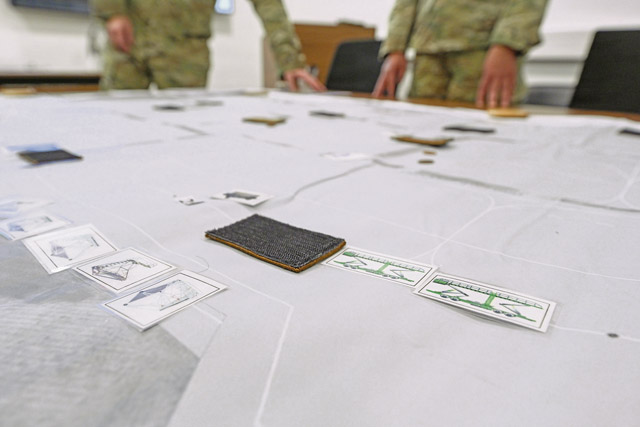
While the tabletop format might seem simple, by using a model of the flightline participants are to work through multiple scenarios at an intentional pace without hindering real-world operations. An emphasis on discussion rather than evaluation encouraged open communication and crosstalk.
“I was really happy how eager all of our staff and tactical experts were to participate,” Stinson said. “I was really pleased with the collaboration, and the cross talk that happened through it.”
By discussing each squadron’s role, participants examined how their individual actions would contribute to a coordinated response if a UAS incident were ever to occur.
“It’s really just getting the reps and just determining the correct course of action in any type of scenario,” Ossowski said.“[You] go through the processes of thinking like ‘what’s most important right now?’ ‘What should I do?’”
The 721st AMOG intends to continue UAS training at different levels, building on the perspectives and experiences of Airmen throughout the organization.
“Getting feedback from different people at different levels is going to help us develop this even more,” Ossowski said.
Through continued training, the 721st AMOG aims to strengthen the coordination and confidence Airmen need to protect one another while sustaining the mission.


