 Twitter
 Facebook
by Gina Hutchins-Inman
86th Airlift Wing Public Affairs
An old proverb – April showers bring May flowers — ties the month to spring, renewal, and a number of movable religious and civic observances. Its name derives from the Latin aperire, meaning “to open,” a fitting image for budding growth.
In Germany, as in the United States and elsewhere, April often begins on a playful note: April Fools’ Day, with its pranks and jokes, lifts spirits on the first of the month and can provoke a smile, or the occasional exasperated frown.
One of the most famous hoaxes occurred on April 1, 1996, when Taco Bell ran full‑page ads claiming it had bought the Liberty Bell to help reduce the national debt and would rename it the “Taco Liberty Bell.”
By contrast, April 1, 1918, marked a serious milestone: the founding of the Royal Air Force in the United Kingdom, the world’s oldest independent air force, which was established near the end of World War I and maintains a contingent at Ramstein Air Base.
Rain or shine, April often ushers in seasonal change, but it has also been the backdrop for turmoil and tragedy.
Historic events
On April 2, 1982, Argentina invaded the Falkland Islands, called the Malvinas by Argentina, sparking the Falklands War with the United Kingdom. The conflict lasted 74 days and resulted in more than 900 deaths, including Argentine and British service members and three island civilians.
April 4, 1968, brought the assassination of Martin Luther King Jr. in Memphis, Tennessee; his death prompted nationwide mourning and unrest and marked a pivotal moment in the U.S. civil‑rights movement. The first official federal observance of Martin Luther King Jr. Day took place on Monday, January 20, 1986, after the holiday was signed into law by President Ronald Reagan.
On April 15, 1912, the RMS Titanic went down in one of the most infamous maritime disasters of modern times. Among the passengers was Isidor Straus, who had emigrated from Otterberg near Kaiserslautern, became co‑owner of Macy’s in New York, and served in Congress. Returning from a visit home, he and his wife Ida boarded the supposedly “unsinkable” ship; they are said to have given their places in a lifeboat to others and chosen to remain together until the end.
Positive spring vibes
April also brings a brighter focus on the natural world: the first Earth Day was observed on April 22, 1970, when millions joined rallies and teachings that helped launch the modern environmental movement and paved the way for landmark laws and institutions. Observances now range from neighborhood cleanups, tree plantings, and school programs to large‑scale campaigns and policy advocacy led by organizations such as Earth Day Network. Schools, governments, businesses, and community groups use the day to promote sustainable practices and increase public engagement.
Each year the 86th Civil Engineer Squadron Environmental Office organizes a week of activities for all ages at Ramstein Air Base, featuring tree‑planting projects, guided nature excursions, and tours of water‑treatment facilities; watch for this year’s event schedule.
April has also been the month of notable, positive milestones. On April 27, 1994, South Africa held its first multiracial national elections—the landmark vote that brought Nelson Mandela to the presidency and is now commemorated as Freedom Day.
Other memorable April moments include Bob Marley’s One Love Peace Concert on April 22, 1978, which famously brought rival political figures together, and the election of Susanna M. Salter as the first female mayor in the United States on April 4, 1887, in Argonia, Kansas; she later lived to be 101.
Amazing, but true: On April 13, 1928,
Martin Cooper made the first handheld cellular phone call on a prototype that required 10 hours of charging for just 35 minutes of talk time. While on April 17, 1783, the American Revolutionary War officially ended with the signing of the Treaty of Paris, marking the independence of the United States.
Germany can look upon a centennial anniversary, when on April 6, 1926, the Deutsche Luft Hansa Aktiengesellschaft, founded in January 1926, began flight operations with its first scheduled flight. From Berlin-Tempelhof Airport, the Fokker-Grulich high-wing aircraft took off for a flight to Zurich via Halle, Erfurt, and Stuttgart.
These events highlight the diverse range of historical significance that April has brought to the world. From political and social changes to scientific breakthroughs, April’s events continue to influence and inspire people around the globe.
Tulip Mania
The Netherlands’ primary tulip season runs from March through mid‑May, with fields typically reaching their peak bloom around mid‑April. Famous viewing spots include Keukenhof Gardens, the Bollenstreek (near Leiden and Haarlem), and the Noordoostpolder.
The country is the world’s largest exporter of tulips, shipping more than 2.5 billion bulbs each year. In the early 17th century, rare tulips became highly sought after across the Netherlands. During the Tulip Mania that followed, the market’s collapse nearly provoked a broader social and political crisis.
Witches and May Poles
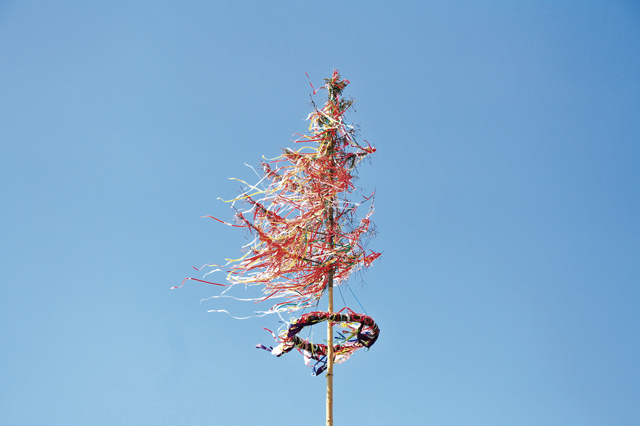
Alongside flower markets and spring fairs across the region, April in Germany ends with a lively folk tradition: on Hexennacht, mischievous youngsters play pranks such as draping cars and lampposts with toilet paper, “borrowing” trash cans, or decorating doorknobs with shaving cream. In many villages, young people also guard the Maibaum, a May pole festooned with colorful ribbons, through the night between April 30 and May 1 to protect it from would‑be thieves from neighboring villages.
April is full of surprises, bringing renewal, color, and freshness—so keep an umbrella handy, rain or shine. Frankfurt Airport is preparing to mark a milestone later this month; details are being kept under wraps for now, with the unveiling planned for next week’s edition. Stay tuned for exciting news!


