 Twitter
 Facebook
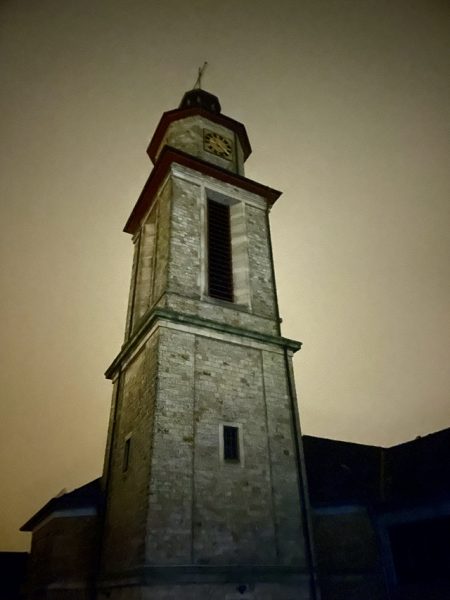
Queidersbach: Small in size, big in vision
This year, the United States celebrates the 250th anniversary of the signing of the Declaration of Independence, marked by festivities throughout the nation.
Yet, imagine a small community near Kaiserslautern that can trace its history back four times as far as this momentous event. Queidersbach will mark its 1050th anniversary in 2026 under the motto “Experience History — Shape the Future,” an extensive program of events is planned to celebrate the occasion.
The small village of Queidersbach with a population of 2,840, and additionally about 450 Americans and NATO members, is located about 10 kilometers southwest of Kaiserslautern. It is nestled in a natural meadow valley along the western edge of the Palatinate Forest, where the landscape transitions into the Sickingen Heights. Nearly two-thirds of its 1,500‑hectare territory is forested. Queidersbach also encompasses the localities of Forsthaus Stempelberg, Schweinstal, and Zuckerhof.
An eponymous creek, commonly referred to as Steinalb, flows through Queidersbach. Neighboring communities are Bann, Kaiserslautern, Krickenbach, Linden, Weselberg and Obernheim-Kirchenarnbach.
Experiencing history
The community was first recorded in 976, when Emperor Otto II granted his vassal Biso, the Bishop of Paderborn, land along the Queidersbach.
Until the late 18th century, the village of Queidersbach belonged to the Grand Court of the Rule of Landstuhl, governed by the barons of Sickingen‑Hohenburg. In 1794, during the First Coalition War, the left bank of the Rhine came under occupation.
From 1798 to 1814, during the period when the Palatinate belonged first to the French Republic and later to the Napoleonic Empire, Queidersbach was incorporated into the canton of Landstuhl within the Department of Donnersberg. At that time, it served as the seat of a Mairie that also included the village of Linden.
Following the agreements of the Congress of Vienna, the region briefly passed to Austria in June 1815 before being ceded to the Kingdom of Bavaria in 1816 under the Treaty of Munich. Under Bavarian rule, Queidersbach became part of the Landeskommissariat Homburg in the Rhine District, which was reorganized into a district office in 1862.
From 1929 to 1939, Queidersbach belonged to the district office of Kaiserslautern. Since 1939, the community has been a part of the district of Kaisers-lautern. After the Second World War, Trippstadt was within the French occupation zone of the then newly formed state of Rhineland-Palatinate and the administrative district of Pfalz. In 1972 Queidersbach was incorporated into the newly created collective municipality of Kaiserslautern-Süd during the first Rhineland-Palatinate administrative reform. This municipality subsequently merged with Landstuhl in July 2019.
The excitement is clearly visible in the faces of local mayor Harald Vierling and his wife Anita when they talk about the current year and Queidersbach’s 1050th anniversary. Preparations for this year-long major event are already in full swing.
A committed team — composed of municipal council members and enthusiastic volunteers — has joined forces to craft a diverse and lively festival year. The people of Queidersbach have already shown their talent for hosting remarkable celebrations: even the 1000‑year anniversary, held five decades ago, still lives on as a splendid and unforgettable event in the memories of many residents.
Shaping the future
The festive opening was marked by the New Year’s reception on Jan. 11. In addition to performances by the fanfare band and the men’s choir, the Star Singers paraded through the hall. Just a few days later, the traditional grand session returned, kicking off the carnival season punctually at 8:11 PM.
When spring arrives, activities will continue in a sporty and sociable manner. In March, the community invites people to a guided hike of around twelve kilometers along the culturally and historically significant Walkmühltal hiking trail, with two refreshment stations providing the food and drinks. The delightful month of May will be welcomed with a three-day celebration. From May 1 to 3, visitors can expect a weekend full of music and dance, and fun and activities for the whole family.
Big celebrations in the summer
Summer will be all about history and celebrating. In June, a museum festival at the local history museum will make the town’s history tangible for visitors. The grand highlight will be the big village festival from Aug. 7 to 9 at the village square. There will be plenty for guests to enjoy, traditional crafts can be experienced up close in the old forge, and children can let off steam in a village rally. Older visitors can enjoy a specially brewed festival beer made for the anniversary. The highlight of the festival weekend will be the large parade through the streets of Queidersbach on Aug. 9.
Welcoming yet another new year together
Even as autumn and winter arrive, the festivities will continue without interruption. After the October fair, the men’s choral society will host an autumn concert, accompanied by another museum day. The eventful year will draw to a close on Dec. 31 with a community-wide New Year’s Eve celebration. To preserve the memories of these special months, the Open Channel will document the festivities and present a film compilation at the end of the anniversary year.
Mayor Harald Vierling is eagerly looking forward to celebrating the anniversary alongside local clubs and neighboring communities. “The community wishes to honor the ties between its past, present, and future. From the festive opening in January to the New Year’s Eve celebration, this year is meant to be enjoyed in a spirit of togetherness and to further strengthen our already vibrant village community,” he says, warmly inviting guests from near, far, and even from across the seven seas to join in the festivities.


