 Twitter
 Facebook
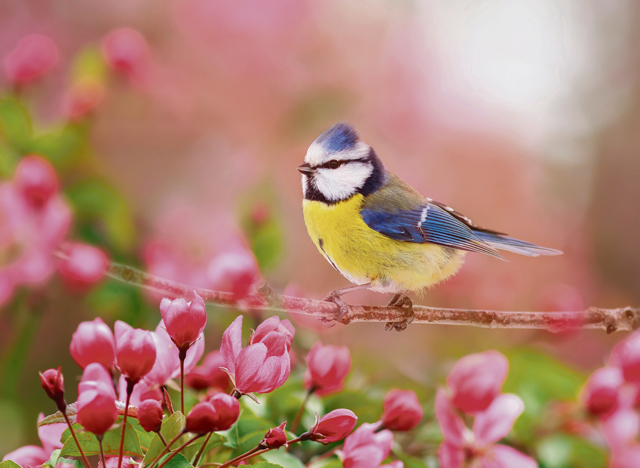
Willkommen im Frühling!
Welcome to spring!
Meteorologists mark the start of spring on March 1, while traditional calendars place it on Friday, March 20, the year’s first equinox, when day and night are in perfect balance at twelve hours each.
March is named after Mars, the Roman god of war. Originally known as Martius in the Roman calendar, this month marked the beginning of the military campaign season and agricultural activities, with March often considered the first month of the year.
In any case, it’s the season when the world stirs from winter’s sleep: daffodils, tulips, and hyacinths, along with early bloomers like crocus, snowdrops, and lily of the valley, splash the countryside with color and fresh green. Step outside to enjoy longer days, cheerful birdsong, and the sun’s warming, energizing light.
There’s plenty happening around the Kaiserslautern Military Community: Easter egg markets, spring and flower fairs, flea markets, and bright decorations popping up across the villages, panoramic hikes and more. This year Ramadan will conclude on March 19 or 20 depending on the location, Jewish Passah (Passover) begins April 1, while Good Friday falls on April 3 and Easter is on April 5.
Easter traditions in Germany
Many Easter traditions, such as the Easter bunny, egg hunts and chocolate or candy bunnies, are quite similar in the U.S. and in Germany, however, there may be a few customs you are not familiar with.
In Germany, Easter is historically a Christian holiday with church services on Friday, Sunday and Monday. Both Good Friday (April 3) and Easter Monday (April 6) are public holidays in Germany and all stores, banks and official offices are closed. Switzerland and the Netherlands are closed on Friday, while Luxembourg, France and Belgium treat Easter Monday as a public holiday.
Not only does Easter mark the end of Lent, it also sweeps you into the spring feeling with a number of German customs to go along with it. As elsewhere in the world, children enjoy blowing out eggs, colorfully dying them and are eager to hunt for the ones the Easter bunny has hidden for them.
Green dishes and false rabbits
Beginning the weekend of celebration on Thursday, referred to as “Gründonnerstag” (green Thursday) by Germans, may not be so familiar. Tradition has it that some families only eat pure vegetarian meals, preferably in green. Popular dishes include spinach with potatoes and fried eggs, potatoes with green herb sauce, a specialty from Frankfurt, or egg salad with mustard and herb dressing.
In honor of St. Peter, who was a fisherman, fish is typically served, fried or steamed, on Friday. Salmon with potatoes and green asparagus is popular, while kids may prefer simple fish sticks. An Easter Sunday dish could be “falscher Hase” (false rabbit), a type of meatloaf, or the traditional Easter lamb, served with rosemary potatoes and fresh spring vegetables. Typical desserts include carrot cake, a braid shaped cake called “Osterzopf” or cakes and cupcakes with fresh fruits and cream. Chocolate Easter bunnies, eggs, chicks and other sweets remain the all-time favorites for younger (and older) children.
Bonfires, egg shooting, Easter trees
Easter bonfires are lit in some villages, which traditionally served to drive winter spirits away. In some parts of Germany, it is common to burn rotten wood and old furniture, no longer needed clothes and shoes, and even rags in the “Lumpenfeuer” (rag bonfire), so as to clear the house of unnecessary items, an early form of spring cleaning.
A popular sport during the season is “Ostereierschiessen” (Easter egg shooting). Contestants shoot at paper goals marked with Easter figures or eggs with the aim of hitting as many “eggs” as possible. Each successful shot brings about a real egg and the winner of a whole tournament is crowned as the “Schützenkönig” (champion marksman).
You may find colorfully decorated flower bouquets or even wreaths with bright spring flowers such as crocus, primroses, tulips, daffodils and Easter ornaments in households and stores. Others decorate pussy willow or forsythia branches with small wooden eggs, bunnies or lambs or tidy up their front yards by hanging ornaments on bushes. Some communities even offer colorful and elaborate Easter trees in traffic circles or on market squares.
A somewhat older tradition is to pull moss from below trees and shrubs and bind it into natural Easter baskets for the bunny to fill with eggs and small gifts.
Along the coastal regions of the North and Baltic Seas, the Easter bunny likes to hop around the beach, lay eggs in the sand and children can dig for the precious “seafood” with buckets and shovels.
Peter Cottontail
Rabbits have historically been seen as a symbol of fertility (offspring can be up to 20 bunnies). In addition, in Byzantium a rabbit was an early symbol for Christ. Both in Greek and Germanic mythology, rabbits were considered to be holy animals for Greek Goddess Aphrodite and for Germanic Spring and Fertility Goddess Ostera.
According to legend, children were sent to meadows to search for eggs in Zürich, Switzerland, and since they more often saw rabbits than hens, they believed that the long-eared animals had left the eggs. In Germany, the rabbit first became popular in 1678 (Reformation time) by Protestant families and the bunny finally became a “star” thanks to the chocolate industry!
And not to forget, St. Patrick is celebrating his special day on March 17. He was a fifth century Romano-British bishop who is widely known for converting many Irish to Christianity. St Patrick’s Day is a national holiday in Ireland with large public events, civic ceremonies, and a major parade and festival in Dublin that runs across several days and includes street performances, concerts, family events, and cultural programming. Pubs around Kaiserslautern will also have special events on or shortly after March 17.
Spring forward
Remember to set your clocks forward one hour on March 29 for Central European Summer Time (CEST) to enjoy an extra hour of daylight. The Gartenschau in Kaiserslautern opens on April 1 with plenty of fun and activities. Whatever you do, welcome March and early April, savor nature’s revival, and celebrate the season.


