 Twitter
 Facebook
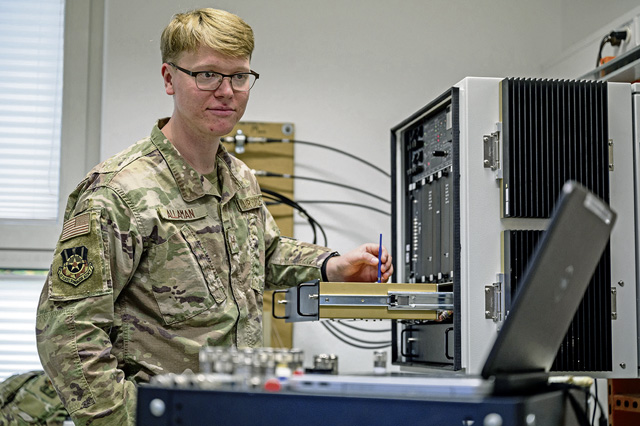
A 17-member team of radar, airfield and weather systems specialists at Kapaun Air Station, Kaiserslautern are responsible for keeping U.S. and allied air fields operational across Europe and Africa.
The European Regional Main-tenance Center provides 24/7 technical support for more than 100 airfields, ensuring navigation and landing systems remain functional in any condition. When a fault occurs with a radar or instrument landing system, the call often routes straight to Kapaun.
“We’re the first line of defense when something goes wrong,” said Master Sgt. Kent Parsons, ERMC supervisor. “If an airfield loses its instrument landing system or a navigational aid starts acting up, air traffic control reaches out to us immediately. Our team either troubleshoots remotely or works with local maintainers to restore the system.”
The Airmen at the ERMC specialize in navigational aids which are the critical systems that guide pilots during takeoff, approach and landing, especially when visibility is limited.
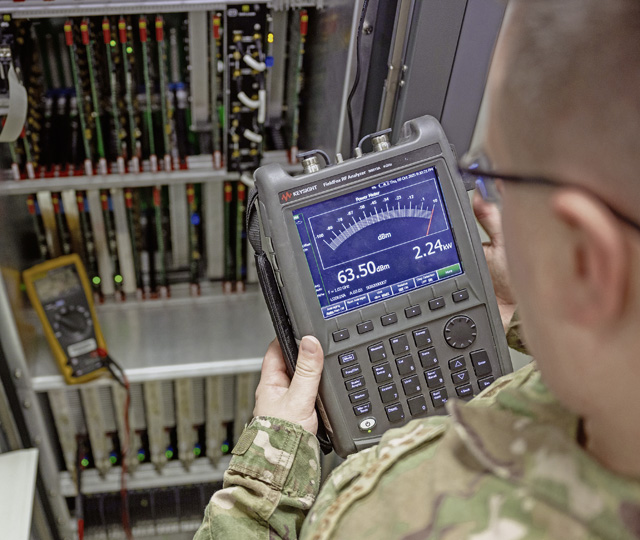
“When conditions turn rough, that’s when our work matters most,” Parsons said. “Pilots rely on these systems to get home safely.”
The ERMC works alongside other centers in Japan and Oklahoma City to maintain continuous global coverage. Their mission ensures that a call for help, no matter where from, is answered by a qualified expert who can diagnose and correct the problem quickly.
“We’re a small team with a huge reach,” Parsons said. “During our shift, we’re covering Europe and Africa, and at the same time, backing up our partners in the Pacific and stateside. It’s a constant relay that keeps global air operations running.”
Much of their work happens quietly, but the effects are visible across multiple theaters. In recent months, ERMC technicians executed emergency repairs at RAF Lakenheath, United Kingdom, and Lajes Air Base, Portugal, restoring critical landing systems and allowing mission-essential flights to continue uninterrupted.
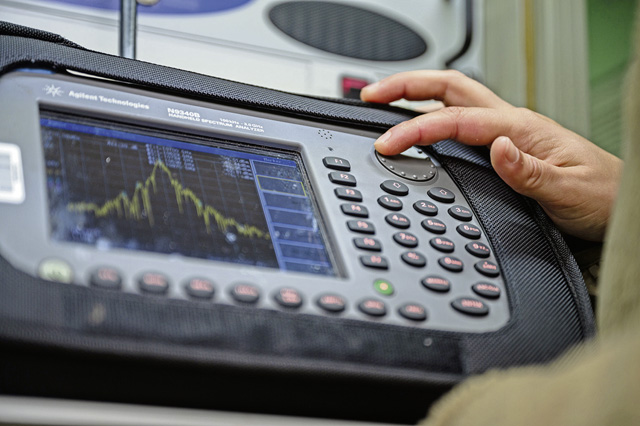
“We handle hundreds of service calls each year and well over 400 TDYs a year,” Parsons said. “If a system can’t be fixed remotely, we send someone on site.”
The high tempo of this team requires a lot of coordination.
“Everyone here wears multiple hats,” said Staff Sgt. Rashad Haugabook, ERMC noncommissioned officer in charge of production control. “We track every job across the region, manage workload and make sure each maintainer has what they need to keep the mission moving.”
The ERMC also prepares Airmen for forward deployed missions by offering hands-on training before they head downrange.
“Before Airmen deploy, we train them here on the same systems they’ll see downrange,” Haugabook said. “That way they’re not walking into something cold.”
The unit’s selectivity is key to its success.
“These positions are hand-picked,” Parsons said. “We get applications from across the Air Force and choose the best fit for this environment. Everyone here earned their place and that creates a lot of pride in their work.”
No matter the time or place, Airmen of the ERMC ensure that navigation systems work exactly when they’re needed most.


