 Twitter
 Facebook
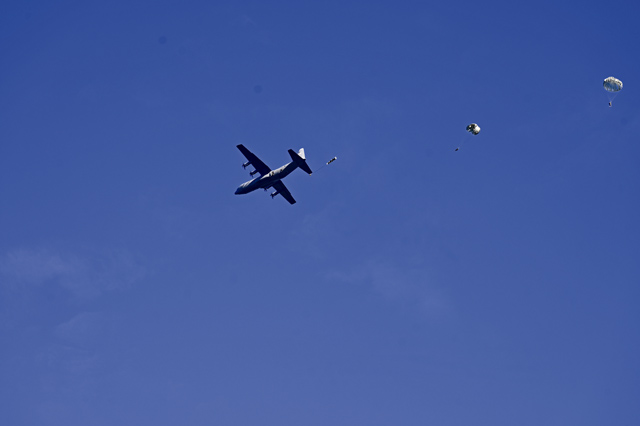
Typically during a military exercise, it is assumed that communications exist, but what happens when it doesn’t?
In comes Exercise Heavy Rain 2025.
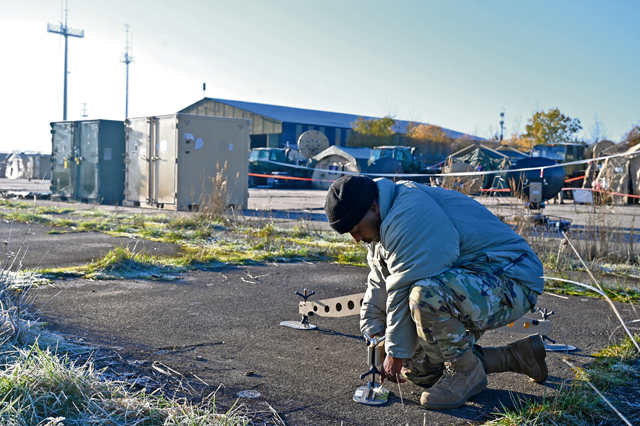
“Heavy Rain is a squadron-up exercise to prepare Airmen by creating a ‘field of dreams scenario’ that pushes them to develop tactics, techniques, and procedures for surviving and operating in a challenging environment,” said U.S. Air Force Col. Scott Weed, 435th Communications Operations Group commander. “The exercise emphasizes observing, experiencing, and feeling the real-world impact of communication limitations, forcing participants to work through workflow disruptions, process jams, and complete communication denial.”
Approximately 200 personnel immersed themselves in a scenario consisting of realistic and challenging assaults on Command, Control, Communications, and Computer Systems; encompassing effects across cyber, ground and space-based systems. The core focus was on three critical areas: Command and Control Enablement, Mission Assurance, and Agile Combat Employment concepts.
The exercise was a group effort including Allied partners and the U.S. Army 44th Expeditionary Signal Battalion. Additionally, the 37th Airlift Squadron from the 86th Airlift Wing, provided critical air support, including airdrops of equipment and personnel, further enhancing the realism of the training.
10 Dec 25
In its fifth iteration, Heavy Rain is the only place in the Air Force where this type of exercise can occur because it is the only place where this many Air Force Specialty Codes reside in one organization.
Heavy Rain 2025 took place across multiple geographic locations, including Ramstein Air Base and Landstuhl; Grostenquin, France; and Chievres Air Base, Belgium.
“In one of the locations, the host nation said we couldn’t use certain equipment, so we installed an alternate solution,” said U.S. Air Force Col. Leland Cowie, 435th Air Ground Operations Wing commander. “It was a real-time capability that we exercised.”
The challenges weren’t limited to simulated threats. The exercise lived up to its name with periods of actual rain and another unplanned inject came from beyond Earth’s atmosphere.

“We experienced actual space weather,” said Cowie. “It provided a valuable opportunity to evaluate our response to both nefarious and natural disruptions that could emerge during wartime.”
Airmen confronted communication and movement disruptions from electronic warfare attacks, fostering creative problem-solving and decentralized decision-making within a mission command framework.
Before there was Heavy Rain, there was Light Rain, an academic block that laid the groundwork for the exercise.
“Heavy Rain 2025 is the most realistic and largest contested C4 exercise to date for the Department of the Air Force,” explained U.S. Air Force Maj. Sean Miller, 1st Combat Communications Squadron director of operations. “Driven by real-world lessons and emergent technology, we’re focusing on readiness by aggressively stress-testing alternative communication architectures, including high frequency radio, terrestrial networks, and secure, mobile communication nodes.”
Cowie explained Exercise Heavy Rain aligns with guidance from U.S. Air Force Lt. Gen. Jason Hinds, U.S. Air Forces Europe-Air Forces Africa commander, who emphasizes the need for Airmen to be ready to generate airpower from “minute one.”
Heavy Rain needs to be incorporated into all major Department of War exercises, added Weed.
“Reliable connectivity is more important than ever in the operational environment, so it is imperative that communicators and mission owners push the status quo together to make our Airmen more ready,” said U.S. Air Force Lt. Col. Melanie Strodtman, 1st Combat Communications Squadron commander. “What we learn from Heavy Rain 25 will cascade out to our partners across the theater and the Department of the Air Force. This will allow us to maintain freedom of action within the Electromagnetic Spectrum.”


