 Twitter
 Facebook
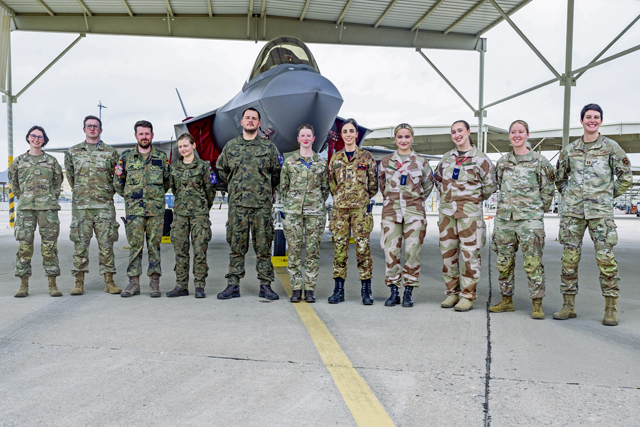
LUKE AIR FORCE BASE, Ariz. — The F-35 International Intelligence Formal Training Unit graduated its most diverse class in program history during a ceremony on Feb. 11. Class 2026002 included seven students from five partner nations, featuring the first-ever graduates from Poland and Germany.
The ceremony marks a significant milestone in the F-35 program’s international training mission, which is designed to build a shared foundation of capabilities and tactics among allies.
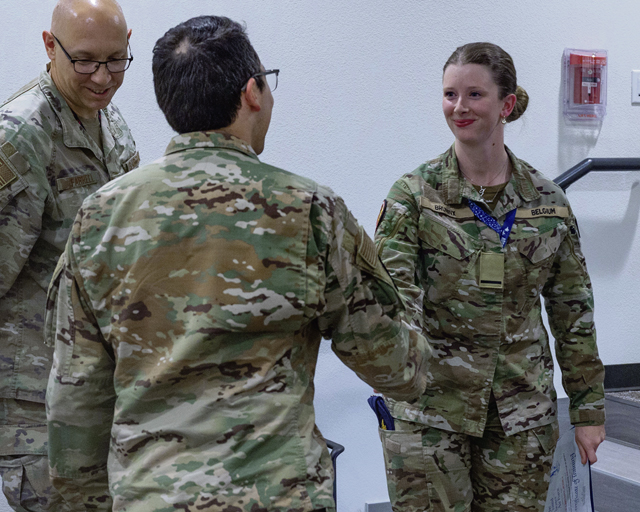
“The F-35 International Intelligence Formal Training Unit provides advanced instruction to intelligence professionals from 11 different partner nations: Belgium, Norway, Netherlands, Denmark, Germany, Italy, Finland, Poland, United Kingdom, Australia and Canada,” said U.S. Air Force Capt. Julie Fleming, 56th Operations Support Squadron chief of combat intelligence cell. “This course sets a foundation of shared capabilities and tac-tics that directly contributes to the operational readiness of the U.S. and our partners.”
To achieve this, the train-ing is focused on collaboration with allies.
“F-35 IIFTU train-ing is con-ducted in a shared environment because building interoperability in training will enable us operationally,” said Fleming. “The course is designed with events where students must collaborate and work together to solve complex problem sets. This builds relationships across their respective units, ultimately strengthening our valued partnerships through working and training together.”
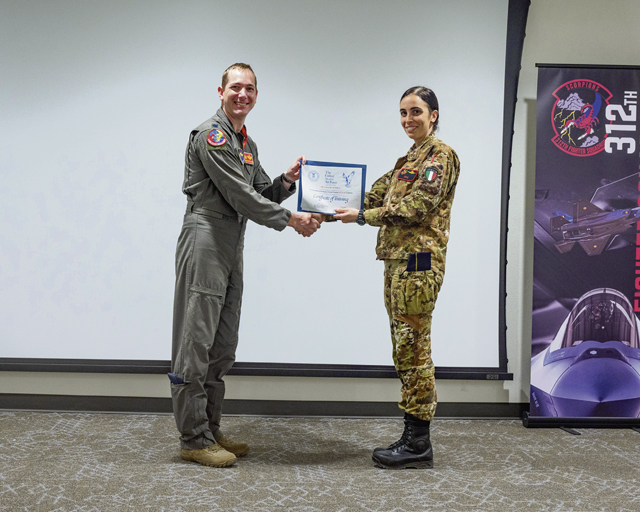
Students in the F-35 IIFTU learn to analyze the threat environment and potential adversaries while providing integrated intelligence support for F-35 operations, including mission research, threat assessments, pre-flight briefings and post-mission debriefings across all phases of mission planning.
“Successful employment of the F-35 as a weapon system requires detailed intel integration,” said Fleming. “This course sets a foundation of shared capabilities and tactics that directly contributes to the operational readiness of the U.S. and our partners.”
As the Air Force’s premier F-35 training wing, Luke Air Force Base plays a critical role in preparing coalition forces for future operations. The F-35 IIFTU contributes to that mission by developing intelligence professionals who directly enhance mission effectiveness and allied operational readiness within the F-35 enterprise.
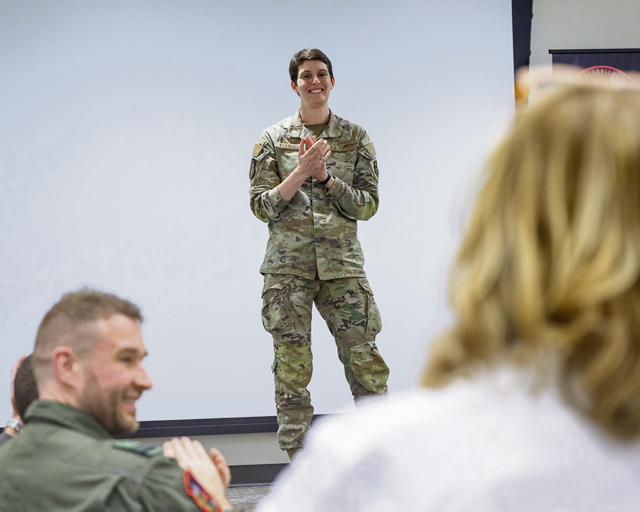
mission planning.


