Twitter
 Facebook
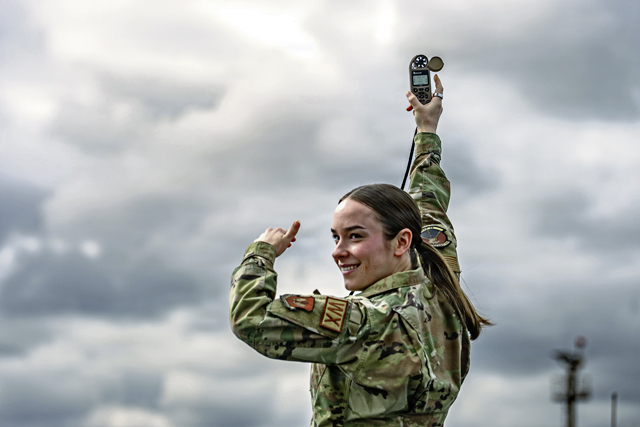
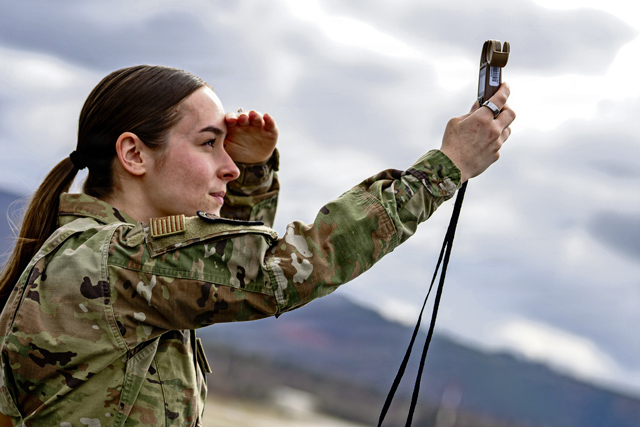
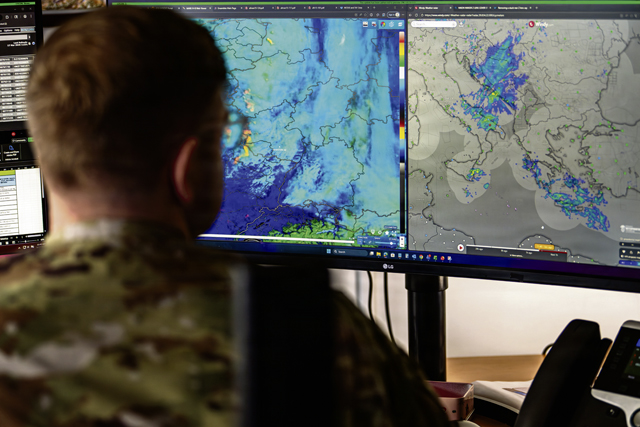
Kaleidoscopic radars flicker across glowing screens as weather patterns shift across Europe. Prior to aircraft taxiing onto the runway, Airmen assigned to the 86th Operations Support Squadron weather flight are already collecting data that will shape the mission.
Before every flight, there is a forecast.
Operating 24/7, weather Airmen monitor atmospheric conditions, analyze data and deliver forecasts that inform aircrew, commanders and base agencies across the U.S. Air Forces in Europe – Air Forces Africa.
“It depends on what shift you’re working,” said Senior Airman Mackenzie Martie, 86th Operations Support Squadron weather forecaster. “We’re a 24-hour shop. Day shift is more customer service, swing shift is preparing forecasts, and mids is briefing. That’s when we’re briefing all the aircraft.”
Forecasting is not just reading data. It is interpreting it, especially when information does not align.
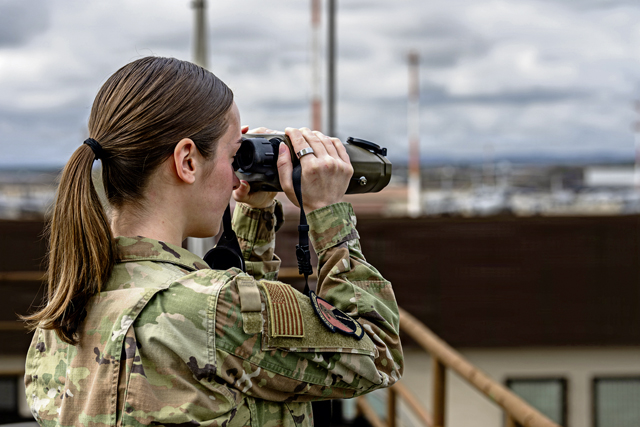
“When models don’t agree, that’s the stressful part,” Martie said. You’re trying to figure out what’s actually going to happen and make the best call you can.”
That call matters.
“If we didn’t exist, pilots wouldn’t be able to properly plan,” she said. “They could fly into hazards or run into conditions they weren’t expecting.”
For Staff Sgt. Matthew Nicholson, 86th OSS weather forecaster and Air National Guard augmentee, the responsibility extends beyond prognostication.
“We give our Airmen a lot of responsibility early,” Nicholson said. “They’re on shift by themselves, making decisions and supporting real-world operations.”
That level of trust requires deliberate mentorship.
“The biggest challenge is figuring out how each person learns,” he said. “Once you understand that, you can teach in a way they’ll actually use when it matters.”
Airmen must be able to process all of the information coming at them quickly, all while staying organized and making decisions under pressure.
“You have things coming in from all sides,” Martie said. “You have to stay on top of it and keep everything moving.”
As aircraft prepare for departure, the forecast has already been completed. Behind every flight is a team of Airmen interpreting the atmosphere, making the call and ensuring operations move forward safely.