 Twitter
 Facebook
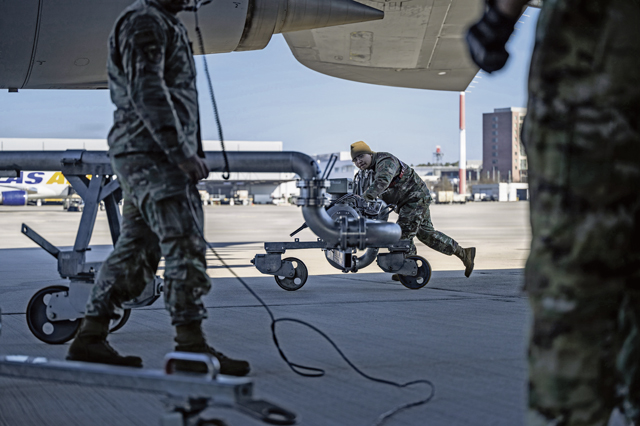
On the flight line, it can look simple: a hose connected, a deadman handle squeezed, a gauge rising as aircrew hustles.
For the Airmen of the 86th Logistics Readiness Squadron’s Petroleum, Oils and Lubricants shop, the scene on the flight line is just the final step in a much bigger system. Much of their work happens behind the scenes, keeping aircraft and vehicles moving across Europe and beyond.
“We provide all the fuel for three wings and five combat commands, ground products and jet fuels,” said Master Sgt. Matthew Bennett, 86th LRS Fuels Management Flight superintendent. “We have about 9 million gallons of fuel storage that we ‘QC,’ constantly testing the fuel, checking out the trucks.”’
POL manages storage, quality control and distribution of fuel and ground products that support Ramstein’s role in maintaining the Air Force’s “Global Gateway.”
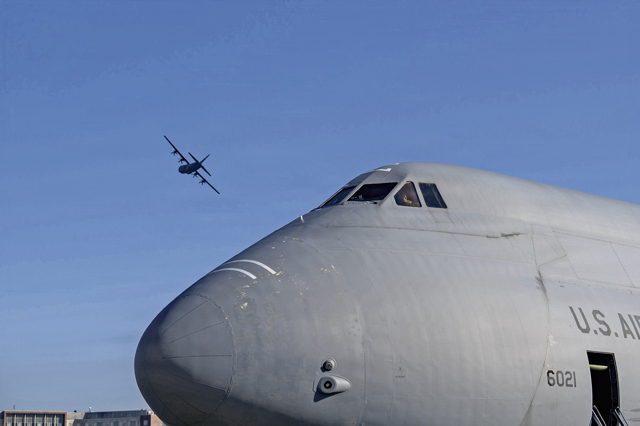
Behind the scenes, that mission includes maintaining the base’s hydrant system, an underground network of tanks, piping and pumps that moves fuel from storage to ramps without relying solely on trucks.
“Along with the refueling trucks and the aircraft, we also maintain all the fuel stored on base here,” McEwen said. “We’re responsible for maintaining the tanks and the piping system and all the pumps that can actually get fuel to the aircraft.”
POL also includes cryogenics, which involves providing, sampling and testing liquid oxygen, liquid nitrogen and fuel stored on base in a controlled laboratory setting.
Daily operations center on coordinating, tracking requirements, monitoring inventory and supporting takeoff times at any hour of the day.
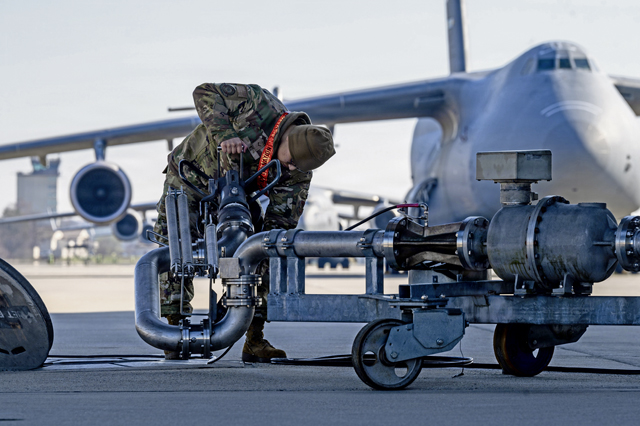
“Without fuel, these planes aren’t going anywhere,” said Staff Sgt. Nicholas McEwen, 86th LRS hydrants noncommissioned officer in charge. “Our impact is, anything you see flying was touched by POL.”
“Things definitely change on the fly for us,” he said. “We get a lot of quick turns here at Ramstein. Planes only have maybe an hour or two of ground time, and they need fuel to go.”
Airman 1st Class Dalayna Barrera, an 86th LRS fuel service center controller, said her job is to keep those moving parts aligned, whether she’s running day shift or night shift.
“It’s mostly just controlling, making sure everything on the flight line is getting the fuel it needs for the aircraft, whatever they’re requesting, making sure that they’re meeting their takeoff times,” Barrera said.
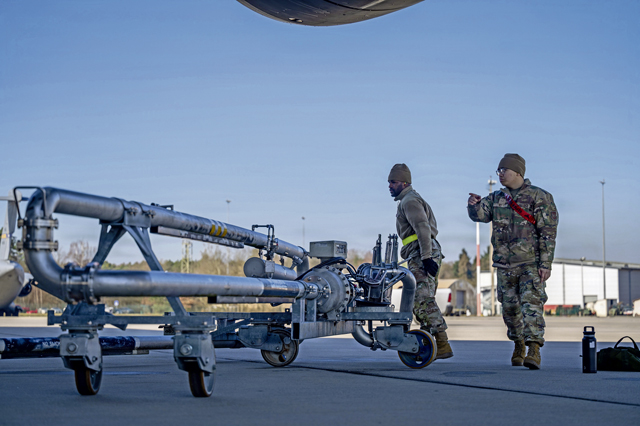
On nights, the focus can shift to an equally important mission, accountability.
“During closeout, we’re making sure that we’re keeping up with our log, and how much fuel we issued is matching what we put out,” Barrera added.
That accountability is crucial because the fuel volumes are large and must be tracked to the gallon. Ramstein’s scale and mission diversity makes its fuel operations distinct from those of many other bases.
“With fuel requirements, we’re supposed to be maintaining a certain level of fuel at all times,” McEwen said. “Right now, we’re running through 500,000-600,000 gallons of fuel a day. So just as fast as fuel is going out, it’s coming in.”
For many POL Airmen, that flexibility becomes personal growth, as they learn to adapt in a career field where schedules, requirements and priorities can shift in an instant.
“POL has brought me more discipline when it comes to being ready, being prepared for things that I don’t necessarily want to happen all the time,” Barrera said. “You take it as it comes.”
The team reiterated that they are close-knit, partly because the mission demands it. Long hours, constant coordination and the shared understanding that if any link in the chain breaks, everything slows.
“That team mindset becomes most visible during surges,” Bennett said. “When workloads can multiply, Airmen step outside their typical roles and no one’s complaining. Everyone’s just really willing to help each other out, we’re all doing it and it’s awesome.”
For 86th LRS fuels professionals, the Airmen who make it happen, it’s a point of pride shared across the flight line and the shops behind it. The mission isn’t just pumping fuel, it’s enabling every mission, sortie and operation at Ramstein.
“Everything that comes through this area comes through here,” Bennett said. “And we’re the ones that are putting gas on the planes to get it out of here.”


