Twitter
 Facebook
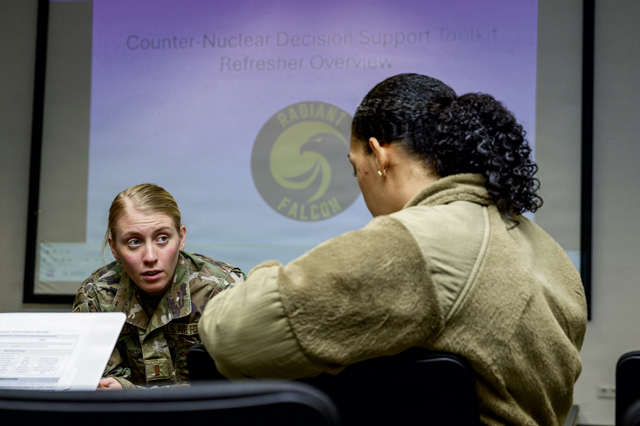
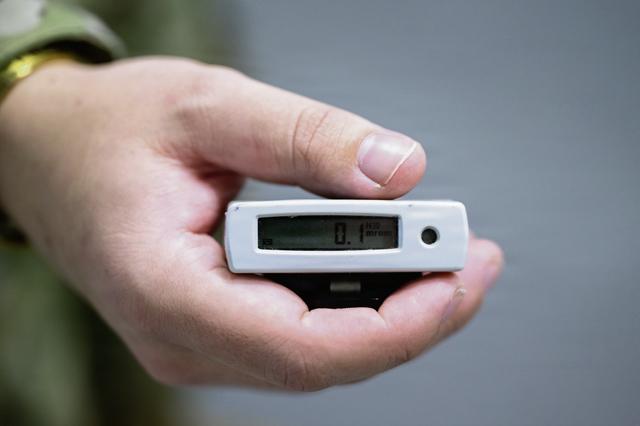
U.S. Air Force Airmen assigned to the 86th Operational Medical Readiness Squadron, the 86th Aircraft Maintenance Squadron, the 786th Civil Engineer Squadron emergency management flight, and the 86th Airlift Wing safety office, participated in exercise Radiant Falcon to obtain and strengthen proficiency in radiological contamination detection and decontamination safety techniques Feb. 12, at Ramstein Air Base. This exercise integrated hands-on training to bolster response capabilities within a simulated radiological contamination scenario involving an aircraft. The objective: to guarantee mission continuity while safeguarding personnel through efficient radiation detection and control.
“We’re trying to simplify how to assess an aircraft for radiation and contamination,” said U.S. Air Force Lt. Col. Andrew Wagner, U.S. Air Forces in Europe – Air Forces Africa surgeon general bioenvironmental branch chief. “These exercises allow us to relay information to commanders on the ground to better understand the risk associated with the mission and the health of the Airmen who are executing the mission.”
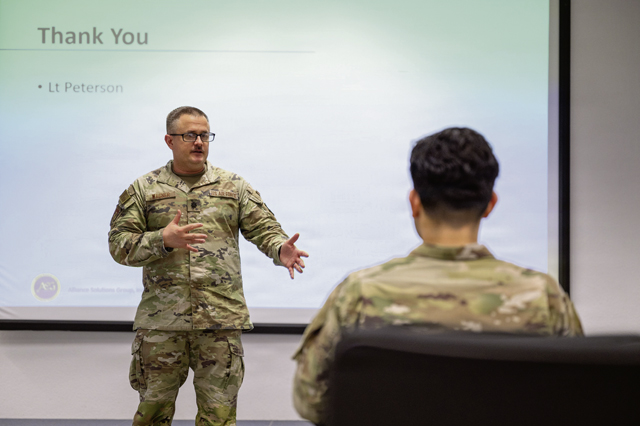
The methodical training began with comprehensive planning sessions and safety guidelines to lay the foundation for working within the field. Airmen assessed radiation safety principles and protocols before transitioning to scenarios that took them step by step in a controlled environment. Midway through the course, participants utilized their training in practical field conditions, reinforcing the importance of coordination between units and cultivating decision-making under pressure.
“The purpose of this exercise is to run through some of the plans or processes associated with the detonation of a nuclear weapon and if an aircraft were to fly through that plume,” said Senior Airman Eugene Chambers, 786th Civil Engineer Squadron emergency management journeyman. “If maintainers are going out to receive that aircraft, what are they exposed to, what are the processes that they need to go through to stay safe, what PPE do they need to wear, how are they getting out of their gear, how are they getting out of that without spreading contamination?”
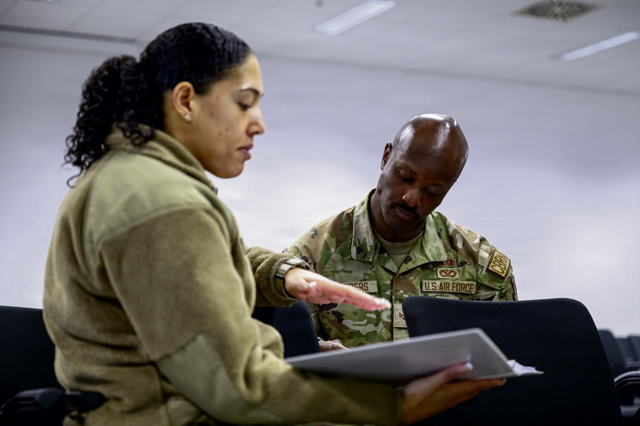
Radiant Falcon is a continued training exercise that USAFE-AFRICA leadership promotes in the interest of developing and expanding the scope of training of Mission Ready Airmen within different career fields. Each scenario practiced during Radiant Falcon focuses on the original objective of safeguarding the force and ensuring mission success. “It’s moderately important to train for things, even if you hope they never are required,” states Chambers. “Hopefully there isn’t a nuclear detonation in our area of responsibility, but in the event that there is, we’ve at least practiced the processes required for receiving aircraft that have been exposed to those types of environments.”
Key responders and maintenance personnel applied electronic radiation dosimeters capable of measuring exposure and identifying potential contamination onto the aircraft. Bioenvironmental technicians then gave health risk assessments and situational observations to commanders to direct mission decisions.
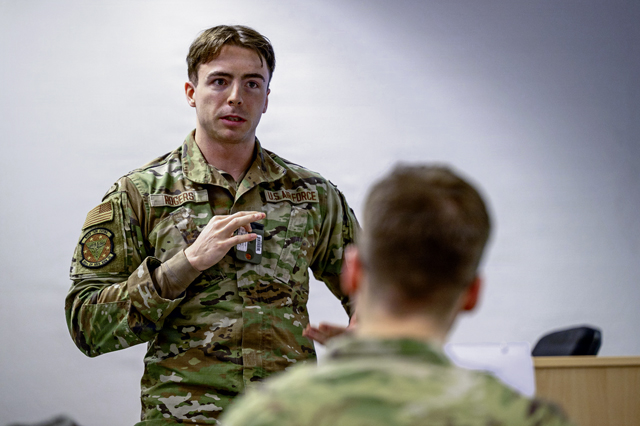
Wagner states, “The primary idea is health risk assessment and being able to tell the commander; ‘Here’s a situation. You can turn this aircraft, and here’s what people will be exposed to and you accept the risk of the Airman’s health to look at it at the risk of the mission as well.”
Training hand in hand with several squadrons gave participants a larger understanding of how their roles play into the larger mission. Radiant Falcon also unveiled opportunities for future growth and highlighted the importance of collaboration and broader communication.
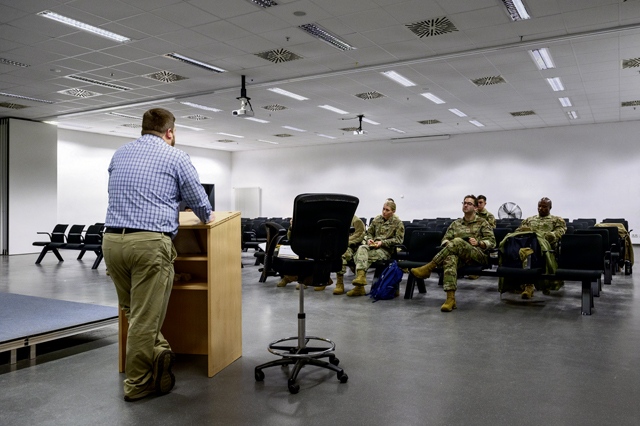
“Being able to work well with other flights was really good to see. You’re so tunnel visioned when doing your job, but it’s important to know what other people are capable of doing,” said U.S. Air Force 2nd Lt. Allyson Peterson, 86th OMRS bioenvironmental flight readiness and training officer in charge.
Exercises like Radiant Falcon are crucial and fundamental to accelerating the 86th Airlift Wing’s mission readiness capabilities, interoperability across Ramstein, and bolstering the capability to face chemical, biological, radiological, or nuclear threats. Through constant and in-depth training, Ramstein Airmen continuously refine the skillset needed to counter and adapt to any contingency — safeguarding the mission, the people, and the European Theatre.