 Twitter
 Facebook
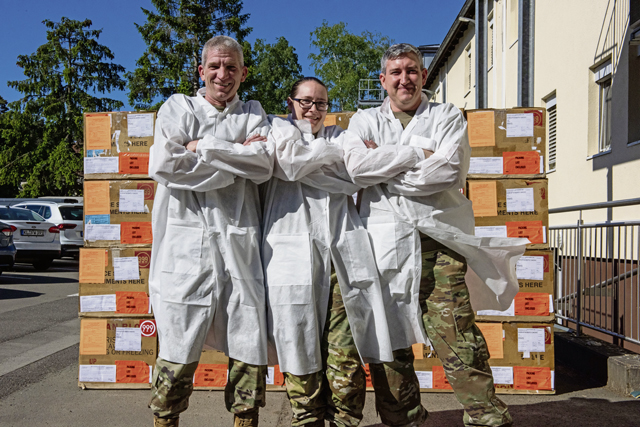
The Landstuhl Regional Medical Center Blood Services Program partnered with the 86th Aeromedical Evacuation Squadron at Ramstein Air Base, May 14-15 to provide real and simulated blood products in support of the Defender Europe 25 exercise.
The theater-wide exercise, hosted by U.S. Army Europe and Africa, provided Army and Air Force medical personnel from LRMC and Ramstein Air Base the opportunity to demonstrate their medical expertise and skills.
As the central repository for military blood products and supplies in the European theater, the LRMC Blood Donor Center prepared more than 1,000 real and simulated blood products for transport via U.S. Air Force aircraft. Once loaded, the blood products were then transported to Lithuania for use by U.S. military medical forces taking part in the Defender Europe 25 exercise.
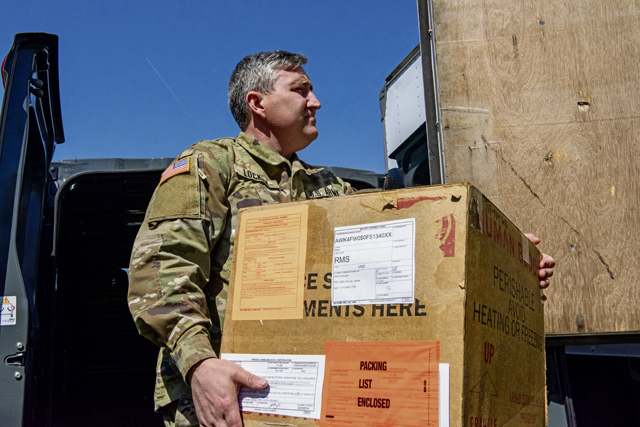
According to military medical officials, fresh whole blood is a vital component in increasing the survivability of trauma patients in the combat environment. A U.S. military report estimates that 15 to 20 percent of traumatic deaths are preventable, and 66 percent to 80 percent of these deaths occur from hemorrhage.
“Providing both real and simulated blood products is crucial for supporting real-world contingencies and the fighting military force,” said U.S. Army Sgt. 1st Class Raymond Clark, non-commissioned officer-in-charge of the LRMC Blood Services Program. “Real blood ensures immediate availability for transfusions during combat casualties, addressing critical needs for volume resuscitation and oxygen-carrying capacity.”
“Simulated blood products, on the other hand, play a vital role in training and preparedness,” added Clark. “They allow medical personnel to practice life-saving procedures in realistic scenarios without depleting limited real blood supplies. This dual approach ensures readiness, improves medical skills, and ultimately enhances the survivability of our Soldiers on the battlefield.”
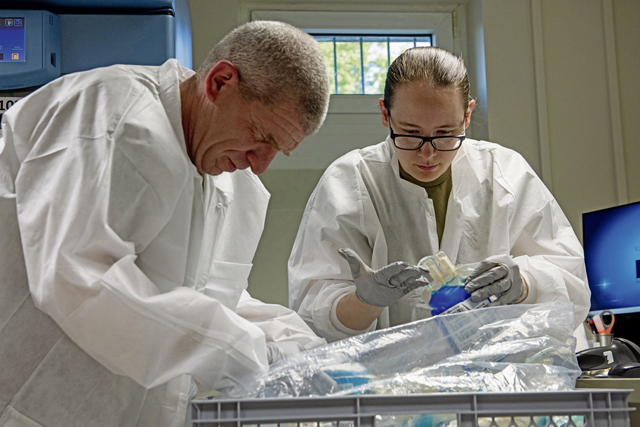
Military medical officials emphasize that properly equipped and trained medical teams are essential for maintaining a strong and effective fighting force.
Defender 25 is the largest annual U.S. Army deployment into the European Theater consisting of approximately 25,000 U.S Allied and Partner service members, 29 Allied and partner nations, 18 host nations, 14 different aerial ports of embarkation in the U.S., movement of 3,000 pieces of equipment and more than 5,000 U.S. based troops processed into the European Theater.


