Twitter
 Facebook
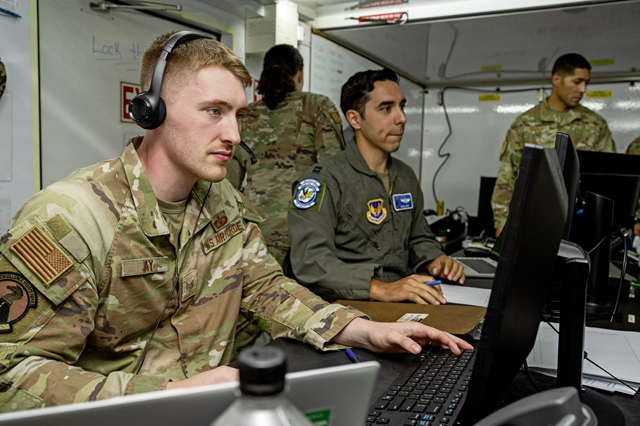
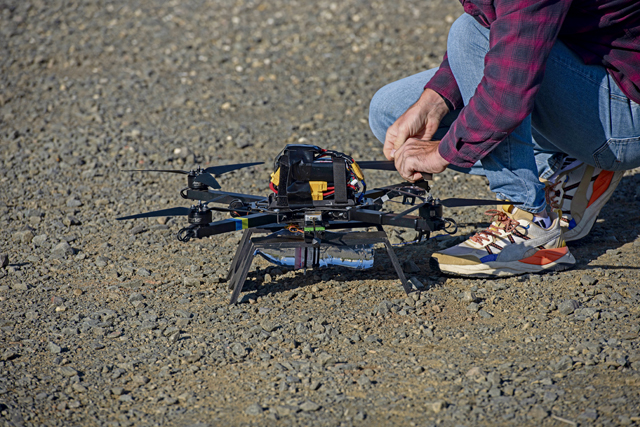
U.S. Air Forces Europe – Air Forces Africa, in collaboration with the 86th Airlift Wing, the German Air Force and the Rheinland-Pfalz Police, successfully completed a point defense operational utility assessment at Ramstein Air Base earlier this month.
The assessment is a major step forward in USAFE-AFAFRICA’s efforts to determine aerial defense needs and pave the way for shared and fine-tuned aerial defense archi-tecture for the U.S. and its Allies and partners.
These efforts align with the Pentagon’s recent directive to advance counter-unmanned aerial systems capabilities, as well as USAFE-AFAFRICA’s operational focus area of Integrated Air and Missile Defense.
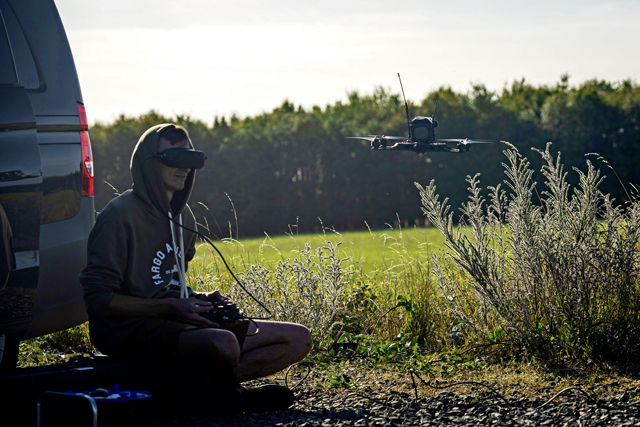
“Countering unmanned aerial systems is a constantly evolving field. Our job is to ensure that we’re evolving with it,” said Lt. Col. William Singletary, USAFE-AFAFRICA Integrated Air and Missile Defense Division. “Regular assessments with our partner nations ensure that we have the right agencies, equipment, and procedures in place to defend the base against any threat at any time.”
Over the four-day point defense assessment, U.S. and German Air Forces worked together to respond to simulated UAS threats through a “kit” of integrated equipment, tactics and personnel with the goal of assessing command and control capabilities in sensing, identifying, locating and countering hostile UASs, strengthening local security.
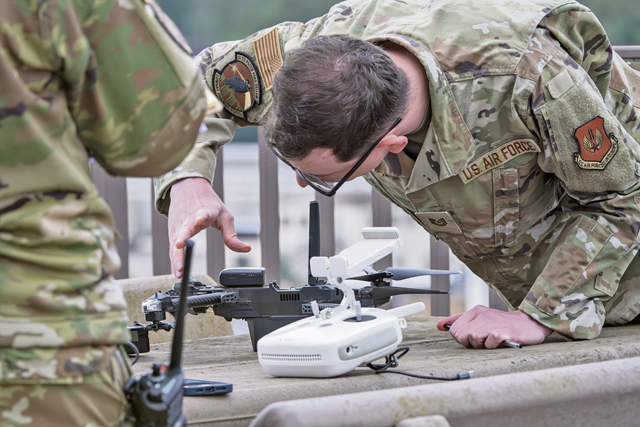
Also in attendance were Rheinland-Pfalz Police observers looking to advance their own anti-air threat capabilities for the local community.
“The outstanding cooperation that has existed for decades between the U.S. armed forces and the Rheinland-Pfalz police at all levels has been further strengthened by the current form of collaboration, said Thomas Welsch, Department of the Inspector of Police, Rheinland-Pfalz Police.
By sharing resources and expertise, U.S. and German officials will continue to protect both civil and military infrastructure across the region.
“Mutual trust and an unwavering willingness to provide support are the key to addressing future common challenges in defense and security policy,” continued Welsch. “I am grateful that the commitment to a partnership-oriented cooperation remains unbroken.”