 Twitter
 Facebook
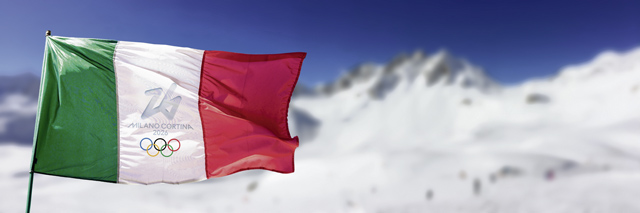
Icy sports and creamy gelato at Cortina d’Ampezzo
Plenty is happening in Cortina d’Ampezzo, and the action continues through Feb. 22 as the 2026 Winter Olympics unfold.
Cortina d’Ampezzo, perched at about 1,224 m (4,016 ft) in the Italian Dolomites (Province of Belluno, Veneto), is nicknamed the “Queen of the Dolomites” for its dramatic limestone peaks, world‑class skiing, luxury tourism, and enduring Olympic legacy.
Cortina d’Ampezzo hosted the Winter Olympics in 1956 and returns as a co‑host for Milano‑Cortina 2026. Its 1956 venues and long Olympic tradition helped secure a place in the new Games. The 2026 Milano‑Cortina Games run Feb 4 (first competitions) — Feb 22 (closing ceremony) and the official Opening Ceremony took place Feb 6 in Milano. Ninety-three nations are participating with over 3,000 athletes.
Cool runnings and Eddie the Eagle
The first Winter Olympics were held in Chamonix, France, in 1924, originally organized as “Winter Sports Week” and retroactively recognized as the first Olympic Winter Games. Sixteen nations competed over 10 days. The IOC and winter‑sport federations created a separate international festival for snow and ice sports after 1924, and the Winter Olympics have continued as a distinct, permanent series ever since.
Germany has also been host of the winter Games. Games took place in Garmisch‑ Partenkirchen in 1936. Twenty-eight nations and roughly 669 athletes competed for the gold, silver and bronze medals in 17 events in eight disciplines, when Alpine skiing was first introduced as a discipline.
On the other hand, the United States has hosted the Winter Olympics four times: Lake Placid in 1932 and 1980, Squaw Valley in 1960, and Salt Lake City in 2002.
Canada has been host to the Winter Olympics two times: in Vancouver in 2010 and earlier in 1988 in Calgary. Elderly readers may recall a fearless athlete and a remarkable tropical team to compete in winter games.
“Eddie the Eagle” was a determined British ski jumper who became a global sensation at the 1988 Winter Olympics for finishing last but doing it with unforgettable heart and humor. He arrived with limited funding, borrowed equipment, and famously thick glasses that fogged inside his goggles, but despite all odds even managed to set a British ski jumping record!
The Jamaican bobsled team also made history, first bursting onto the world stage at the Calgary Games and inspiring the film “Cool Runnings.” A crash in one of their runs prevented them from finishing, but they walked the sled across the line, an unforgettable moment!
Their debut, struggles, and long-term impact have made them a lasting symbol of determination. One of the most famous sayings associated with the Olympic spirit is “The important thing is taking part” and captures the idea that participation matters more than victory, effort and sportsmanship outweigh medals.
Bronze, silver and gold
This year the Winter Olympics include 116 medal events across eight sports and 16 disciplines: Alpine skiing, biathlon, bobsleigh, cross‑country, curling, figure skating, freestyle, ice hockey, luge, Nordic combined, short track, skeleton, ski jumping, ski mountaineering, snowboard and speed skating.
The German team consists of remarkable 184 athletes in 15 disciplines, with three of them from Rheinland-Pfalz. Team USA announced a roster of roughly 232 athletes for Milano‑Cortina 2026, across all sports and a number of athletes from the U.S. Army and Air Force qualified for the games via the World Class Athlete Program.
Army personnel include Staff Sgt. Deedra Irwin who competes in the biathlon program, individual, sprint, pursuit and relay formats as selected by the U.S. Biathlon team. Specialist Sean Doherty, a veteran biathlete named to the U.S. Olympic biathlon squad, selected for individual races and relay team opportunities. Sergeant Frank Del Duca as the bobsled pilot on Team USA, who is also named as one of Team USA’s Opening Ceremony flag bearers.
Specialist Azaria Hill with bobsled, selected for the two‑woman bobsled event (brakeman), who is also a recent World Cup / World Championship competitor. Sergeant Ben Loomis named to the U.S. Nordic combined team, competes in ski jumping and cross‑country combined events, Gundersen formats and team events. Private Spencer (Akira) Howe competes in pairs figure skating (with partner Emily Chan), listed on Team USA roster. Also see Sports on pages 14 & 15.
Air Force members include Staff Sergeant Kelly Curtis as competitor in skeleton (individual sliding event) and Senior Airman Jasmine Jones as competitor in bobsleigh, two‑ or four‑person sled events, as selected by team coaches. Also see: https://www.kaiserslauternamerican.com/wcap-airmen-qualify-for-winter-olympics/
Gelato artigianale
Cortina d’Ampezzo is not only famous for being an upscale alpine resort known for world‑class skiing, but also renowned for being the “birthplace” of “gelato artigianale” (handmade gelato) using fresh, local ingredients and recipes adapted for alpine tastes and the town promotes gelato as part of its food culture.
The Gelato-Day festival “Gelato‑Day Cortina‑Dolomiti” is an annual event in held in August that showcases regional gelato makers and has included novelty presentations such as gelato served at very high altitudes.
Cortina’s gelato makers have a long, documented connection to Germany. Families and artisan gelato businesses from the Dolomites (including Cortina and nearby valleys) emigrated to Germany in the 1950’s and 1960’s and established Eiscafés that still trade under Italian names like “Cortina,” keeping an uninterrupted artisanal tradition alive in German towns.
At just 17 years old, Dario Fontanella, the son of an Italian immigrant from the region, came up with the coolest idea of his life. On April 6, 1969, in Mannheim, he served the very first plate of his whimsical creation: spaghetti ice cream. Soft vanilla gelato pressed into noodle-like strands, drizzled with raspberry “tomato” sauce, sprinkled with white chocolate and finished with a dab of whipped cream. Sadly for Dario, he never patented his delicious invention, and it soon became a beloved treat enjoyed across Germany.
Let’s celebrate the incredible athletes and their “icy” sports representing the United States, Germany, and countless nations across the globe, honoring their dedication and sportsmanship. The Games stand as a powerful symbol of unity, perseverance, and the competitive spirit, bringing together the five continents and athletes from every corner of the world. And honestly, it’s all even better with a bowl of creamy gelato while cheering them on from the comfort of the couch!


