 Twitter
 Facebook
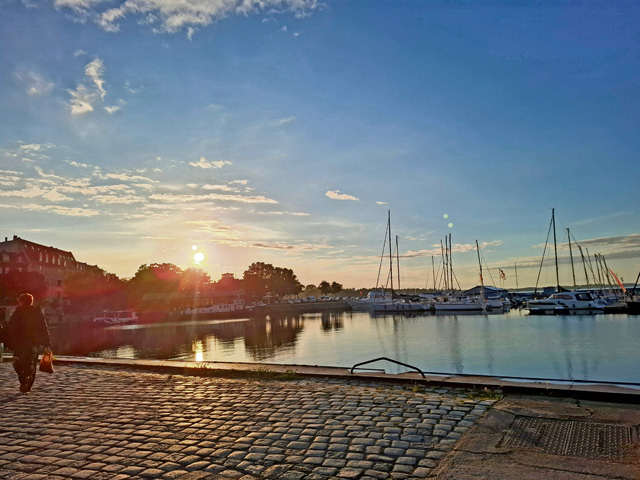
Hygge at the Sea
Welcome back to our coastal journey! After last week’s exploration of the North Sea that ended near Sylt, today we’ll drift a little east to Flensburg, a charming town on the Flensburger Förde where the Baltic Sea slips into the rolling hills between Germany and Denmark.
The Baltic Sea, about 750 kilometers from the KMC, began as an almost enclosed freshwater basin and only reconnected with the North Sea around 10,000 years ago. As a result, it is much less salty than the open ocean and experiences only modest tides of about one meter.
Flensburg, just five kilometers south of Denmark, makes an ideal stop en route to or from Denmark or a relaxed base for exploring the Baltic coast. The city of about 89,000 hosts a sizable Danish minority, visible in bilingual signs, bakeries, and a hyggelig (free and easy) atmosphere. The harbor is the first draw: blue water, sailboats, yachts and historic tall ships. Short fjord cruises on vessels like the MS Viking pass the German Naval Academy at Mürwik, circumvent the Danish Ochsen Islands and lead to Glücksburg, Germany’s most northern city. There powdery beaches, Strandkörbe (beach chairs), the elegant Strandhotel, and the water castle await.
Back in Flensburg, the waterfront and over-one-kilometer pedestrian zone run parallel to the harbor. From Nordertor you’ll find steep-roofed fisher houses, red-brick churches, merchants’ and captains’ houses, and the Maritime Museum. Sample a Backfischbrötchen on the boardwalk, browse Danish bakeries, and visit the Danish cultural center Flensborg Hus. Saturday’s Südermarkt farmers’ market sells regional produce and fresh fish, and have a taste of Flensburger Pils, sold in flip-top bottles.
Climb Museumsberg for views and then wander Rote Strasse’s cobbled lane of artisan shops and cafés. Don’t miss the small Rum Museum, a reminder of Flensburg’s 19th-century trade in Caribbean rum.
Kieler Woche and Marzipan
Kiel, the capital of Schleswig‑Holstein is a lively maritime hub. Its expansive harbor handles ferries to Denmark, Sweden and Norway and hosts a large cruise terminal for Baltic voyages.
Each June the city comes alive for Kieler Woche, the world’s largest sailing regatta, with thousands of boats, concerts, markets and street entertainment. Maritime history is on display at the Fischhalle Maritime Museum and the Maritime Museum. A short trip from the city brings you to Laboe, a seaside town famed for its dramatic Naval Memorial, the preserved U‑995 submarine, a long sandy beach, marina and pleasant coastal walks.
Lübeck is best known as the “Queen of the Hanseatic League” and located further south. It is a UNESCO World Heritage site with its waterways and maritime history. The Holstein Tor at the city entrance was depicted on the 50 Deutsche Mark bill and it is renowned for its long tradition of marzipan.
Traveling east, we’ll reach Timmendorfer Strand, a popular beach that can get crowded in high season. Travemünde, Wismar, Rostock with its Warnemünde district are further along the coast, and smaller seaside towns like Kühlungsborn and Boltenhagen invite you to beach fun. Furthest east lies the island of Usedom, of which about one third lies in Poland.
Lilla Sverige
Though less famous, but therefore more relaxed, our final stop is the charming Hanseatic port of Stralsund, celebrated for its red‑brick Gothic old town. The city features lively maritime museums and a striking bridge that connects it to the island of Rügen.
Stralsund grew from a ferry settlement into a chartered city in 1234 and became one of the Hanseatic League’s important trading hubs, prospering on herring, grain, and Baltic trade. Its medieval wealth left a skyline of brick Gothic churches and merchant houses that still define the old town.
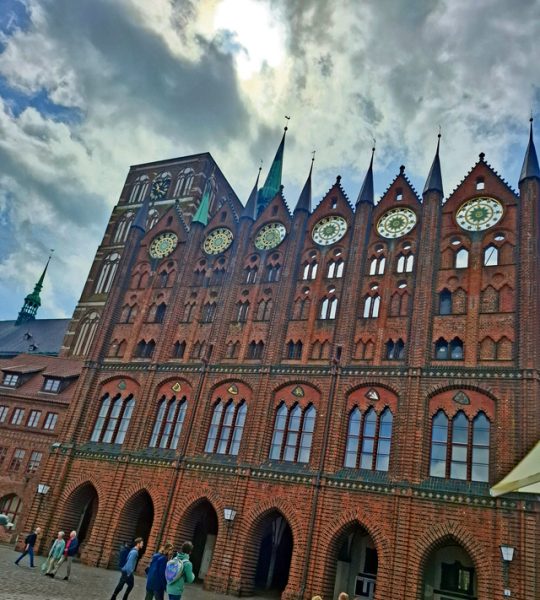
After the Thirty Years’ War Stralsund ended up under Swedish rule in the 17th and 18th centuries. The Swedes made it one of their main coastal outposts, pouring money into fortifications, administrative buildings and Baroque architecture, which reshaped the city’s layout. You can still spot parts of the old ramparts and several Swedish‑era buildings today. The military focus and repeated conflicts slowed some commercial growth, but the Swedish period left a lasting mark on Stralsund’s streets and legal history.
Some residents still call themselves “southern Swedes,” and many elderly speak Swedish. Swedish is also the university’s most popular second foreign language after English, with roughly 70–80 students enrolling each semester.
Stralsund
You’ll find Stralsund on the southern shore of the Strelasund (a Slavic word, by the way), the narrow sound that separates the Pomeranian mainland from Rügen. The water is never far, many streets and cafés look out over the harbor, giving the city an island‑like feel even though it sits on the mainland. Stralsund is the administrative center for the Vorpommern‑Rügen district and makes a calm, walkable base for exploring the Baltic coast.
As a UNESCO World Heritage Site (together with nearby Wismar) since 2002, the city offers a rich historic core: narrow cobbled streets lined with gabled merchant houses and eaves‑front façades, and an ornate Gothic town hall that testifies to its Hanseatic prosperity. St. Mary’s, St. Nicholas and St. James rise above the skyline as soaring brick churches, their dramatic interiors and layered histories inviting exploration. Step into the Stralsunder Welterbe-Ausstellung (World Heritage Display) in the Baroque Palace.
The Ozeaneum and the Deutsches Meeresmuseum are world‑class aquariums and maritime museums that make Stralsund a magnet for families and sea enthusiasts. Stroll the harbor promenade to view the historic Gorch Fock I, a three‑masted German barque built in 1933 and long used for sail training. Grab a fresh Fischbrötchen, take a harbor cruise to see Stralsund from the water, and warm up with a Grog (hot water, rum, and sugar) while admiring sweeping views of the Rügenbrücke. Finish the day at the Hafenkneipe “Zur Fähre,” Europe’s oldest port pub, and soak in the locality’s unique maritime atmosphere.
Strelasund
The Strelasund is crossed by two main links: the older Rügendamm, a causeway with rail and road, and the modern Rügenbrücke, a cable‑stayed bridge opened in 2007. The Rügenbrücke is an impressive, nearly 2.8-kilometer-long crossing built to ease traffic to the island. It offers spectacular views of the sound and makes the island an easy day trip from Stralsund.
Rügen is Germany’s largest island and a mix of long sandy beaches, dramatic chalk cliffs, beech forests, historic seaside resorts and outdoor activities, perfect for hiking, cycling, wildlife watching and classic Baltic‑coast relaxation, and offers a permanent sand sculpture display in the Glaspalast in Prora.
Highlights include the chalk cliffs of Jasmund National Park with the Königsstuhl skywalk — about 185 meters long and perched 122 meters above the sea. The island also has classic seaside resorts like Binz, Sellin and Göhren, with long promenades, piers and elegant resort architecture, plus wide sandy beaches ideal for swimming and family days. Cape Arkona adds dramatic lighthouses, cliffside views and the tiny fishing village of Vitt, a favorite spot for sunsets and coastal walks. For more inspiration visit: https://wildeast.blog/en/baltic-sea-germany/
With your curiosity piqued, and not knowing what to choose first, don’t wait too long to book a beach break with Hanseatic charm! After an eventful tour of the German coastline, let’s head way down south to Germany’s largest lake next week!


