 Twitter
 Facebook

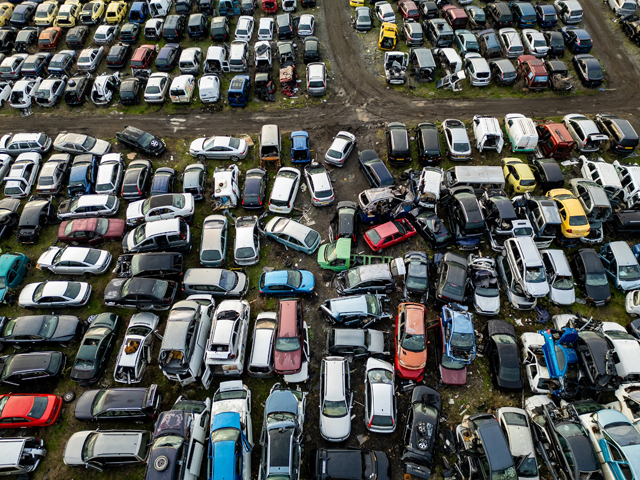
Germany has long been known as a recycling powerhouse. From returning plastic bottles through the deposit system to reusing smartphone components, recycling packaging and paper, or turning old glass into new products, recycling is deeply embedded in everyday life. In fact, Germany is one of Europe’s top recycling nations, second only to Belgium. In 2025 Germany had a recycling rate of 75.8 percent, slightly less than Belgium at 79.7 percent.
Now, recycling is moving into a whole new league. At Volkswagen’s plant in Zwickau, in eastern Germany, old cars are no longer just being scrapped. Instead, they are being carefully dismantled so that valuable materials can be recovered and used in future vehicles.
The vision is ambitious: Yesterday’s car could become tomorrow’s new one. By combining recycling with automation, robotics, and artificial intelligence, VW hopes to close the loop on vehicle production and turn Zwickau into a pioneer of the circular economy.
Circular Economy
A new recycling and dismantling line opened at VW’s Zwickau plant in late October. Alongside building cars, the facility will now also take apart old vehicles and recover valuable raw materials that can be reused. Saxony’s Economy Minister, Dirk Panter, called it a positive sign for the future of the site, although it’s still unclear whether the operation will prove profitable in the long run.
With the new facility, VW is betting on automated recycling and wants Zwickau to become a flagship site for the circular economy. The idea is simple: recover materials from end-of-life vehicles and use them in the production of new cars. Whether that makes financial sense will largely depend on how valuable those recovered materials turn out to be.
While recycling old cars into new resources sounds like a forward-thinking idea, VW’s plans were initially met with skepticism when they were unveiled in 2025. At the time, the company was facing challenges, and the future of the Zwickau plant itself was far from certain.
Back then, young VW employees summed up what many colleagues were thinking on the shop floor: “We’re car builders, that’s who we are. But we think we need to get used to the idea that, in the future, we’ll also be taking cars apart.” For the staff the project was about securing jobs and creating new opportunities for the plant, high hopes are tied to the prestigious venture.
Whisking into the future
Now that vision is becoming reality. VW Zwickau officially launched operations in a converted hall dedicated to dismantling end-of-life vehicles.
The goal is ambitious: VW plans to process up to 15,000 vehicles a year in Zwickau. To make the operation efficient, the company is bringing proven techniques from car manufacturing into the recycling process, including a high degree of automation, robotics, and artificial intelligence.
Andreas Walingen, Head of Circular Economy at VW, describes the plan in a press release like this: ‘Specifically, we want to reuse raw materials to build new cars. This makes Volkswagen less dependent on the global raw materials market, cuts the CO2 footprint of the cars, and opens up new business models.’
Basically, he says, an old car can be almost completely recycled. ‘Whether you can make money from it basically comes down to which material flows you can get out of it and how expensive you can resell them.’ If a lot of valuable materials like copper, circuit boards, and the like are in the cars — which is expected with more and more electric cars — then you can extract increasingly valuable resources.
Still, these days, recycling often only happens because the EU sets clear rules. That’s why the word ‘hope’ best describes the project. Hope that recycling in Zwickau will be perfected to the point where it becomes a whole new business pillar.
Who knows, maybe one day you’ll cruise down the autobahn in a slick new showstopper that’s actually the reincarnation of your old rust bucket!


