 Twitter
 Facebook
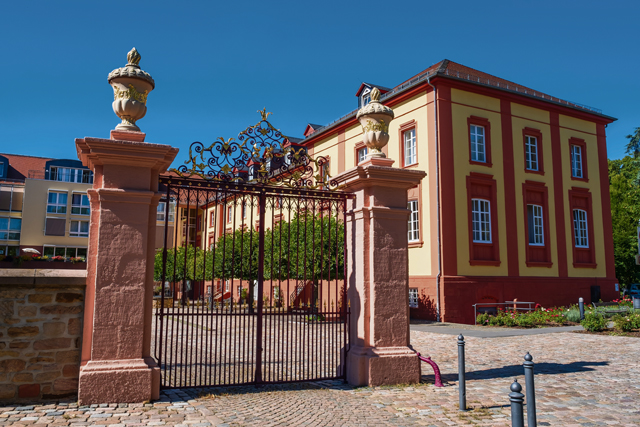
Kirchheimbolanden is a charming little Palatine town with a medieval center and an 18th‑century princely palace, only about a 20‑minute drive from Sembach. Around 8,000 locals love showing off the picture‑perfect town center — think quaint half‑timbered houses, tiny independent shops, and a pedestrian area full of cafés and ice‑cream spots that are perfect for a relaxed stroll.
It earned the title of Residenzstadt when the Counts and later Princes of Nassau used it as a secondary residence, and its past includes a stint under Napoleon during the French Revolutionary era. These days it’s lively, with a busy festival calendar. If you come in on the L401 (the old B40), also known as Kaiserstrasse, you will be welcomed by a Napoleonic headdress and signs marking the distance to Mainz and Paris.
History
Kirchheim shows up in records as early as 774 and really started to take shape after 1368, when Count Heinrich II of Sponheim‑Bolanden gave it town rights and had walls, towers and gates built. Over the next few centuries the town passed by marriage into the House of Nassau, and the Nassau‑Weilburg line left its mark on the town’s look and how it was run for about four hundred years. The medieval street plan, the surviving towers and the later palace complex all tell that layered story.
Napoleon and the French period
From 1792, during the French Revolutionary wars, French troops occupied Kirchheimbolanden. The princely family fled, the palace was damaged and looted, and the area was folded into French administration under Napoleon. After his defeat the Congress of Vienna in 1815 handed the Palatinate to the Kingdom of Bavaria, which ended Nassau rule on the left bank and brought big administrative and social changes through the 19th century.
A few small touches still hint at the French era: wooden shutters, narrow alleys with colorful flower pots, and a general bit of Gallic charm in the town center. Most parking spots are free, so you can linger longer in the little shops, boutiques and cafés, but don’t expect any common large chain stores.
Residenzstadt
The town earned the nickname Residenzstadt because it actually served as a princely residence. Over time the old castle grew into Schloss Kirchheimbolanden, a palace complex that became a secondary home and court for the Nassau‑Weilburg family. In the 18th century the princes added a Baroque palace and formal gardens, so the place took on all the trappings of a small princely court — administration, courtly events, and buildings that look the part. That concentrated courtly presence is why people still call it a “small residence.”
Sights to see
Key sights include the Schloss Kirchheimbolanden and its gardens, remnants of the medieval town wall and towers (Apothekerturm and Gray tower), St. Peter’s and other historic churches, plus small museums and the palace‑park ensemble. The town is compact and walkable.
Vows in a tower
A Hochzeitszimmer (wedding room) is installed in one of the medieval towers (the Grauer Turm) and is presented as a historic, atmospheric space for small ceremonies and receptions. Local descriptions and photo galleries document its painted decoration and rustic character. The room also has a (symbolic) canopy bed for the bride and groom.
Festivals and Cultural Life
Kirchheimbolanden is lively in summer thanks to the Residenzfest, a wine-and-culture festival that fills the historic center with music, local food and plenty of wine. The town also hosts concerts, markets and seasonal events in the palace gardens, the Orangerie and the old squares, so there’s usually something going on. All that activity keeps Kirchheimbolanden at the heart of cultural life in the Donnersberg region. Don’t miss out on this year’s Residenzfest from Aug. 8 to 10, and shopping on Sunday.
Administrative role
Kirchheimbolanden is the administrative heart of Donners–bergkreis, so it’s where county services and offices are based for the surrounding rural towns. Sembach Kaserne belongs to the Union Community of Winnweiler, which is also part of Donnersbergkreis. Other nearby towns include Eisenberg, Rockenhausen and Göllheim.
Donnersberg
Right next door is Donnersberg, literally “Thunderhill,” which was a major center more than 2,000 years ago. Back then a huge Celtic oppidum sat on the 687‑meter plateau, a bustling place with thousands of people, markets and crafts — hard to picture when you’re just walking the quiet summit today. Archaeological digs in recent decades have uncovered much of what was hidden for centuries.
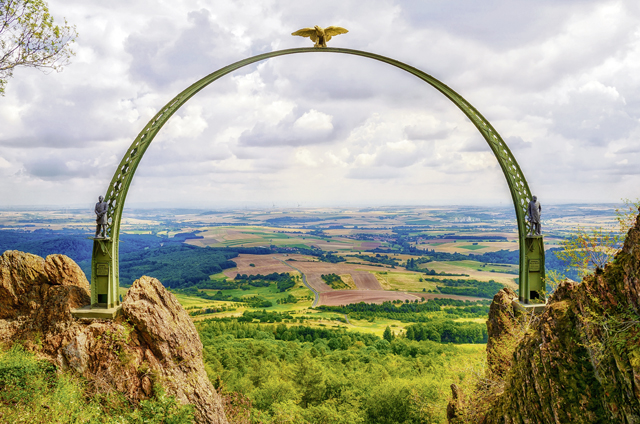
A clearly visible circular rampart still surrounds the main plateau, a reminder that this was once one of the largest Celtic settlements north of the Alps and a central hub for the region. Finish your visit at the Keltendorf in Steinbach. It’s currently closed for renovations but is expected to reopen in the fall.
Local tip: Skip the A63 exit at Kirchheimbolanden and cruise the old Kaiserstrasse instead. It rolls through tiny villages and soft, rolling hills with Donnersberg on your left, and you can almost imagine his majesty personally riding this road two hundred years ago!


