 Twitter
 Facebook
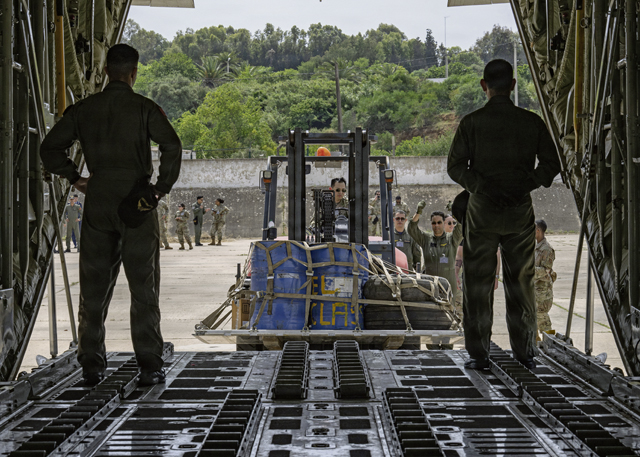
After three weeks of integrated operations across multiple domains and forward operating locations in Morocco, U.S. Air Force participation in Exercise African Lion 26 concluded, May 8.
Led by U.S. Army Southern European Task Force, Africa and executed alongside the Royal Moroccan Armed Forces and more than 40 partner nations, AL26 brought together more than 5,600 participants across Morocco, Ghana, Senegal and Tunisia in U.S. Africa Command’s largest premier annual joint exercise.
AL26 showcased the U.S. Air Force’s ability to project combat-credible airpower alongside African and international partners while strengthening interoperability, readiness, and regional security cooperation.
“This iteration of African Lion showcased our Airmen and partners’ adaptability, resilience, and proficiency,” said Ms. Heidi Bruns, U.S. Air Forces in Europe – Air Forces Africa Operations Directorate joint training specialist and AL26 air training exercise lead. “As requirements changed, units responded flexibly, accepted added responsibilities, and drove the mission forward.”
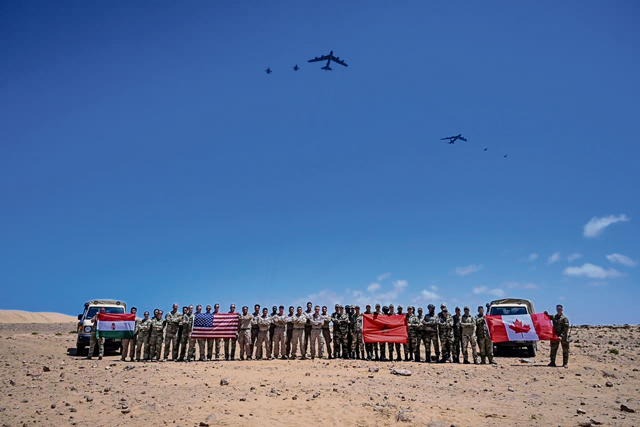
Throughout the exercise, U.S. Air Force Airmen trained shoulder-to-shoulder with Allied and partner forces in complex, multinational scenarios designed to enhance deterrence, improve operational readiness, and empower partners through shared responsibility.
The integration of U.S. Air Force B-52H Stratofortress aircraft with air and ground assets in Morocco highlighted both the depth of the strategic partnership and the flexible deterrence the aircraft provide.
Two U.S. Air Force B-52H Stratofortress aircraft integrated with Royal Moroccan Air Force F-16 Fighting Falcons during flyovers supporting Morocco’s first nationally accredited Joint Terminal Attack Controller qualification course at Cap Draa, Morocco. Later in the exercise, U.S. bombers and Moroccan F-16s conducted an additional flyover during the exercise’s Distinguished Visitor Day, reinforcing multinational interoperability and combat-ready airpower integration.
Bomber integration signals our ability to project combat-credible airpower forward while operating alongside multilateral Allies and partners throughout Africa, Europe and the world.
Demonstrating the “Total Force” concept, nearly 100 personnel from the active duty U.S. Air Force, Air National Guard, and Air Force Reserve integrated throughout Morocco and Tunisia. They executed a wide range of training focused on improving coalition effectiveness and enhancing partner-led regional security capabilities.
In Rabat, Morocco, Airmen assigned to the 123rd Air Control Squadron, Ohio National Guard, Ohio, trained more than 40 Royal Moroccan Air Force members in air battle management procedures, tactical command and control, threat identification and aircraft intercept operations.
Working side-by-side in simulators and classroom environments, U.S. Airmen shared tactics, techniques and procedures designed to strengthen multinational coordination and improve execution during complex air operations.
“Exercises that test these skills and give us opportunities to work together are critical to ensuring we control the airspace,” said U.S. Air Force 1st Lt. Jeremy Booher, 123rd ACS air battle manager.
The training enhanced interoperability and strengthened the ability of participating forces to operate as a unified coalition in future real-world contingencies.
In Kenitra, Morocco, Airmen assigned to the 88th Aerial Port Squadron, Joint Base McGuire-Dix-Lakehurst, N.J., trained alongside the U.S. Marine Corps’ 2nd Air Naval Gunfire Liaison Company (ANGLICO), Marine Corps Base Camp Lejeune, N.C., and the Royal Moroccan Air Force personnel on engine running on and offloading procedures, a rapid mobility capability that enables cargo operations while aircraft engines remain on.
The training improved operational safety, standardized communication procedures and increased multinational coordination during austere airlift operations.
“We train because these operations are critical in real-world environments,” said U.S. Air Force Master Sgt. Christopher Pacheco, 88th APS load planner. “Being able to participate in exercises like this is invaluable.”
Additional Air Force participation included Joint Precision Airdrop System training in Ben Guerir, Morocco, Joint Terminal Attack Controller Training in Tunisia, contingency response and air rigging operations with the 435th Contingency Response Support Squadron, Ramstein Air Base, and integrated communications support provided by the 1st Combat Communications Squadron through Link-16 enabled operations.
“From advancing multinational air operations to integrating Link-16, our teams stayed solutions-focused and committed to success. Adapting in real time while meeting objectives is precisely what African Lion aims to strengthen,” said Bruns.
The exercise also highlighted innovation and the evolving character of warfare, integrating advanced command-and-control systems, autonomous capabilities, intelligence, surveillance and reconnaissance platforms, and multinational information-sharing networks into realistic operational scenarios.
Beyond tactical execution, AL26 reinforced the enduring partnership between the United States and Morocco while deepening ties with Allies and regional partners. The exercise emphasized that readiness is built not through unilateral action, but through trusted relationships and collective investment.
By integrating across multiple domains, the U.S. Air Force enhanced its power projection and crisis-response capabilities, ultimately empowering partner nations to lead in addressing regional security challenges.


