 Twitter
 Facebook
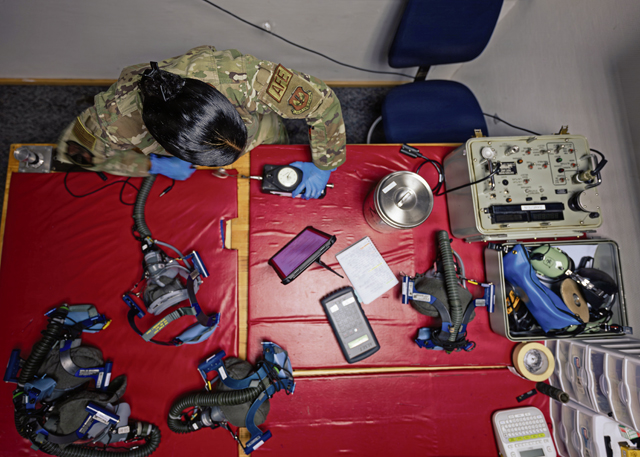
Story & photos by Senior Airman Edgar Grimaldo, 86th Airlift Wing Public Affairs
Before a C-130J Super Hercules aircraft departs Ramstein Air Base, Germany, Airmen assigned to the 86th Operations Support Squadron’s Aircrew Flight Equipment flight have already inspected the emergency equipment aircrew members may depend on if the unexpected happens.
From oxygen masks and parachutes to survival vests and life rafts, AFE Airmen inspect, maintain and issue equipment that helps keep aircrew members safe before, during and after flights.
For U.S. Air Force Airman 1st Class Racquel Reid, 86th OSS AFE apprentice, that responsibility extends beyond routine inspections.
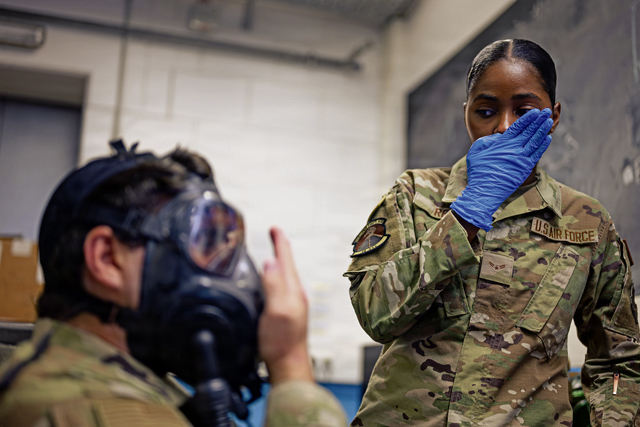
“The first thing people ask when they hear you’re in the Air Force is, ‘Do you fly planes?'” Reid said. “No, but I make sure the people flying those planes are equipped if an emergency happens. Aircraft can be repaired or replaced, our aircrew can’t.”
AFE Airmen rotate through multiple sections of the shop learning to inspect and maintain a variety of emergency equipment before moving to the flightline. There, they perform Mission Termination Inspections, ensuring equipment is present, serviceable and ready before the next sortie.
“When I’m inspecting equipment, I’m thinking about every tiny detail,” Reid said. “You have to look for cuts, tears and holes because if you miss something, it may not function the way it was designed to.”
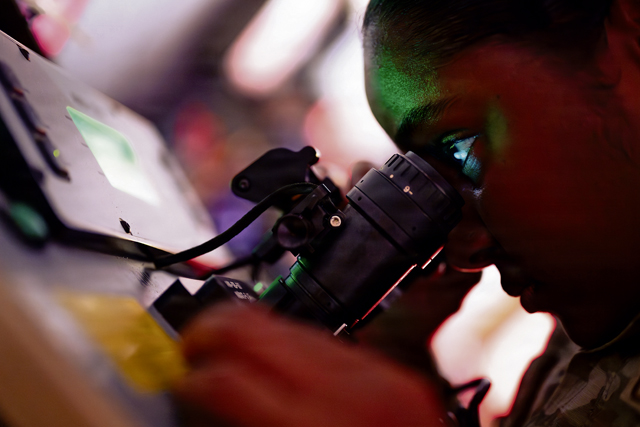
Beyond inspecting flight equipment, AFE Airmen also maintain Chemical, Biological, Radiological and Nuclear response capabilities through the Aircrew Contamination Control Area and Aircrew Contamination Control Station programs. They regularly train alongside aircrew members to prepare for hazardous material response.
Reid said the significance of her work became even more apparent while supporting recent operations.
“It honestly gives me a lot of motivation,” Reid said. “Knowing that someone could rely on this equipment to survive makes you want to give 110% every day.”
As one of the newest Airmen in the shop, Reid said repetition, mentorship and asking questions have been key to building her confidence.
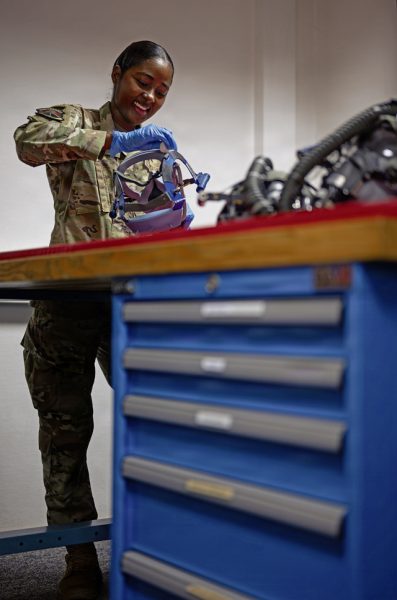
“The biggest lesson I’ve learned is to never be afraid to ask questions,” Reid said. “Everybody learns differently, and the more repetition you get, the more confident you’ll become.”
Reid shared a story by an instructor during technical training that continues to shape the way she approaches every inspection. After an aircrew member survived an emergency by deploying a parachute the instructor had packed, the Airman later arrived at the instructor’s home to personally thank him for saving his life.
“That was the night it really hit him,” Reid said. “Just knowing someone came home to their family because he did his job correctly, that’s why every inspection matters.”


