Photo by Senior Airman Brenden Beezley,
86th Airlift Wing
German SWAT members assess a simulated mass-casualty scene at Ramstein Air Base, Germany, Oct. 2, 2026. The simulated explosion tested participants’ ability to assess the scene, identify casualties and prioritize treatment under realistic conditions. (U.S. Air Force photo by Senior Airman Brenden Beezley)
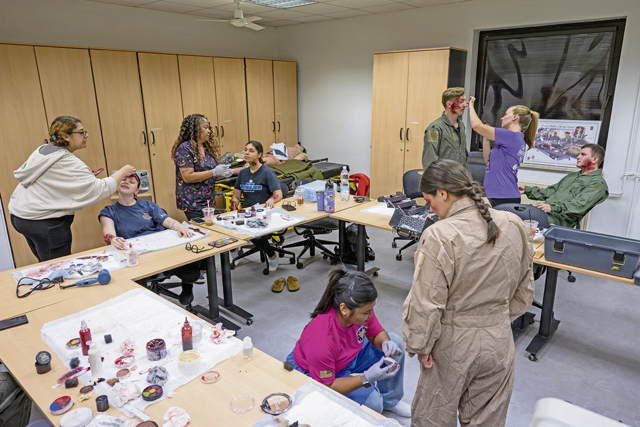
U.S. Airmen assigned to the 86th Aeromedical Evacuation Squadron apply moulage, or realistic injury simulations, to role players in preparation for a mass-casualty response scenario at Ramstein Air Base, Germany, Oct. 2, 2026. The scenario was part of a weeklong medical training exchange with 14 German SWAT members from multiple German states and U.S. Air Force medical personnel. (U.S. Air Force photo by Senior Airman Brenden Beezley)
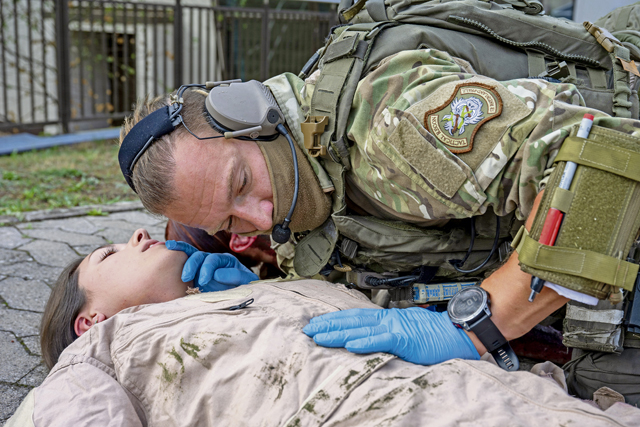
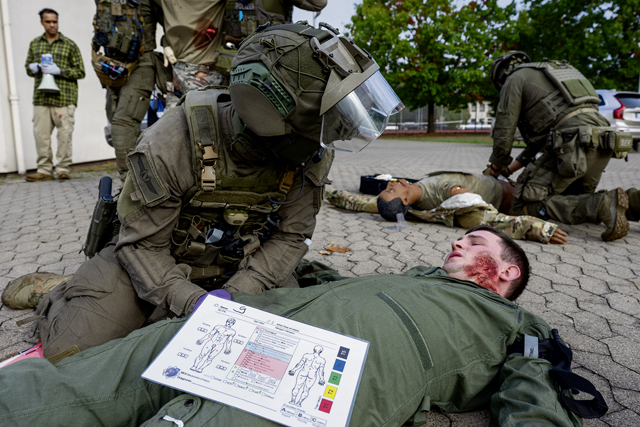
A German SWAT member checks a simulated casualty for signs of life via pulse and breathing during a mass-casualty response scenario at Ramstein Air Base, Germany, Oct. 2, 2026. The scenario reinforced a systematic approach to identifying life-threatening injuries and prioritizing immediate treatment. (U.S. Air Force photo by Senior Airman Brenden Beezley)
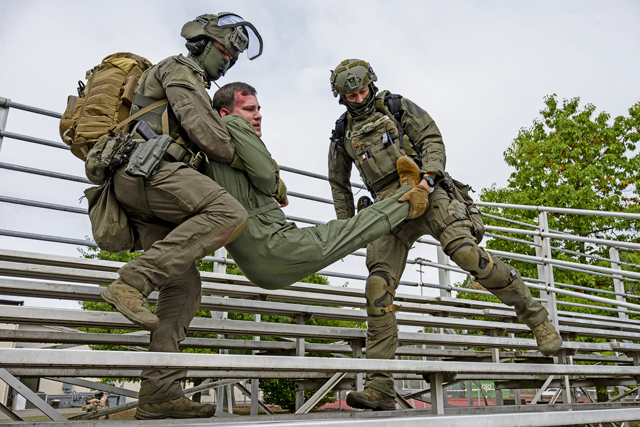
German SWAT members simulate evacuating a wounded service member during a mass-casualty response scenario at Ramstein Air Base, Germany, Oct. 2, 2026. The scenario required the SWAT members to assess casualties, coordinate movement and communicate while responding to multiple simulated injuries. (U.S. Air Force photo by Senior Airman Brenden Beezley)
A German SWAT member simulates conducting initial triage on a wounded service member during a mass-casualty response scenario at Ramstein Air Base, Germany, Oct. 2, 2026. The practical exercise allowed participants from both nations to compare casualty-care procedures and build a shared understanding when responding in high-stress environments. (U.S. Air Force photo by Senior Airman Brenden Beezley)
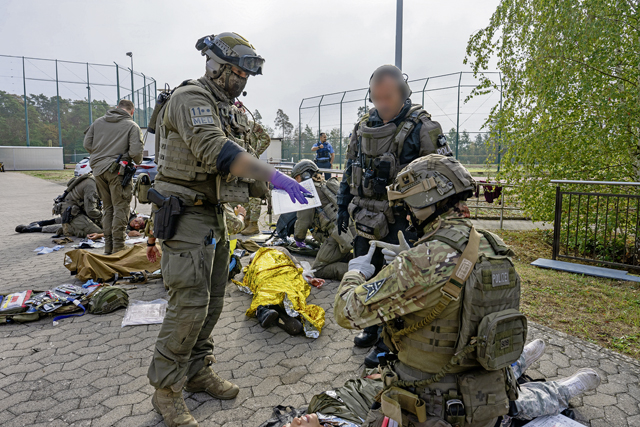
German SWAT members coordinate casualty care during a mass-casualty response scenario at Ramstein Air Base, Germany, Oct. 2, 2026. The scenario required participants to communicate patient status, prioritize treatment and coordinate follow-on care after a simulated explosion. (U.S. Air Force photo by Senior Airman Brenden Beezley)(Portions of this image have been blurred for operational security purposes by blurring out faces and tattoos.)
 Twitter
 Facebook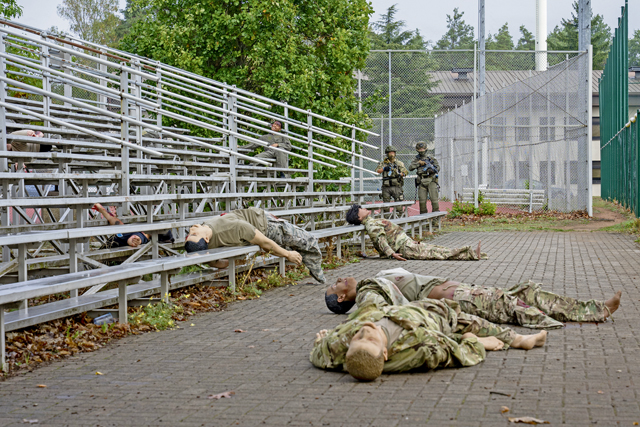
 News for the Ramstein, Kaiserslautern, Landstuhl & Baumholder military communities in Germany
 Published by