 Twitter
 Facebook

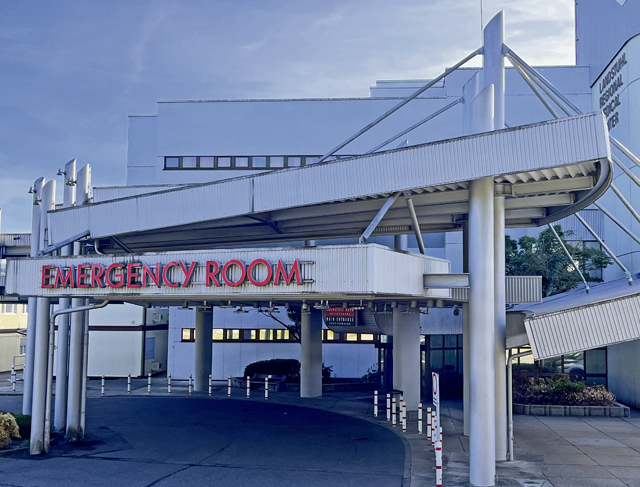
For service members and military families living overseas. A medical emergency can be stressful, particularly when it happens far from home. At Landstuhl Regional Medical Center, the Emergency Department provides around-the-clock emergency care for eligible patients, including active-duty service members, family members, military retirees and Department of War civilians.
The department operates 24 hours a day, seven days a week, with a team of physicians, nurses, medics and technicians working together to assess patients, prioritize treatment and respond to medical emergencies.
Maj. Nicholas Johnson, the Emergency Department’s chief nursing officer in charge, said the team strives to reassure patients and help them understand what to expect then they arrive.
“From the moment patients enter our reception area, our priority is to quickly assess their urgency, provide reassurance, and set clear expectations for their care,” Johnson said. “Being ill or injured overseas can feel isolating and overwhelming, so we are here to bridge that gap with compassion and immediate action.”
Behind that initial assessment is a coordinated response that depends on clear communication, teamwork and defined responsibilities, Johnson said. Whether treating a traumatic injury, stabilizing a critically ill child or responding to a sudden increase in patients, the team works together to address each patient’s needs.
“Whether managing a complex trauma, stabilizing a critically ill child, or handling a sudden influx of urgent patients, the entire team — nurses, doctors, medics, and technicians — operates with a unified understanding of the mission and the patient’s needs,” Johnson said.
One common misconception is that the Emergency Department functions as a substitute for primary care, Johnson said. Although the department assesses everyone who seeks emergency care, it is designed to prioritize urgent and life-threatening conditions rather than provide routine care for stable or chronic medical problems.
“We recognize that accessing routine appointments overseas can sometimes be difficult, and patients may come to the ED because they are concerned or unsure where else to turn,” Johnson said. “We will assess every patient who seeks care; however, the ED is not structured to replace the ongoing relationship patients have with their primary care manager or specialty-care team, particularly for chronic or stable conditions that require long-term follow-up.”
When patients arrive, a specialized nurse conducts an initial assessment to determine the urgency of their condition. Patients with life-threatening or limb-threatening injuries or illnesses receive priority, while those with less urgent conditions may have longer waits.
“From the trauma bay to the discharge lounge, our physicians, nurses, and technicians huddle dynamically, merging their expertise in real-time to co-manage complex cases and deliver the highest standard of mission-ready care,” Johnson said. “Prioritizing patients according to the urgency of their condition means patients with concerns that are stable or not immediately life-threatening may experience longer waits while the team treats life- and limb-threatening emergencies.”
LRMC has supported the military community since opening in 1953, maintaining its role in caring for service members and other eligible patients during routine operations and times of crisis.
Col. Warren Stewart, LRMC Commander, said the medical center remains committed to providing care to those who need it, with clinical treatment taking priority over administrative and billing concerns.
“We have never turned away anyone in need of care,” Stewart said. “If you possess a Common Access Card, a retiree ID card, or a U.S. passport, can access the installation, and enter our emergency department, we will provide you with world-class medical care.”
“Our mission is clear,” Stewart added. “We deliver the highest standard of care to our warfighters, Department of War civilians, military retirees, family members, and allied partners.”
Knowing where to turn during a medical emergency is an important part of staying safe while stationed overseas. Johnson and Stewart emphasized the importance of seeking immediate help for life-threatening conditions while using available primary care resources for routine medical concerns.
For life-threatening emergencies in Germany, call 112 for emergency services or seek emergency care immediately.
For or minor illnesses and routine medical concerns, patients should consider contacting the Military Health System Nurse Advice Line or scheduling an appointment your Primary Care Manager. Using these resources when appropriate can help patients receive care through the most suitable channel while allowing the Emergency Department to focus on time-sensitive emergencies.
Patients should keep the LRMC Emergency Department’s contact information readily available: 06371-9464-6321 for civilian callers and 314-590-6321 for Defense Switched Network callers.
Stewart said LRMC’s mission builds on a legacy of caring for service members evacuated from operational theaters and connecting them with the medical care they need.
“When we look back at the legacy of this mountaintop, we don’t just see a hospital, we see a promise,” Stewart said. “For over seven decades, Landstuhl has stood as a beacon of hope for more than 100,000 service members who were medically evacuated through our doors during their darkest hours.”
As LRMC continues its mission, Stewart said the medical center remains focused on providing care to service members and other eligible patients while supporting military readiness.
“As we look toward the future, our mission remains unchanged,” Stewart said. “We are more than a medical center; we are the heartbeat of readiness and the lifeline that connects the battlefield back to the families waiting at home.”


