Twitter
 Facebook

Last month, U.S. Air Force Chief of Staff Gen. Kenneth Wilsbach likened the beginning of the Air Force to the use of Super Intelligence today — they both call for a new way of thinking to achieve decision superiority.
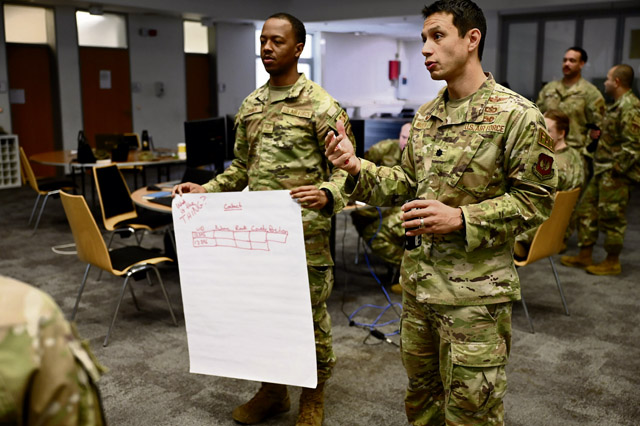
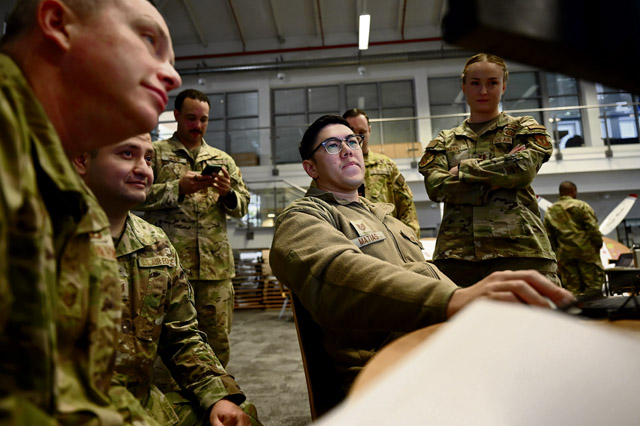
In light of that vision, the 435th Tactical Advisory Squadron initiated “Slow-Down-to-Speed-Up” training.
From Oct. 1-8, the squadron held four-hour daily training dedicated to SI and Foundry, the system that powers Envision and Maven Smart Systems.
According to a KPMG study, 57 percent of leaders say they want to use technology to improve performance and efficiency, but less than 10 percent prioritize developing stronger workforce training programs. This study is one of the main reasons U.S. Air Force Lt. Col. Michael Mayor, 435 TAS commander, decided this training was an investment his Airmen needed.
“We went from a crawl, to a walk, and we’re hopefully moving toward a jog on how to use our own data and developing more effective products,” said U.S. Air Force Capt. Molly Brabant, 435 TAS Africa Operations flight commander.
The 435 TAS spent much of the training uploading their own data and experimenting with what kinds of products they could create.
“We have a lot of products that are specific to certain sections, but we’re working toward a centralized platform that merges a lot of products into one that can be readily accessed,” said U.S. Air Force Tech. Sgt. Hector Montoya, 435 TAS European Flight section chief.
“A key advantage is the information is limited to the verified information we provided, so we know exactly where the data originates,” added U.S. Air Force Master Sgt. Erik Silva, 435 TAS Standards and Evaluations flight chief.
The 435 TAS identified several areas where SI can enhance operations.
Aggregated readiness
“We’re creating a common site picture,” added U.S. Air Force Tech. Sgt. Christopher Barrow, 435 TAS flight chief. “This aligns directly with U.S. Air Forces in Europe and Air Forces Africa’s (Operational Focus Area) on aggregated readiness.”
Aggregated readiness is one of six Operational Focus Areas for U.S. Air Forces in Europe and Air Forces Africa.
Traditionally, during readiness exercises, information is funneled from various, independent sources, leading to vulnerabilities and single points of failure. Aggregated readiness allows commanders to see the entire unit, which better reflects readiness required to generate combat power, defend from attack, and sustain operations.
“This past year, we had people on various missions, but when it comes to seeing who is ready next to go out the door, there are multiple platforms to check for things such as medical readiness and weapons qualifications,” said Barrow.
One goal for this training is to be able to see who is ready to “fight tonight” in a matter of minutes versus spending hours or days checking various systems.
Barrow also mentioned SI can help during a recall by determining who can be recalled and who cannot.
Redundancy and continuity
As part of the 435 TAS mission, Airmen frequently travel across Europe and Africa advising Allies and partners.
“Using these tools can save us time,” Silva said. “When someone needs information, instead of asking one of us who may be on the road, they will be able to find the information they need.”
Beyond the squadron, SI can benefit Allies, partners, and the Joint Force.
“When we work with our Allies and partners, we can put all the information we learned from previous missions so that when the next person goes there, all that information is easily digestible, preventing silos,” said Brabant.
Barrow added that the information can also be used as reference when working with joint partners.
Setting the future up for success
The products created today by the 435 TAS can also benefit future advisors.
“We all want to leave this unit better than we found it, but sometimes things get lost in turnover,” said Silva. “Now we’re ensuring we’re leaving our unit 100 percent better than when we found it because they will have all the information.”
Silva also identified the SI chatbot as key, because Airmen will be able to ask real questions and have them answered.
Although the training ended, this is just the beginning for how the 435 TAS will implement SI into their daily routine.
“At the beginning of the ‘Slow-Down-to-Speed-Up’ period, we set quantifiable objectives against which we can assess their effectiveness,” said Mayor. “We plan to use the rest of the year to build fluency in Foundry and establish the architecture in Envision upon which the whole squadron can run smoothly. At the end of January, we will assess our progress against the objectives and debrief the effectiveness of SI adoption.”