 Twitter
 Facebook
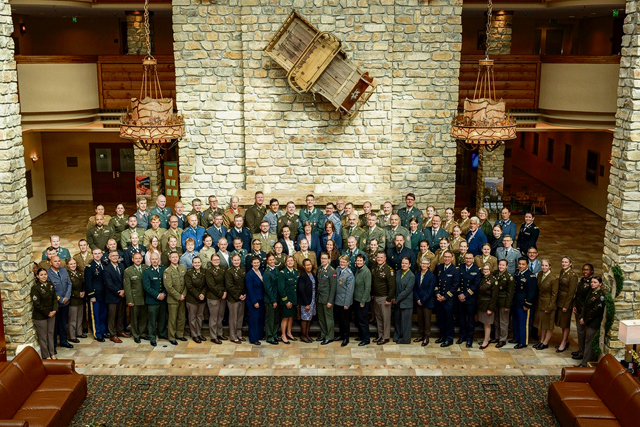
Garmisch- Partenkirchen, Germany — Public Health Command Europe recently hosted the 71st International Military Veterinary Exchange, bringing together nearly 100 veterinary leaders from 18 Allied and Partner nations to strengthen alliances, enhance global force protection, and address shared medical and agricultural challenges.
The multi-day symposium served as a critical platform for international collaboration, focusing on topics ranging from the “unseen battlefield” of microscopic disease threats to advancing the standard of care for military working dogs.
Col. Anastasia McKay, commander of U.S. Army Public Health Command Europe, welcomed the attendees by emphasizing the critical need for global interoperability.
“Look around this room. We are not just colleagues; we are a united front,” McKay said during her opening remarks. “This exchange is more than a meeting, it is a critical accelerator. Our mission here is to drive convergence, to strengthen the bonds of interoperability and to unify our efforts against shared global challenges.”
Confronting the unseen battlefield and food defense
A significant portion of the exchange centered on mitigating global health risks, specifically the prevention of transboundary diseases during military movements. Experts from Germany, Norway and the United States led discussions on translating NATO standards into effective action on the ground, ensuring line commanders understand the catastrophic agricultural and economic consequences of biological material transfer.
Simultaneously, international experts tackled food defense. Representatives from Germany and the Republic of Serbia shed light on emerging foodborne parasites, while U.S. representatives challenged the coalition to build proactive, multi-national defenses to safeguard vital military food supply chains.
Advancing canine care and standardization
The well-being and operational readiness of military working dogs remained paramount. A major highlight of the 71st exchange was the push to standardize canine casualty care. The United Kingdom guided attendees through a comprehensive proposal for a unified, European-focused Canine Tactical Combat Casualty Care model, aiming for a NATO-level operational patient care pathway.
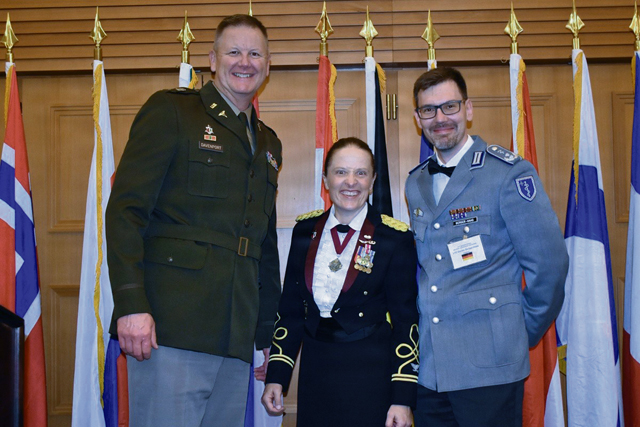
Major James Bladen, Officer Commanding for the U.K.’s Veterinary Training Squadron, noted the importance of navigating these complex issues as a coalition.
“It’s been great to get to know colleagues from other countries and comforting to know that we’re all facing the same challenges,” Bladen said. “The best way to overcome those challenges is by coming together and discussing issues like we are this week. How we use animals in defense is something that every country is feeling the pressure on, so it’s up to us to advocate for the animals and make sure they’re used in the best possible way.”
Discussions also pushed the boundaries of current practices, featuring debates on the use of electronic shock collars in MWD training led by the Netherlands and conversations on live tissue training alternatives guided by Norway. On the innovation front, the symposium explored the future of battlefield medicine, including the use of canine freeze-dried plasma for austere environments.


